Dáil Debates Strategic Gas Reserve Bill as Ireland Moves to Insulate Itself from Energy Market Shocks
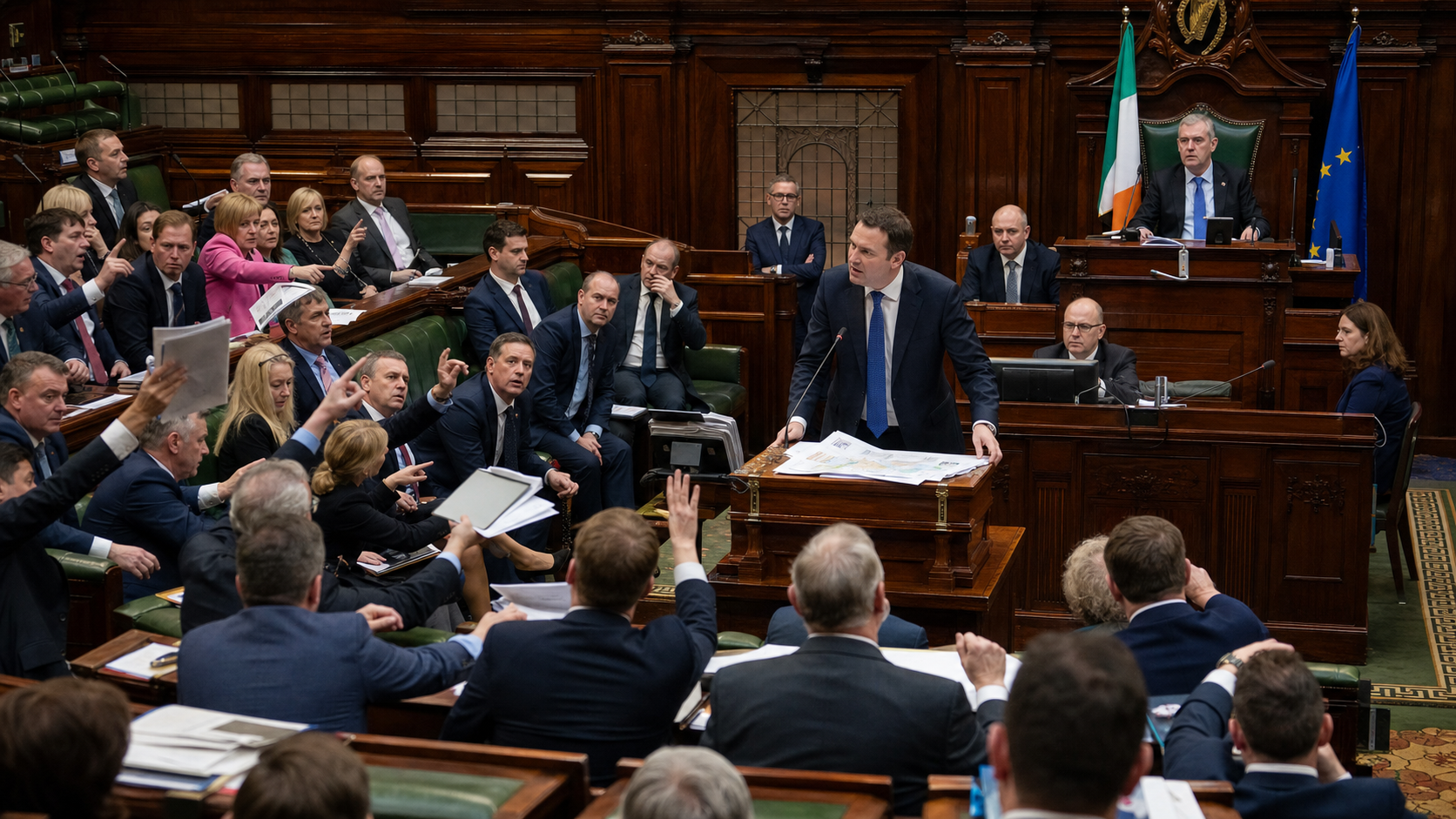
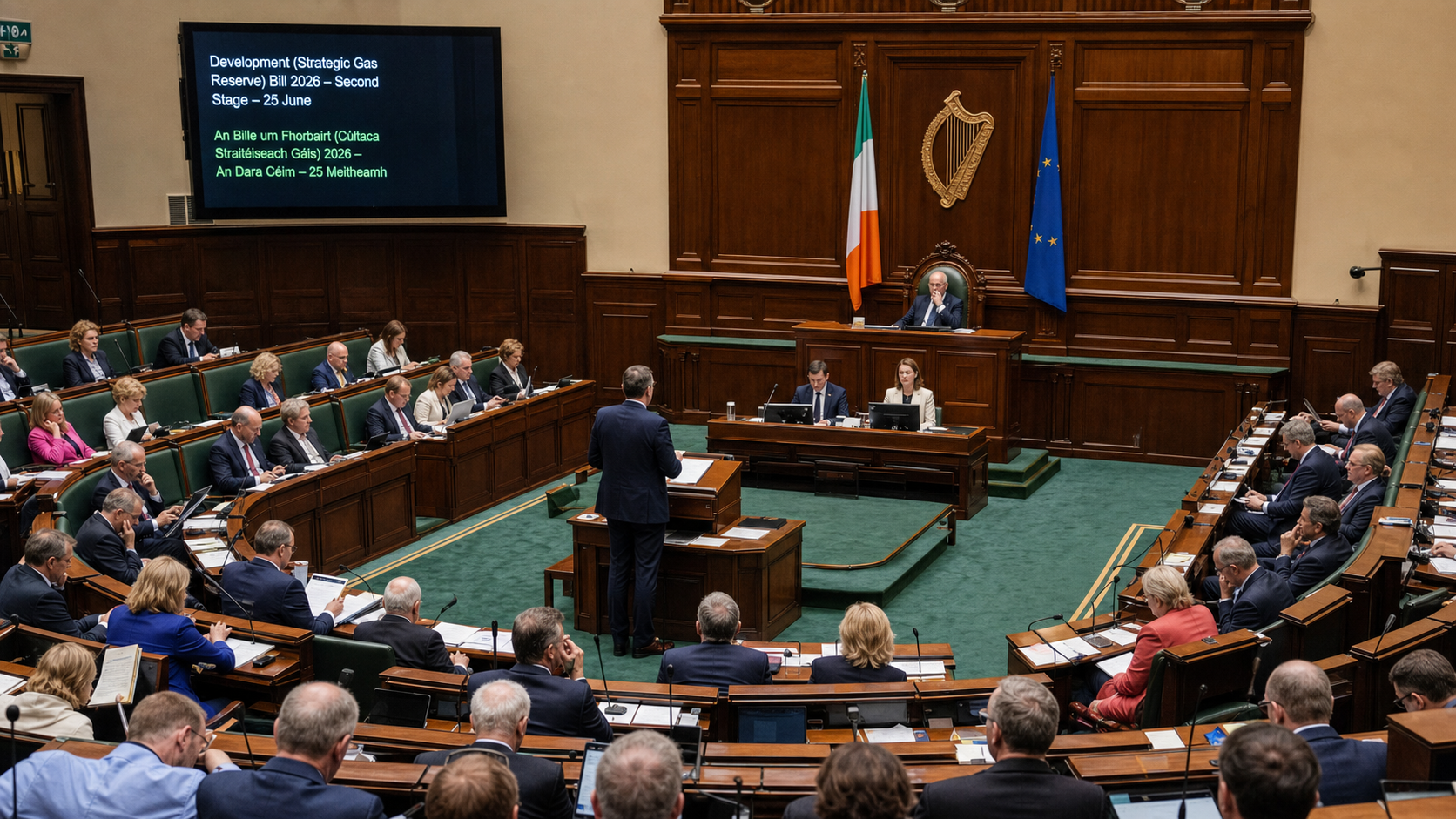
The Dáil held a significant Second Stage debate on the Development (Strategic Gas Reserve) Bill 2026 on 25 June, as the government seeks to establish a state-controlled buffer against energy supply disruptions — a structural response to Ireland's heavy reliance on a single gas import pipeline and the geopolitical volatility that has driven energy prices to record levels in recent years.
Background
Ireland's energy security position is, by European standards, unusually exposed. The country imports the vast majority of its natural gas through a single interconnector pipeline from Scotland, the Moffat pipeline, which carries gas from the UK's national grid to the Irish network. This single point of dependency means that any disruption to the pipeline — whether through technical failure, extreme weather, or geopolitical pressure on UK gas supplies — could have immediate and severe consequences for Irish households and businesses.
The vulnerability has been known for years, but the urgency of addressing it has increased dramatically in the context of global energy market disruptions. The war in Ukraine, which began in 2022, demonstrated how quickly European energy markets could be destabilised by geopolitical events, and the subsequent volatility in gas prices had significant knock-on effects for Irish consumers and businesses. More recent geopolitical developments have reinforced the case for structural measures to improve Ireland's energy resilience.
Ireland's legally binding climate targets add a further layer of complexity to the energy security debate. The country is committed to reducing its reliance on fossil fuels, including natural gas, as part of its transition to a renewable energy system. A strategic gas reserve, by definition, involves maintaining a stockpile of a fossil fuel — a tension that the Dáil debate has brought into sharp focus.
Key Developments
The Second Stage debate on the Development (Strategic Gas Reserve) Bill 2026 took place in the Dáil on 25 June, with contributions from government ministers and opposition spokespersons across the main parties. The bill, if passed, would empower the government to establish and maintain a strategic reserve of natural gas, providing a buffer that could be drawn upon in the event of a sudden disruption to the country's primary import routes.
Government speakers emphasised the necessity of the legislation in the context of Ireland's current energy security position, arguing that a strategic reserve is a prudent and proportionate response to a genuine risk. They pointed to the precedent set by other European countries, many of which maintain strategic gas reserves as a standard element of their energy security infrastructure, and argued that Ireland's failure to do so has left it more exposed than its neighbours.
Opposition speakers raised questions about the cost of establishing and maintaining the reserve, the timeline for its implementation, and the apparent tension between the legislation and Ireland's climate commitments. Several TDs argued that the money would be better spent accelerating the transition to renewable energy, which would reduce Ireland's dependence on imported gas over the long term. The debate is expected to continue at Committee Stage in the autumn.
Why It Matters
The Strategic Gas Reserve Bill matters because it represents a significant shift in how the Irish government thinks about energy security. For most of the past two decades, energy policy in Ireland has been dominated by the twin objectives of liberalising the energy market and transitioning to renewables. The idea of the state maintaining a strategic stockpile of fossil fuel sits awkwardly with both of those objectives, and the fact that the government is now pursuing it reflects a genuine reassessment of the risks Ireland faces.
The bill also matters because of what it reveals about the limits of Ireland's renewable energy transition. Despite significant investment in wind energy in particular, Ireland remains heavily dependent on natural gas for electricity generation, especially during periods of low wind. Until that dependency is reduced — through a combination of more renewable capacity, better interconnection with European grids, and energy storage — a strategic gas reserve provides a form of insurance that is difficult to argue against on purely practical grounds.
The political debate around the bill also reflects a broader tension in Irish energy policy between short-term security and long-term sustainability. This is not a tension unique to Ireland — it is playing out across Europe — but the specific vulnerabilities of the Irish system, including its island geography and single-pipeline dependency, make it particularly acute here.
Local Impact
For Irish households and businesses, the Strategic Gas Reserve Bill is ultimately about the reliability of their energy supply. Gas is used for heating in the majority of Irish homes, and disruptions to supply — even temporary ones — can have serious consequences, particularly for vulnerable households during cold weather. The bill's proponents argue that a strategic reserve would significantly reduce the risk of such disruptions, providing a buffer that could sustain supply for weeks or months in the event of a pipeline failure or geopolitical crisis.
For businesses, particularly those in energy-intensive sectors like food processing, pharmaceuticals, and data centres, energy security is a significant factor in investment decisions. Ireland's attractiveness as a location for foreign direct investment depends in part on the reliability of its energy infrastructure, and the Strategic Gas Reserve Bill is partly aimed at reinforcing that reliability.
What's Next
The bill will proceed to Committee Stage in the Dáil following the summer recess, with detailed scrutiny of its provisions expected in September and October. The government has indicated it hopes to have the legislation enacted before the end of 2026, with the establishment of the reserve to follow in 2027. The Commission for Regulation of Utilities will play a key role in the implementation of the reserve, and is expected to publish a consultation paper on the technical and commercial arrangements for the stockpile later in the year.