Occupied Territories Bill Returns to Dáil Amid Coalition Pressure
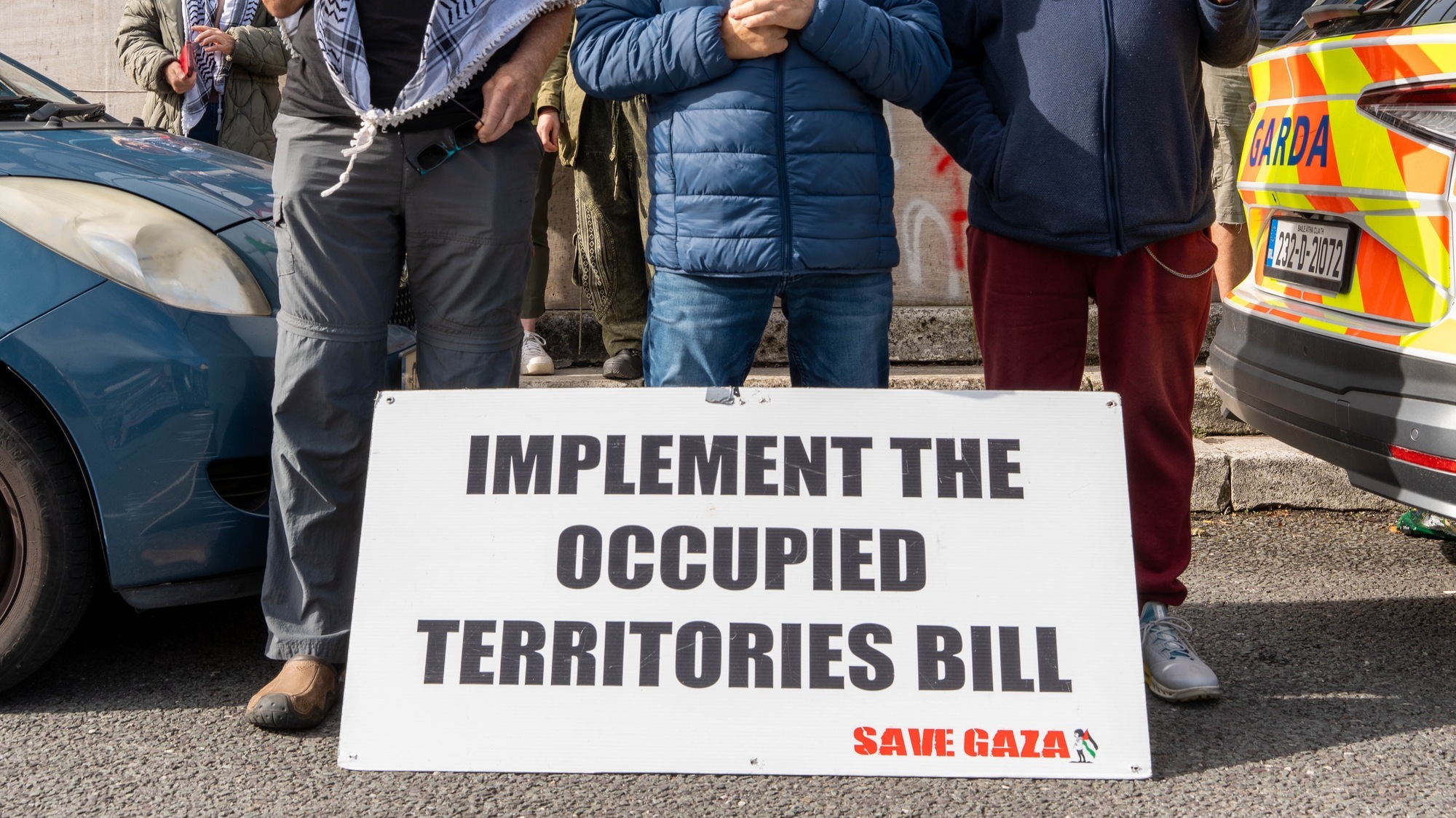
The Dáil has resumed debate on the Occupied Territories Bill, with Sinn Féin and other opposition parties pressing the coalition government to support legislation that would ban the import and sale of goods produced in illegal Israeli settlements in the occupied Palestinian territories. The government has indicated that it will oppose the bill on legal grounds, arguing that it is incompatible with EU trade law, but faces significant political pressure to take a stronger stance on the issue.
The Occupied Territories Bill has had a long and tortuous history in the Oireachtas. First introduced in 2018, the bill has been debated on multiple occasions but has never been enacted, with successive governments citing legal concerns about its compatibility with EU law as the primary reason for their opposition.
The Legal Debate
The central legal question is whether Ireland can unilaterally ban trade with Israeli settlements without breaching EU trade law, which generally prohibits member states from imposing trade restrictions that are not sanctioned at EU level. The government's legal advice has consistently been that such a ban would be incompatible with EU law and would expose Ireland to legal challenge.
Supporters of the bill dispute this analysis, pointing to legal opinions that suggest a carefully drafted ban could be compatible with EU law, particularly given the EU's own position that Israeli settlements are illegal under international law. They argue that the government's legal concerns are being used as a pretext to avoid taking a principled stand on the issue.
Political Context
The debate on the Occupied Territories Bill is taking place against the backdrop of the ongoing conflict in Gaza, which has generated intense public interest and emotion in Ireland. Ireland has been one of the most vocal EU member states in criticising Israeli military operations in Gaza, and the government's recognition of Palestinian statehood in May 2024 was widely welcomed.
However, critics argue that the government's opposition to the Occupied Territories Bill is inconsistent with its stated commitment to Palestinian rights and international law. Sinn Féin's foreign affairs spokesperson has argued that the government cannot claim to support Palestinian rights while refusing to take concrete legislative action to prevent Irish businesses from profiting from the occupation.
Government Position
Tánaiste and Foreign Affairs Minister Micheál Martin has defended the government's position, saying that Ireland is taking a range of actions to support Palestinian rights and to press for a ceasefire and a political solution to the conflict. He has pointed to Ireland's recognition of Palestinian statehood, its support for International Criminal Court proceedings, and its advocacy within the EU as evidence of the government's commitment to the issue.
However, Martin has maintained that the Occupied Territories Bill, as currently drafted, would not survive a legal challenge and would ultimately be counterproductive. He has indicated that the government is exploring alternative approaches, including working with EU partners to develop a coordinated EU-level response to the settlements issue.
The Vote Ahead
The bill is expected to come to a vote in the Dáil in the coming weeks. With the government indicating it will oppose the legislation, the bill is unlikely to pass, but the debate will provide an important opportunity for parties to set out their positions on one of the most sensitive foreign policy issues facing Ireland. The outcome will be closely watched by the many Irish people who have strong views on the conflict and on Ireland's role in the international response to it.