Cork County Plan Targets 120,000 New Jobs and 50,000 Homes to Reach Critical Mass by 2050
Cork County Council has adopted a development plan that sets out one of the most ambitious regional growth frameworks in the history of the Irish state, targeting the creation of 120,000 new jobs and the construction of up to 50,000 homes by 2034 as part of a strategy to transform the metropolitan Cork region into a city of 500,000 people by 2050 — a scale of growth that planners describe as necessary to achieve the "critical mass" required for Cork to function as a genuine counterweight to Dublin.
Background
Cork is Ireland's second city, but the gap between it and Dublin in terms of population, economic output, and infrastructure has been a persistent source of frustration for the region's political and business leaders. While Dublin has grown rapidly over the past three decades — driven by foreign direct investment, the tech sector, and the concentration of public services in the capital — Cork has grown more slowly, and the metropolitan area has struggled to develop the density and connectivity that would allow it to compete effectively with Dublin for investment and talent.
The concept of "critical mass" — the idea that a city needs to reach a certain scale before it can generate the self-sustaining economic momentum that drives long-term growth — has been central to Cork's planning discourse for many years. Planners and economists have argued that Cork needs to reach a population of approximately 500,000 in the metropolitan area before it can develop the range of services, amenities, and economic opportunities that would make it genuinely attractive to the kind of high-value investment that has transformed Dublin.
The newly adopted county development plan represents the most concrete expression of that ambition to date. It sets out a detailed spatial framework for growth across the metropolitan area, identifying specific zones for housing, employment, and infrastructure development, and establishing clear targets for the delivery of homes and jobs over the coming decade.
Key Developments
The Irish Examiner reported on Monday that the development plan targets the creation of 120,000 new jobs in the metropolitan Cork region as a prerequisite for achieving the 500,000 population target by 2050. The plan identifies the eastern and northern sectors of the metropolitan area — particularly Carrigtwohill, Midleton, and Little Island, which currently account for approximately 66% of the county's jobs — as the primary zones for new employment development.
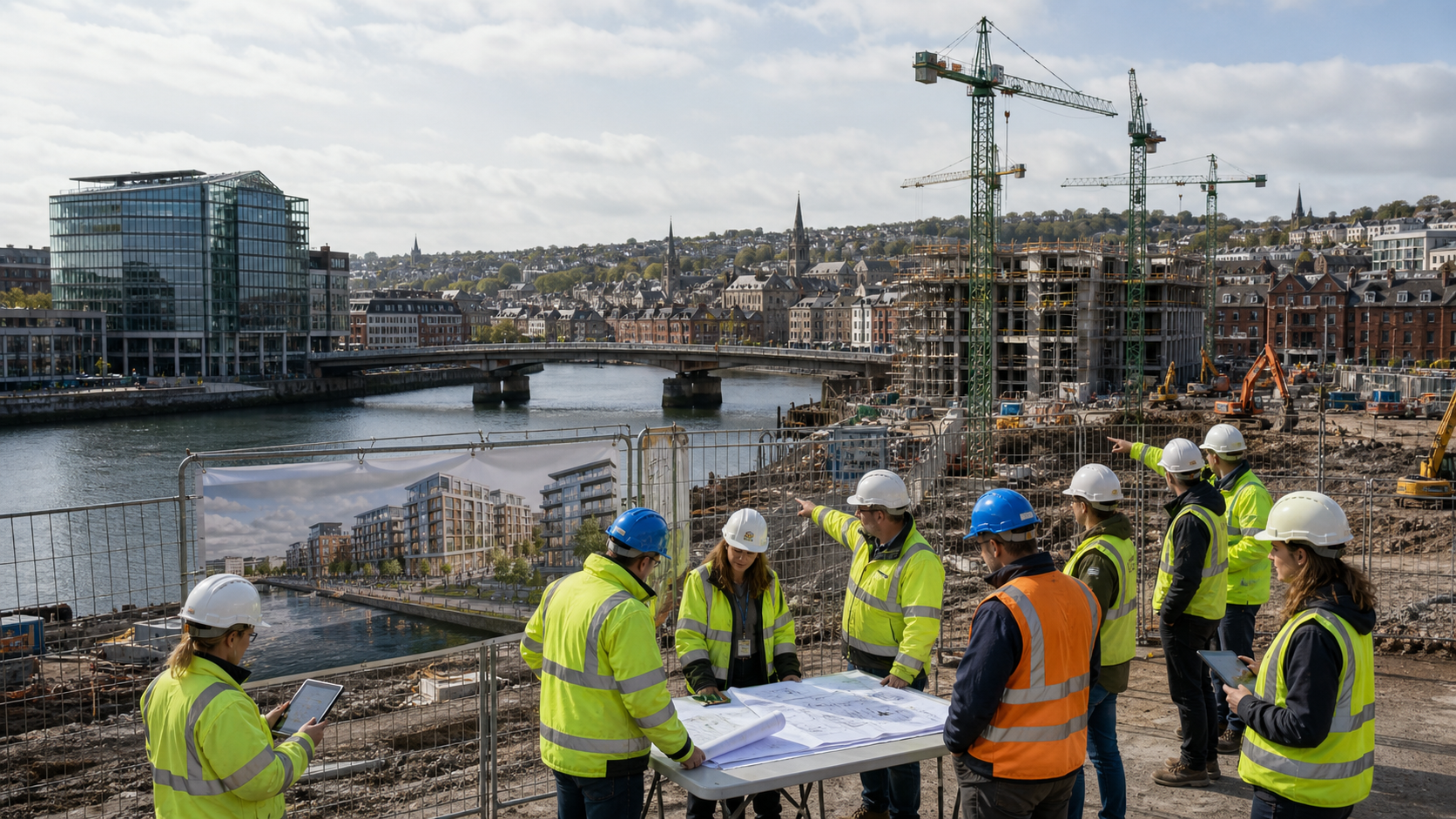
On housing, the plan allows for the construction of up to 50,000 homes by 2034, with a minimum growth requirement of 38,370 units. The council has committed to delivering 3,837 social, affordable, and cost-rental homes annually within this timeframe — a target that will require a significant increase in the pace of social and affordable housing delivery relative to recent years. The metropolitan zone for housing development spans from Midleton in the east to Kilumney and Ovens in the west, and from the north of Fermoy to Carrigaline and Passage West in the south.
Local officials and councillors have been careful to note that the delivery of these targets is contingent on the cooperation of national agencies, including Uisce Éireann, the ESB, Transport Infrastructure Ireland, and the Department of Education. Without the necessary water, electricity, transport, and school infrastructure, the housing and employment targets cannot be met, regardless of the ambitions set out in the development plan.
Why It Matters
The Cork development plan matters because it represents a serious attempt to address one of the most significant structural imbalances in the Irish economy: the over-concentration of growth in Dublin and the under-development of the regions. If Cork can achieve the growth targets set out in the plan, it will become a genuinely significant European city — one capable of attracting the kind of investment, talent, and innovation that has so far been concentrated in the capital.
The plan also matters because it sets a clear framework for the delivery of housing in a region that, like the rest of Ireland, is facing a severe housing shortage. The commitment to 3,837 social, affordable, and cost-rental homes per year is ambitious, and its delivery will require sustained political will and significant public investment. But the alternative — allowing Cork's housing crisis to deepen while the city's growth potential goes unrealised — is not acceptable.
Unlike Dublin, which has struggled to manage the consequences of rapid, unplanned growth, Cork has the opportunity to develop in a more planned and sustainable way. The development plan provides the framework for that development; the challenge now is to deliver on its ambitions.
Local Impact
For the people of Cork city and county, the development plan has direct implications for where they will live, work, and travel in the coming decades. The identification of specific growth zones — particularly in the east and north of the metropolitan area — will shape the pattern of development across the region, with implications for property values, transport infrastructure, and the availability of services. For businesses considering investment in Cork, the plan provides a degree of certainty about the direction of the region's development that should make investment decisions easier. For the construction sector, the housing targets represent a significant pipeline of work that will sustain employment in the industry for many years.
What's Next
The development plan has been adopted by Cork County Council and will now be implemented through a series of local area plans and planning decisions over the coming years. The council will work with national agencies to secure the infrastructure commitments needed to support the plan's growth targets, and will monitor progress against the housing and employment targets on an annual basis. A mid-term review of the plan is scheduled for 2029, which will assess progress and make any necessary adjustments to the targets and policies. The success of the plan will ultimately depend on the willingness of the government, national agencies, and the private sector to invest in Cork at the scale required to achieve the critical mass that the region needs.