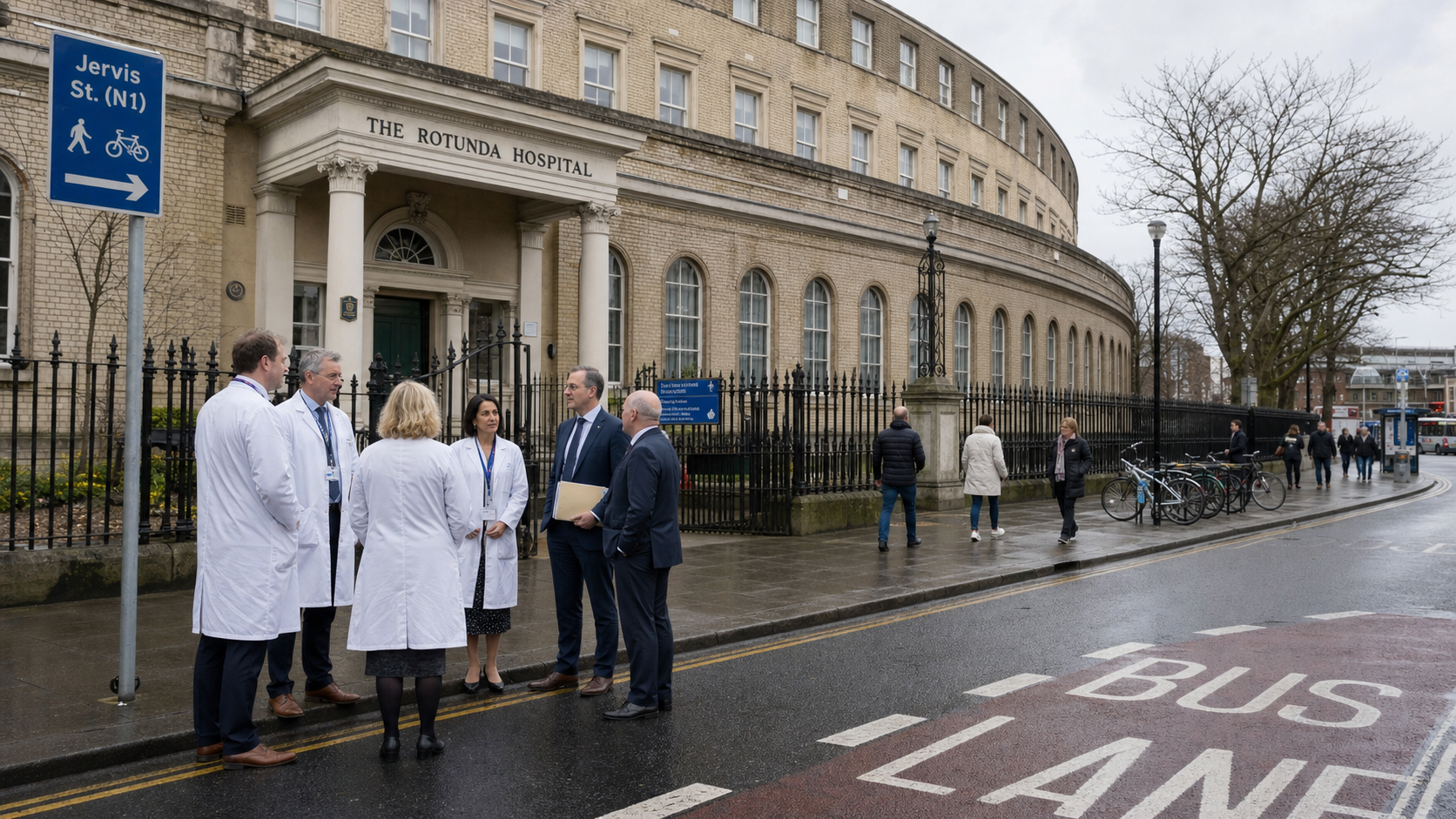
Consultants Launch Judicial Reviews Against HSE Ban on Private Practice in New Surgical Hubs
Two prominent medical consultants have initiated separate judicial reviews against the Health Service Executive, challenging a rule that prohibits private practice within the new publicly funded surgical hubs being established across the Republic — a legal action that has opened a new front in the ongoing battle between the Department of Health and senior medics over the implementation of Sláintecare reforms.
Background
The Sláintecare reform programme, which aims to transform Ireland's health system into a universal, single-tier service over a ten-year period, has been one of the most ambitious and contested policy initiatives in the history of the Irish state. At its core is the principle that access to healthcare should be based on need rather than ability to pay — a principle that requires, among other things, the elimination of the two-tier system in which private patients receive faster access to consultants and procedures than public patients.
The new public-only consultant contract, introduced in 2023, was a central element of this reform. Under the contract, consultants who sign up receive a significantly higher salary in exchange for committing to work exclusively in the public system — no private practice, no private patients, no private fees. The contract has been taken up by a substantial proportion of consultants, but a significant minority have remained on older contracts that allow a mix of public and private work.
The surgical hubs — new, purpose-built facilities designed to provide elective surgical procedures outside the main hospital system — are a key element of the government's strategy for reducing waiting lists. By separating elective surgery from the emergency and acute care functions of the main hospitals, the hubs are intended to provide a more efficient and predictable environment for planned procedures. The government has been clear that the hubs will operate on a public-only basis, with no private practice permitted.
Key Developments
Prof. Brian Manning and Prof. Rustom Manecksha have each initiated judicial review proceedings against the HSE, challenging the rule that prohibits private practice within the surgical hubs. Both consultants are on older "Type B" contracts that allow a mix of public and private work, and they argue that the ban on private practice in the hubs breaches their legitimate expectations under those contracts.
The legal challenge is significant because it tests the government's ability to implement the public-only model for the surgical hubs without the agreement of all consultants. If the courts find in favour of the consultants, it could require the HSE to allow private practice in the hubs — a development that would fundamentally undermine the public-only model and the Sláintecare reform agenda.
The Department of Health has indicated that it will defend the legal challenge robustly, arguing that the public-only model for the surgical hubs is a legitimate policy choice that is consistent with the government's Sláintecare commitments. The department has also noted that consultants who wish to work in the hubs have the option of signing the new public-only contract, which would resolve the conflict.
Why It Matters
The judicial reviews matter because they represent a direct legal challenge to one of the most important elements of the Sláintecare reform programme. The surgical hubs are intended to be a flagship demonstration of the public-only model — a proof of concept that elective surgery can be delivered efficiently and effectively without the involvement of private practice. If that model is undermined by legal challenge, it will have implications for the broader reform agenda.
The case also highlights the ongoing tension between the government's reform ambitions and the interests of a section of the medical profession that has significant economic stakes in the continuation of the mixed public-private model. The consultants who have initiated the judicial reviews are not acting out of bad faith — they have legitimate contractual interests that they are entitled to protect through the courts. But the outcome of the case will have consequences that extend well beyond their individual situations.
For patients on waiting lists — and there are currently close to one million people on waiting lists in the Republic — the surgical hubs represent a potential source of relief. Any delay in their establishment or any compromise of their public-only model will have direct consequences for those patients.
Local Impact
The surgical hubs are being established in Dublin, Cork, Limerick, and other cities, with the Dublin hub at the Mater Private Hospital site on Eccles Street among the most advanced in its development. For patients in these cities who are on waiting lists for elective procedures — hip and knee replacements, cataract surgery, hernia repairs — the hubs represent the prospect of faster access to treatment. The legal challenge creates uncertainty about the timeline for the hubs' full operation.
For the HSE's regional health areas — the new administrative structures that replaced the old hospital groups — the judicial reviews add a further complication to an already complex reform process. The regional health areas are responsible for implementing the Sláintecare reforms in their areas, and the legal uncertainty around the surgical hubs will require careful management.
What's Next
The judicial review proceedings are expected to be heard in the High Court in the autumn, with a judgment possible before the end of 2026. The HSE has indicated that it will continue to develop the surgical hubs in the meantime, on the basis that the public-only model is legally sound. The Department of Health is expected to publish an update on the surgical hub programme in July, setting out the timeline for the opening of the first hubs and the number of procedures they are expected to deliver in their first year of operation.