Child Homelessness in Ireland Rises 19% as Record 17,500 People in Emergency Accommodation
New government figures have revealed that child homelessness in Ireland has surged by 19.1% in the past year, with more than 5,500 children now living in emergency accommodation — part of a record high of 17,517 people homeless across the country, the highest total ever recorded by the state.
The March 2026 statistics, published by the Department of Housing, represent a 13.6% increase in overall homelessness over the preceding 12 months and arrive in the immediate aftermath of new rental regulations that critics warn are actively driving people from their homes. The figures have prompted urgent calls for government action from housing charities, opposition politicians, and the Tánaiste himself.
Background
Ireland's homelessness crisis has been deepening for several years, driven by a chronic shortage of social and affordable housing, rising rents, and increasing eviction notices. The crisis has grown by 46% since the government lifted its ban on no-fault evictions in April 2023. Dublin remains the epicentre, accounting for 12,465 of the total homeless population, including 4,118 children — but the problem is now felt in every county.
The March 2026 figures are the first to reflect the impact of the Residential Tenancies (Miscellaneous Provisions) Act 2026, which took effect on 1 March 2026. While the legislation was designed to provide greater security for renters through six-year minimum tenancies, a key provision allows landlords to reset rent to the full market rate between tenancies. Critics, including housing charities and opposition politicians, argue this creates a powerful financial incentive for landlords to evict existing tenants to secure higher rental income — a concern the Department of Housing's own regulatory impact analysis acknowledged as a "significant" risk of "economic evictions."
The Simon Communities of Ireland reported a 45% rise in eviction notices in the months leading up to the new law's implementation. Their "Locked Out of the Market" report for March 2026 found only 14 properties available to rent nationwide within the limits of the Housing Assistance Payment scheme — a 55% decrease from the previous quarter, leaving the most vulnerable households with virtually no options in the private rental market.
Key Developments
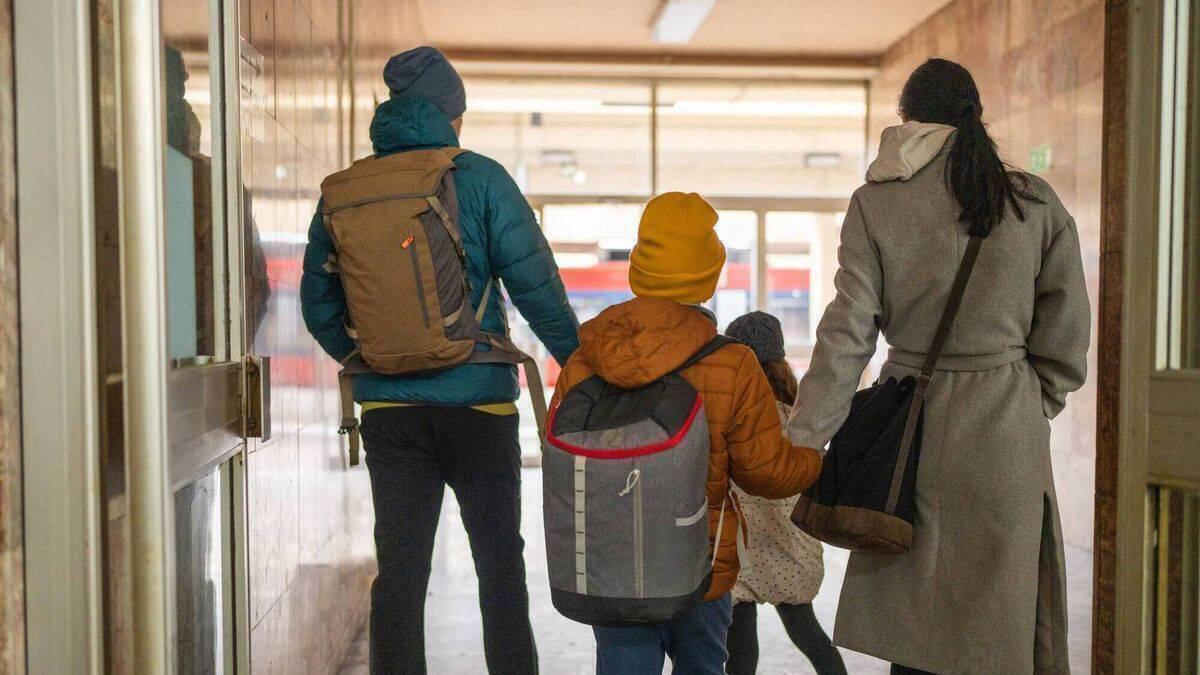
The March 2026 figures show 5,571 children in emergency accommodation — an increase of 896 children compared to March 2025, when the figure stood at 4,675. The total number of families in emergency accommodation rose by 20.2% over the same period, with 2,659 families now homeless. Of these, 57.4% are headed by single parents. Single adults have also seen a dramatic rise, with a 63.3% increase in this demographic since 2021.
The Tánaiste, Simon Harris, acknowledged the figures were "far too high" and that child homelessness was "unacceptable," while stating the government was delivering more social homes. He indicated a specific action plan to tackle child and family homelessness would be published before the summer recess, and highlighted a "significant rise" in individuals entering homelessness after leaving direct provision accommodation, particularly in Dublin.
Sinn Féin's housing spokesperson, Eoin Ó Broin, attributed the rise to the Minister for Housing's decision to cut funding for homeless prevention schemes, including the tenant-in-situ programme. The Social Democrats' Rory Hearne argued the new rent regulations are a "leading contributor" to the crisis, while Labour stressed that these "worst ever recorded" figures should not be normalised in a wealthy country.
Why It Matters
The scale of child homelessness in Ireland in 2026 represents a profound moral and political failure. More than 5,500 children are growing up without a stable home — a circumstance with well-documented long-term consequences for educational attainment, mental health, and life outcomes. Housing charities have described the situation as "unconscionable," and the evidence suggests that recent government policy has made matters worse rather than better. The disconnect between legislative intent and real-world impact is stark: a law designed to protect renters appears to be accelerating the very evictions it was meant to prevent. Without a fundamental shift in approach — prioritising prevention, rapidly increasing the supply of public and affordable housing, and ensuring the rental market offers genuine security — the crisis is poised to deepen further in the months ahead.
Local Impact
While the homelessness crisis is centred in the Republic, it casts a long shadow across the island. In Northern Ireland, housing pressures are also intensifying, with the Northern Ireland Housing Executive reporting growing waiting lists for social housing and rising numbers presenting as homeless. The contrast between the two jurisdictions' approaches to housing policy — and the shared failure to deliver sufficient affordable homes — is a source of growing frustration for community organisations and housing advocates on both sides of the border. The Irish government's experience serves as a cautionary tale for policymakers in Belfast about the consequences of under-investment in social housing and poorly designed rental market interventions.
What's Next
The government has committed to publishing a dedicated action plan on child and family homelessness before the summer recess. Housing charities are calling for urgent prioritisation of long-term homeless families for social housing, an acceleration of affordable housing delivery, and a review of Housing Assistance Payment limits to reflect market reality. The coming months will test whether the government's response matches the scale of the crisis it has acknowledged. Full report: The Irish Times. Simon Communities of Ireland statement.