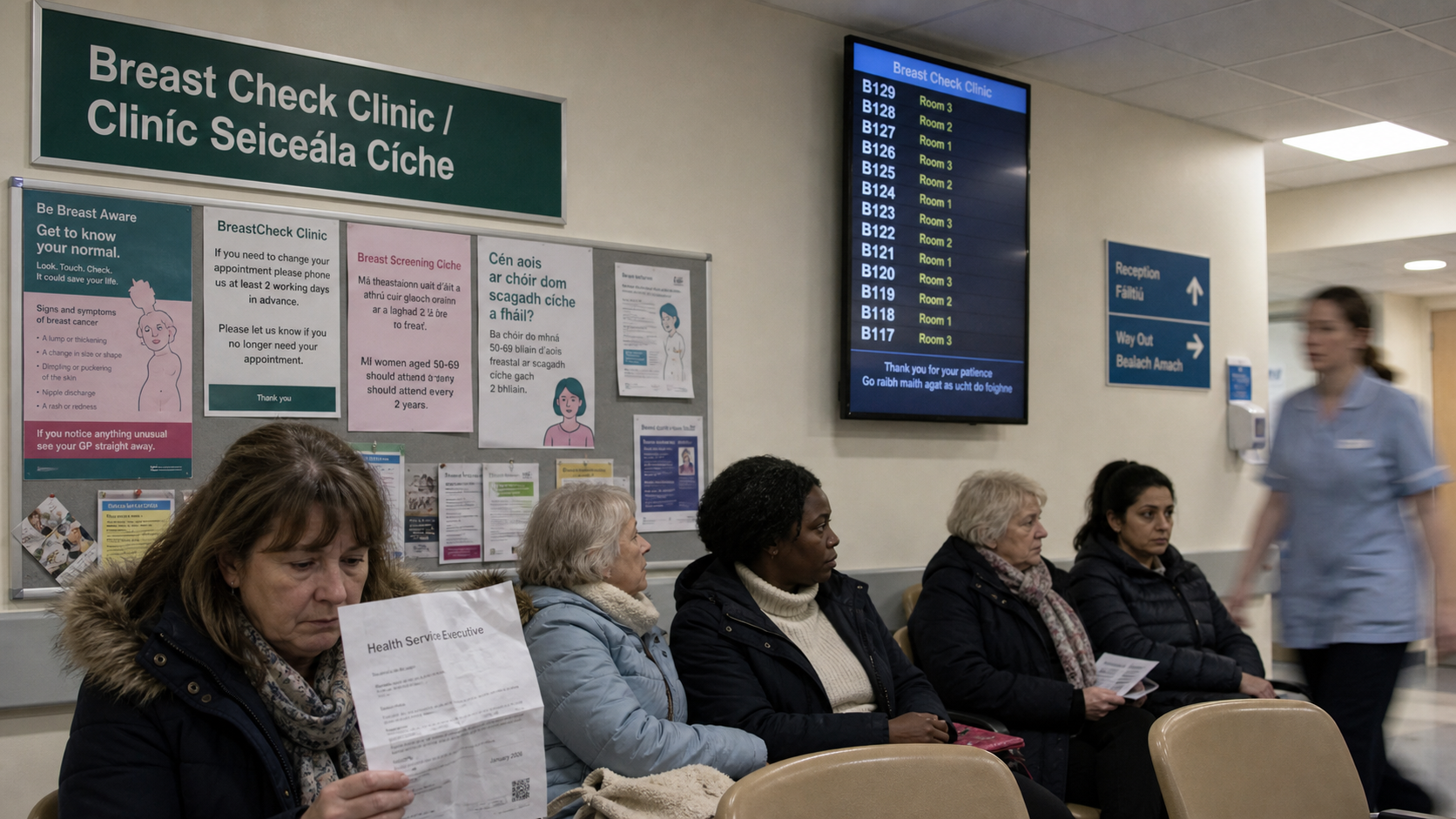
Breast Cancer Waiting Times Crisis: Over 3,000 Women Waiting More Than Ten Days for Urgent Appointments
More than 3,000 women in Ireland are waiting longer than ten days for urgent breast cancer appointments in 2026, despite national guidelines requiring that all women with suspected breast cancer be seen within ten working days of referral — a failure that cancer advocates describe as a serious patient safety issue that is causing unnecessary anxiety and, in some cases, delaying the diagnosis of cancers that are more treatable when caught early.
Background
Breast cancer is the most common cancer in women in Ireland, with approximately 3,500 new cases diagnosed each year. The ten-day target for urgent breast cancer referrals — known as the "rapid access" pathway — was introduced to ensure that women with symptoms suggestive of breast cancer are assessed quickly, reducing the anxiety of waiting and ensuring that any cancer present is diagnosed and treated as early as possible. Early diagnosis is the single most important factor in breast cancer outcomes: women diagnosed at stage one have a five-year survival rate of over 95 per cent, compared to less than 30 per cent for those diagnosed at stage four.
The ten-day target has never been consistently met across all breast cancer units in Ireland, but the scale of the current failure — more than 3,000 women waiting beyond the target in 2026 — represents a significant deterioration from previous years. The HSE's own performance data shows that the proportion of women seen within ten days has fallen from approximately 85 per cent in 2023 to around 70 per cent in the first half of 2026, a trend that cancer advocates describe as deeply alarming.
The causes of the deterioration are multiple and interconnected. The number of referrals to breast cancer units has increased significantly in recent years, driven by a combination of greater public awareness of breast cancer symptoms, the expansion of the BreastCheck screening programme, and the demographic ageing of the population. At the same time, the capacity of breast cancer units — in terms of consultant surgeons, radiologists, and specialist nurses — has not kept pace with demand, creating a structural imbalance that is unlikely to be resolved without significant investment.
Key Developments
The figures were published by the Journal.ie following a freedom of information request to the HSE, and have prompted immediate calls for action from cancer advocacy organisations and opposition politicians. The Irish Cancer Society described the waiting times as "unacceptable" and called for emergency investment in breast cancer services, including the recruitment of additional consultant surgeons and radiologists and the expansion of rapid access clinic capacity at hospitals across the country.
The HSE has acknowledged the waiting time issue and has indicated that it is working on a range of measures to address it, including the use of private hospital capacity to reduce waiting times at the most pressured units and the development of a new national breast cancer service plan that will set out a roadmap for improving capacity over the next five years. However, cancer advocates have argued that these measures are insufficient and that the scale of the problem requires a more urgent and comprehensive response.
Minister for Health Stephen Donnelly has been briefed on the figures and has indicated that he will be meeting with HSE officials in the coming days to discuss what additional measures can be taken. He has stopped short of committing to specific targets or timelines, a reticence that has frustrated advocacy groups who argue that the government needs to treat this as the patient safety emergency it is.
Why It Matters
The breast cancer waiting time crisis is not just a statistic — it represents 3,000 women and their families living with uncertainty and anxiety while they wait for an appointment that should have happened within ten days. For some of those women, the delay will make no clinical difference — their symptoms will turn out to be benign, and the wait, while stressful, will not affect their health outcomes. But for others, the delay may mean that a cancer that could have been caught at an early, highly treatable stage is instead diagnosed at a later stage, with significantly worse prognosis.
The ten-day target exists precisely because the medical evidence shows that delays in breast cancer diagnosis have real consequences for patient outcomes. A system that consistently fails to meet that target is not just failing its administrative obligations — it is failing its patients in a way that may cost lives.
Local Impact
The waiting time problem is not evenly distributed across the country. Units in the larger urban centres — the Mater Hospital and St Vincent's in Dublin, Cork University Hospital, University Hospital Galway — tend to have the longest waiting times, reflecting the concentration of referrals in areas with large populations. However, units in smaller regional hospitals are also under pressure, and women in rural areas who are referred to a distant unit face the additional burden of travel on top of the anxiety of waiting. The HSE's Sláintecare reform programme is supposed to address these geographic inequalities, but progress has been slow.
What's Next
The HSE is expected to publish an updated breast cancer service plan before the end of September 2026, setting out the measures it intends to take to reduce waiting times and improve capacity. The Irish Cancer Society has indicated that it will scrutinise the plan carefully and will hold the HSE and the government to account for its implementation. A Dáil debate on breast cancer waiting times is expected in the autumn, with opposition parties having already indicated that they will use the figures to press the government on its health service commitments.