Aughinish Alumina Under Pressure as Ireland Faces Calls to Back EU Sanctions on Russian Alumina Exports
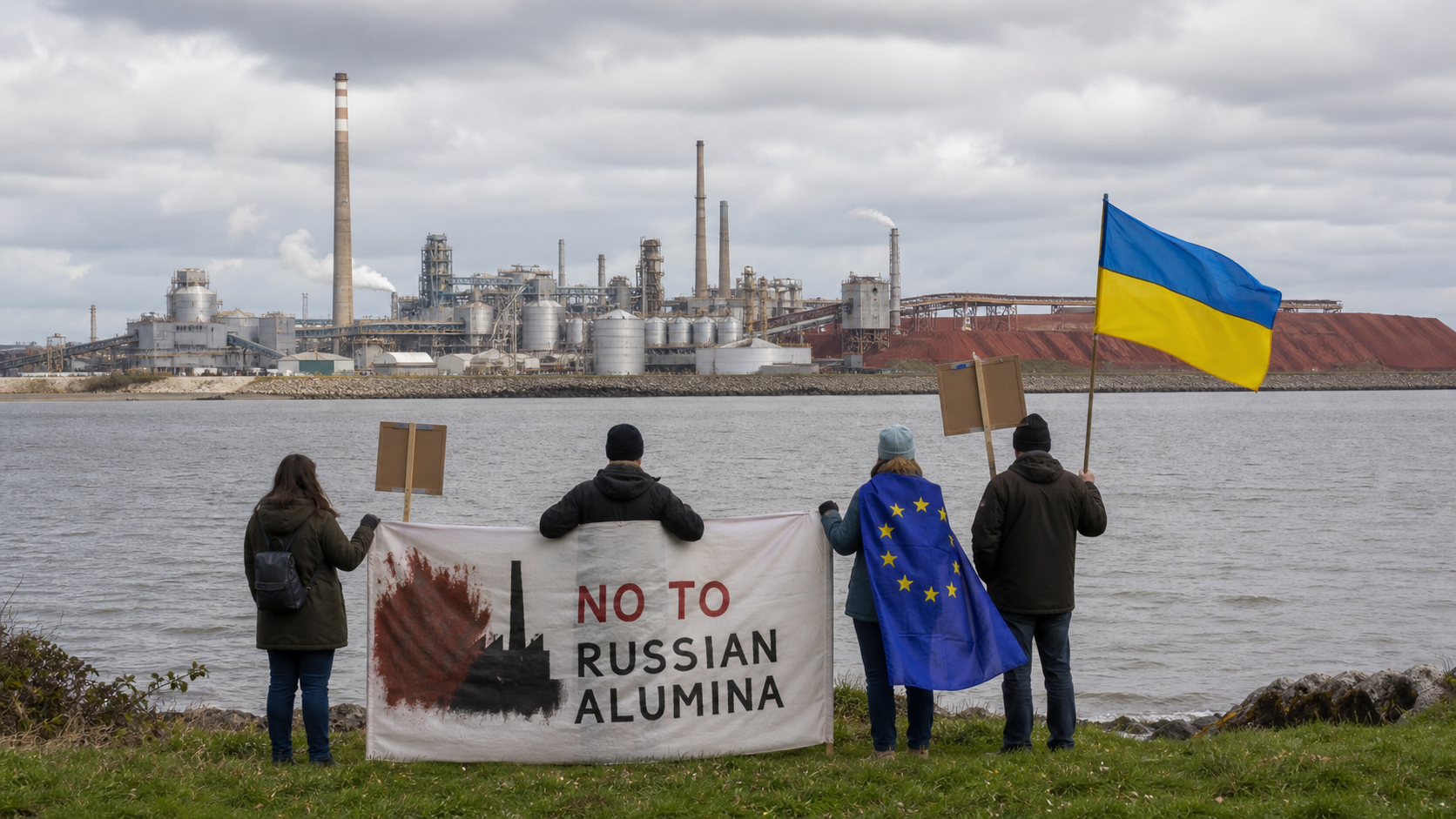
Ireland is facing mounting pressure from the European Parliament, Ukraine, and international NGOs to support EU sanctions on alumina exports to Russia, with investigations by the Organised Crime and Corruption Reporting Project linking output from the Aughinish Alumina refinery in County Limerick to Russian smelters that supply aluminium to defence manufacturers producing cruise missiles and aircraft engines. The Irish government, which holds the rotating EU Council Presidency, is conducting an internal review of the plant's operations while insisting it will work with the European Commission if sanctions are proposed.
Background
Aughinish Alumina, located on the Shannon Estuary in County Limerick, is Europe's largest alumina refinery and one of the most significant industrial facilities in Ireland. The plant, which employs several hundred people directly and supports many more jobs in the local supply chain, is a subsidiary of Rusal, the Russian metals giant controlled by oligarch Oleg Deripaska, who is subject to EU sanctions. The alumina produced at Aughinish — a white powder derived from bauxite ore — is shipped to Russian smelters, where it is processed into aluminium.
The controversy surrounding Aughinish has intensified since Russia's full-scale invasion of Ukraine in February 2022. Investigations by the OCCRP and other organisations have traced the supply chain from Aughinish through Russian smelters to intermediaries that supply aluminium to defence manufacturers producing military hardware, including cruise missiles and aircraft engines, that have been used in attacks on Ukrainian cities and civilian infrastructure. The alumina itself is not currently on the EU's list of sanctioned goods, and Aughinish is not itself a sanctioned entity, which means that the plant's exports to Russia are technically legal under current EU law.
The European Parliament passed a non-binding resolution in early July 2026 calling on the European Commission to implement a blanket ban on the sale of alumina to Russia. The resolution reflects growing frustration among MEPs with the regulatory gap that allows a product manufactured in an EU member state to contribute, however indirectly, to Russia's war effort. Ireland, as the current holder of the EU Council Presidency, is in a particularly sensitive position: it is responsible for facilitating the EU's legislative agenda, including any new sanctions measures, while also having a direct economic interest in the outcome of the debate.
Key Developments
The Irish government is conducting an internal review of the Aughinish Alumina plant's operations, examining the supply chain and the extent to which the plant's output can be traced to Russian military production. The review is being led by the Department of Enterprise, with input from the Department of Foreign Affairs and the Attorney General's office. The findings of the review are expected to inform Ireland's position in any future EU sanctions discussions.
Taoiseach Micheál Martin and Minister for Foreign Affairs Helen McEntee have both stated that Ireland will "work with" the European Commission if sanctions on alumina are proposed, while stopping short of endorsing such sanctions unilaterally. The government has been careful to avoid any action that might be seen as prejudging the outcome of the review or the EU-level discussions, but it has also been clear that it does not wish to be seen as supporting Russia's war effort.
Aughinish Alumina has consistently maintained that it operates in strict compliance with all EU laws, export controls, and trade regulations, and has provided warranties from Rusal asserting that the aluminium produced from its alumina is intended for civilian use. Critics argue that the lack of direct traceability — due to the blending of feedstock from multiple sources at Russian smelters — does not negate the moral or potential legal responsibility regarding the material's end use.
The Ukrainian government and international coalitions including B4Ukraine have formally demanded that the EU close the regulatory gap regarding alumina exports, and the pressure on Ireland to take a clear position has intensified as the EU Council Presidency has brought the country into the spotlight of European politics.
Why It Matters
The Aughinish controversy matters because it exposes the tension between Ireland's economic interests and its stated commitment to European solidarity and the rule-based international order. The plant is a significant employer in a region — the Shannon Estuary — that has historically been dependent on large industrial facilities, and the prospect of its closure or significant disruption is a genuine concern for the workers and communities involved. But the evidence linking Aughinish's output to Russia's military production is sufficiently compelling that it cannot be dismissed, and Ireland's position as EU Council President makes it impossible to avoid the question. The government's internal review is a necessary step, but it will only be credible if it is genuinely independent and if its findings are acted upon, whatever they reveal. Ireland cannot credibly champion European values and the rule of law while allowing a product manufactured on its soil to contribute to the killing of Ukrainian civilians.
Local Impact
The Aughinish Alumina plant is one of the largest employers in County Limerick, and its potential closure or disruption would have a significant impact on the local economy. The plant employs several hundred people directly, and many more jobs in the local supply chain — transport, maintenance, catering, and professional services — depend on its continued operation. The communities of Askeaton, Foynes, and the wider Shannon Estuary area have a direct stake in the outcome of the sanctions debate, and local politicians from all parties have been careful to acknowledge the economic concerns of workers and their families while also recognising the moral dimensions of the issue. The Shannon Estuary is also the site of significant renewable energy development, and the long-term economic future of the region does not depend solely on Aughinish — but the transition to a post-Aughinish economy, if it comes, will require careful planning and significant public investment.
What's Next
The Irish government's internal review of Aughinish Alumina's operations is expected to be completed before the end of the summer, with the findings informing Ireland's position in any EU sanctions discussions. The European Commission is expected to publish a proposal for new sanctions measures in the autumn, which will include a decision on whether to add alumina to the list of sanctioned goods. Ireland's position on that proposal will be closely watched by its EU partners, by Ukraine, and by the workers and communities of the Shannon Estuary. The Dáil is expected to debate the issue when it returns from summer recess in September.