Atlanta Braves Own Baseball's Best Record at 24-10, Powered by Acuña's Return and a Dominant Rotation
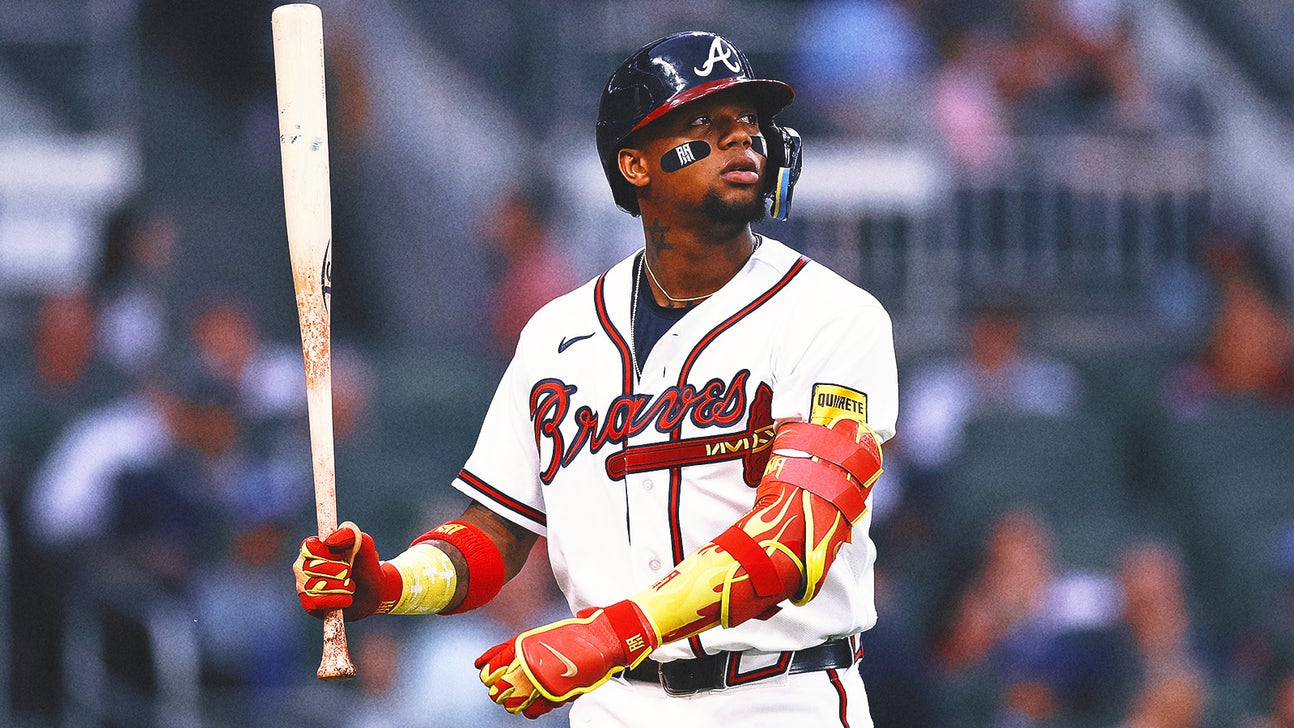
The Atlanta Braves have established themselves as the clear class of Major League Baseball through the first month of the 2026 season, posting a 24-10 record and a plus-76 run differential that no other team in the sport comes close to matching. Ronald Acuña Jr., fully recovered from the torn ACL that cost him most of 2024, is playing at an MVP level, and a starting rotation anchored by Spencer Strider and Chris Sale has allowed the fewest runs in the National League — a combination that has the Braves looking like the most complete team in baseball.
Background
The Braves entered 2026 with championship expectations after winning the NL East in four of the previous five seasons. The 2025 campaign was disrupted by Acuña's knee injury, which limited him to 60 games and robbed Atlanta of its most dynamic offensive weapon. The Braves still won 88 games but fell short of the division title for the first time since 2020. General Manager Alex Anthopoulos responded by adding veteran depth to the rotation and bullpen while betting that Acuña's return would restore the team's offensive ceiling.
That bet has paid off spectacularly. Acuña, 28, is hitting .318 with nine home runs and 28 RBI through 34 games, with a stolen base total that already ranks among the NL leaders. His presence in the lineup has unlocked the offensive potential of the players around him — Matt Olson, Ozzie Albies, and Austin Riley — who are all posting above-average numbers in a lineup that opposing pitchers have no easy outs against.
Key Developments
The Braves' plus-76 run differential through 34 games is historically exceptional. For context, the 2022 Los Angeles Dodgers — widely considered one of the best teams of the modern era — posted a plus-334 run differential over a full 162-game season, which works out to roughly plus-70 through 34 games. Atlanta is on pace to challenge that benchmark.
The starting rotation has been the foundation of the team's success. Spencer Strider, who missed most of 2024 with an elbow injury of his own, has returned with his velocity fully restored, posting a 2.1 ERA through six starts. Chris Sale, 37, is pitching with the efficiency of a man who knows exactly how many bullets he has left, generating weak contact and limiting walks at a rate that ranks among the NL's best. The bullpen, anchored by closer Raisel Iglesias, has converted 18 of 20 save opportunities.
Recent results underscore the team's dominance. The Braves defeated the Colorado Rockies 8-6 on May 1, extending a winning streak that has seen Atlanta go 14-4 over its last 18 games. The New York Yankees, at 22-11, are the only team in baseball with a comparable record, but their plus-57 run differential trails Atlanta's by nearly 20 runs.
Why Americans Should Care
The Braves' dominance has implications for baseball fans across the Southeast and nationally. In Atlanta, Truist Park has been selling out regularly for the first time since the 2021 World Series run, with attendance up 18% compared to the same period in 2025. For fans in Georgia, South Carolina, Tennessee, and Alabama — the Braves' traditional regional footprint — the team's success is driving record merchandise sales and television ratings on Bally Sports South. The NL East race, which appeared competitive entering the season, has effectively been decided by early May: the Philadelphia Phillies and New York Mets trail Atlanta by six and seven games respectively, and the Braves' run differential suggests the gap will only widen. The question for baseball fans nationally is whether Atlanta can sustain this pace over 162 games — and whether any team in the NL can mount a genuine challenge in October.
Why It Matters
The Braves' start raises a fundamental question about competitive balance in Major League Baseball. Unlike the NFL, which uses a hard salary cap to compress the gap between teams, MLB operates with a luxury tax threshold that functions more as a speed bump than a genuine constraint for large-market teams. Atlanta, however, is not a large-market team by traditional measures — the Braves' payroll ranks 12th in the league, well below the Yankees, Dodgers, and Mets. Their success reflects superior player development and roster construction rather than financial dominance, a model that mirrors the Oakland Athletics' Moneyball era of the early 2000s and the Tampa Bay Rays' sustained competitiveness on a fraction of the Yankees' budget. If the Braves win the World Series in 2026, it will reinforce the argument that smart roster construction can overcome financial disadvantages — a message with implications for how fans and analysts evaluate team-building strategies across professional sports.
What's Next
The Braves host the San Francisco Giants for a three-game series beginning Monday, May 4, before traveling to face the Chicago Cubs — the NL Central leaders at 21-12 — for a marquee interleague series later in the week. The NL East standings will be worth monitoring as the Phillies and Mets attempt to close the gap before the All-Star break in mid-July. Acuña's health remains the most important variable: if he stays on the field, Atlanta's rotation depth and offensive firepower make the Braves the clear favorite to represent the National League in the World Series.
Sources: Baseball Reference; MLB.com; ESPN