Spirit Airlines Shuts Down After Failed Government Bailout, Stranding Thousands of Passengers
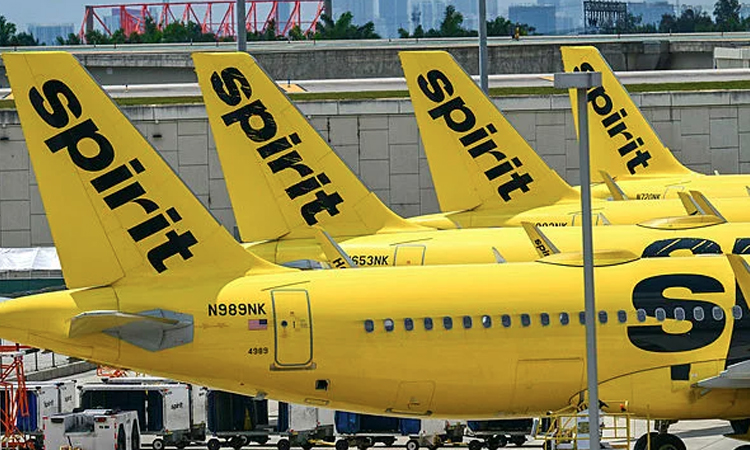
Spirit Airlines, the bright-yellow budget carrier that made air travel accessible to millions of Americans for 34 years, went dark at 3 a.m. ET on Saturday, May 2, 2026. A last-ditch attempt to secure a $500 million government rescue collapsed when bondholders rejected the proposal, triggering an immediate shutdown that stranded passengers at airports from Fort Lauderdale to LaGuardia and eliminated roughly 17,000 jobs overnight.
Background
Spirit's collapse was years in the making. The Fort Lauderdale-based carrier had not posted a profit since 2019, losing more than $2.5 billion between 2020 and its first bankruptcy filing in 2024. A second bankruptcy followed in August 2025. The airline's ultra-low-cost model — charging rock-bottom base fares while layering on fees for carry-on bags, seat selection, and snacks — attracted price-sensitive travelers but generated thin margins that left no cushion against external shocks.
A proposed acquisition by JetBlue Airways, which could have provided a lifeline, was successfully blocked by the Biden Justice Department on antitrust grounds in 2023. An engine defect that grounded a significant portion of Spirit's fleet in 2025 compounded the financial strain. By early 2026, soaring jet fuel prices driven by Iran's blockade of the Strait of Hormuz had pushed the airline's operating costs beyond any viable recovery path.
Key Developments
Spirit's CEO publicly attributed the shutdown to the surge in oil prices caused by the Iran conflict, which has driven jet fuel to its highest levels since the war began on February 28, 2026. Department of Transportation Secretary Sean Duffy disputed that framing, arguing that Spirit's low-cost model was already failing long before the conflict began and that the airline had failed to restructure aggressively enough during its initial bankruptcy.
The shutdown unfolded with striking speed. Spirit canceled all international flights on Thursday, May 1, to prevent aircraft and crews from being stranded abroad. By Saturday morning, kiosks at LaGuardia's Marine Air Terminal and Orlando International Airport displayed shutdown notices. Pilots signed off over aircraft radios with emotional farewells. Customer service lines went dark.
Major carriers moved quickly to absorb displaced passengers. United Airlines rebooked 14,000 Spirit customers on Saturday alone. Southwest Airlines flew more than 20,000 stranded Spirit passengers by late afternoon. American, Delta, JetBlue, and Frontier all capped fares at roughly $200 on high-volume Spirit routes. Several carriers also opened dedicated job portals for Spirit's 17,000 displaced employees, including pilots, flight attendants, mechanics, and ground crews.
Spirit announced automatic refunds for tickets purchased directly with a credit or debit card. The Department of Transportation confirmed the airline maintained a reserve fund for those refunds. Travelers who booked through third-party platforms were directed to contact their point of purchase or pursue credit card chargebacks.
Why Americans Should Care
Spirit's collapse hits hardest in the markets it dominated: Florida, the Caribbean corridor, and Latin American routes where the airline held significant market share. Fort Lauderdale-Hollywood International Airport, Spirit's primary hub, faces an immediate reduction in seat capacity that will push fares higher on routes to cities including Orlando, Tampa, Atlanta, and Chicago. Travelers in smaller markets — particularly in the Southeast and Midwest — who relied on Spirit's sub-$100 fares to visit family or take budget vacations will feel the pinch most acutely.
The 17,000 job losses ripple through communities in Florida, Texas, and New Jersey, where Spirit maintained major operational bases. Aviation workers' unions, including the Association of Flight Attendants-CWA, are pressing the Transportation and Labor Departments to ensure employees receive earned wages, vacation pay, and a $600 weekly federal supplement to state unemployment benefits. Congress faces pressure to examine whether the government's antitrust intervention in the JetBlue merger accelerated the airline's demise.
Why It Matters
Spirit's shutdown marks the end of an era for ultra-low-cost aviation in the United States. The carrier was a genuine pioneer — it proved that Americans would accept stripped-down service in exchange for dramatically lower fares, a model that forced legacy carriers to create their own basic economy tiers. Its disappearance reduces competitive pressure on routes where it operated, and history suggests that when a low-cost carrier exits a market, fares rise within months.
The collapse also exposes the structural fragility of the ultra-low-cost model in an era of geopolitical volatility. European carriers like Ryanair and Wizz Air have survived similar fuel shocks through aggressive hedging and leaner cost structures, but Spirit's repeated bankruptcies suggest it never achieved the operational discipline required. The episode mirrors the 2008 collapse of ATA Airlines and Aloha Airlines during the last major fuel spike, when a dozen carriers folded within months of each other. Frontier Airlines, JetBlue, Breeze Airways, and Southwest are now positioned to bid on Spirit's airport slots and routes through the bankruptcy process — a consolidation that will reshape the budget travel landscape for years.
What's Next
Spirit's assets — including valuable airport slots at congested hubs and its fleet of Airbus A320-family aircraft — will move through bankruptcy proceedings. Frontier Airlines and JetBlue, both of which previously attempted mergers with Spirit, are considered leading bidders. Breeze Airways and Southwest have also been identified as potential acquirers of specific route packages. The Department of Transportation will monitor fare changes on former Spirit routes and has signaled it will act if carriers exploit the reduced competition. Congress is expected to hold hearings on the shutdown's impact on aviation workers and the adequacy of the existing bankruptcy safety net for airline employees.
Sources: CNBC; AP News; CBS News; The New York Times