Stormont Petition of Concern Row: Alliance and DUP Clash Over Assembly Veto Mechanism Reform
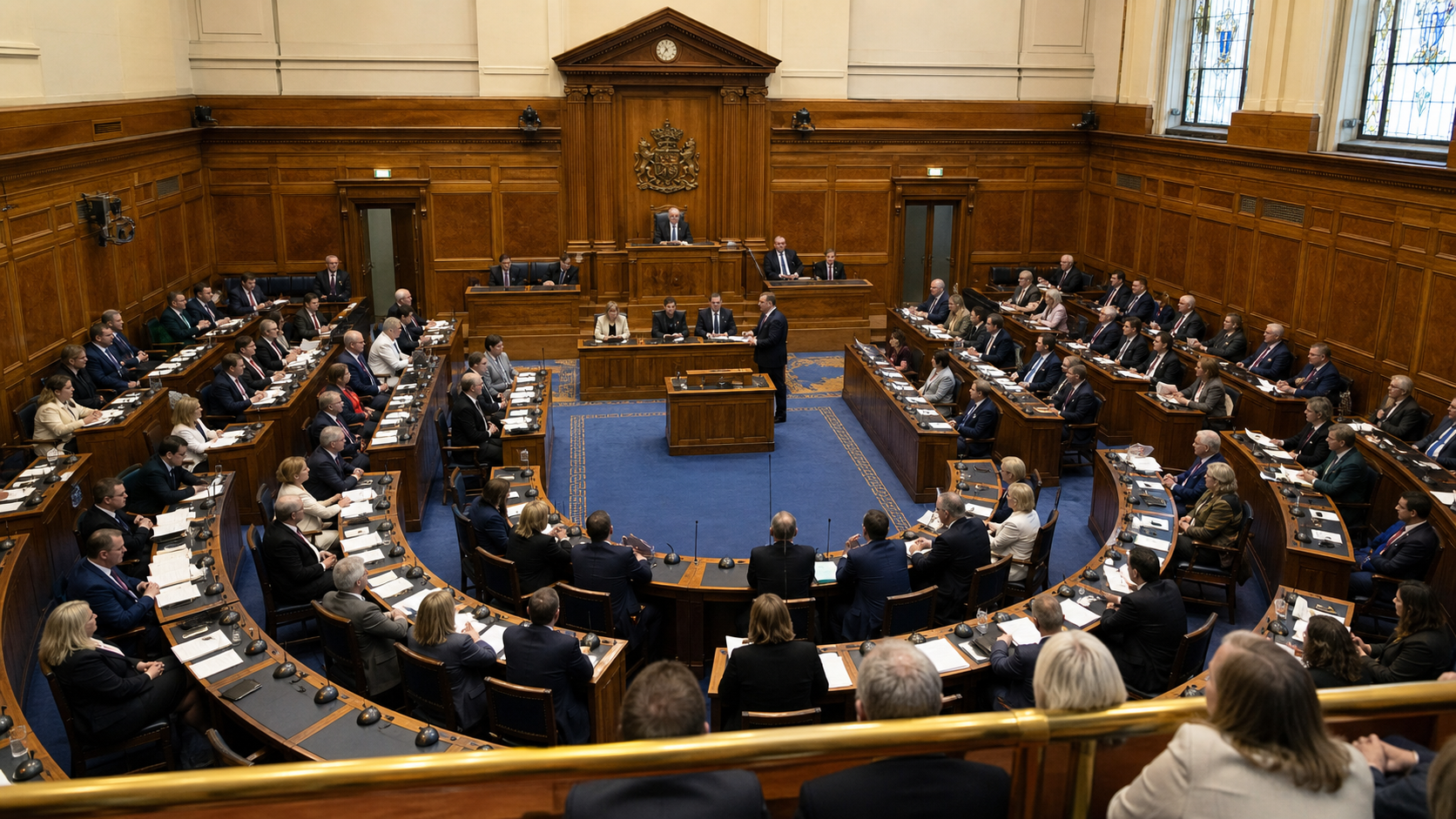
The DUP and Alliance Party have clashed sharply at Stormont over proposed reforms to the Assembly's petition of concern mechanism, with Alliance arguing the veto tool is being systematically misused to block progressive legislation and the DUP insisting it remains an essential safeguard for unionist interests within the power-sharing institutions.
Background
The petition of concern is one of the most distinctive and controversial features of the Stormont Assembly. Introduced under the Good Friday Agreement as a mechanism to protect minority community interests, it allows a bloc of 30 MLAs to require that any vote be passed on a cross-community basis. The mechanism was designed to prevent either community from using its numerical majority to override the fundamental interests of the other.
In practice, however, it has been used far more broadly than its architects intended, with parties invoking it to block legislation on issues ranging from same-sex marriage to abortion rights — matters that many argue have nothing to do with the cross-community protections the mechanism was designed to provide. The growth of the Alliance Party, which designates as "other" rather than unionist or nationalist, has added a new dimension to the debate, as Alliance MLAs cannot sign a petition of concern despite the party commanding significant electoral support.
The debate has intensified in recent weeks following the publication of a detailed reform proposal by Alliance, which has argued that the mechanism must be restricted to matters that genuinely engage cross-community interests. The proposal has been welcomed by civil society organisations and legal experts but has drawn fierce opposition from the DUP, which sees any reform as an attack on unionist protections within the institutions.
Key Developments
Alliance leader Naomi Long argued at Stormont this week that the petition of concern has been "weaponised" to block legislation that has nothing to do with community relations, pointing to its use to block marriage equality legislation as a prime example of the mechanism being deployed for purposes that were never intended. Long called for a cross-party working group to develop reform proposals that could command broad support.
DUP Assembly leader Paul Frew responded by accusing Alliance of seeking to "dismantle the protections that make power-sharing work," arguing that the petition of concern is a fundamental element of the constitutional architecture underpinning the Good Friday Agreement. Frew insisted that any reform would require the agreement of all major parties and could not be imposed unilaterally.
Sinn Féin and the SDLP have both indicated cautious support for reform, while the Ulster Unionist Party has called for a measured approach that preserves the mechanism's core function while addressing its misuse. The TUV has opposed any reform, arguing that the petition of concern is one of the few remaining safeguards for unionist interests in a system it regards as fundamentally flawed.
Why It Matters
The petition of concern debate reflects fundamental questions about the nature of power-sharing in Northern Ireland and the balance between community protection and democratic accountability. The mechanism was designed for a specific political context that has changed significantly in the 28 years since the Good Friday Agreement was signed. The growth of cross-community parties like Alliance has created a situation in which a significant proportion of the electorate is represented by MLAs who have no access to a mechanism that gives smaller unionist and nationalist parties disproportionate influence over Assembly business.
At the same time, the DUP's argument that the petition of concern provides an essential safeguard for unionist interests is not without merit. The history of Northern Ireland is one in which minority communities have had legitimate reasons to fear being outvoted on matters of fundamental importance to their identity and way of life. Any reform must take seriously the need to maintain genuine protections for both communities while addressing the mechanism's documented misuse.
The two governments have signalled their interest in the reform debate, and it is expected to feature prominently in the broader discussions about the future of the Stormont institutions that are currently underway. The outcome of those discussions will have significant implications for the long-term stability and effectiveness of Northern Ireland's devolved government.
Local Impact
For communities across Northern Ireland, the petition of concern debate can seem remote from the practical challenges of daily life. But the mechanism's use has real consequences. The blocking of marriage equality legislation through the petition of concern meant that same-sex couples in Northern Ireland were denied rights that their counterparts in the Republic of Ireland and Great Britain had already secured. The eventual extension of marriage equality to Northern Ireland came not through the Assembly but through Westminster legislation, a fact that many see as an indictment of the petition of concern's misuse.
In Belfast, Derry, Newry, and communities across the six counties, there is a widespread desire for an Assembly that functions effectively and delivers for all its citizens. The petition of concern debate is ultimately about whether the Assembly can be reformed to meet that aspiration while maintaining the cross-community protections that are essential to the peace process.
What's Next
Alliance has indicated it will bring its reform proposal to a formal Assembly debate in the autumn, forcing all parties to take a public position on the issue. The two governments are expected to engage with the reform debate as part of their broader discussions about the future of the Stormont institutions. A cross-party working group on Assembly reform is expected to be established before the end of 2026, with a report due in the first half of 2027. The issue is likely to feature prominently in the next Stormont plenary session.