Aer Lingus Faces Turbulent Autumn as 500 Job Cuts and Route Closures Signal Deepening Crisis
Aer Lingus is planning to cut up to 500 jobs and significantly reduce its route network — including the termination of transatlantic services to Denver, Las Vegas, Minneapolis, and Split — as parent company International Airlines Group demands that the Irish carrier improve its operating margin to the 12-15% range required by the group, following a first half of 2026 in which the airline reported a net loss of €34 million.
Background
Aer Lingus has been Ireland's national carrier for more than eight decades, and its role in connecting the island to the world — particularly through its transatlantic network, which leverages Dublin Airport's US Preclearance facility — has made it a strategically important institution as well as a commercial enterprise. The airline was acquired by International Airlines Group, the parent company of British Airways and Iberia, in 2015, and has since operated as part of a larger European aviation group with its own financial targets and performance expectations.
The first half of 2026 has been difficult for Aer Lingus. The airline reported a loss of €103 million in the first quarter, which was partially offset by a second-quarter profit of €69 million, resulting in a net loss of €34 million for the six-month period. The losses have been driven by a combination of factors: rising fuel costs linked to the US-Iran conflict, heightened competition on North Atlantic routes from major US carriers, and the ongoing costs of a labour dispute that has strained relations between management and the airline's unions.
IAG has made clear that it expects Aer Lingus to achieve an operating margin of 12-15%, a target that the airline's current cost structure makes difficult to meet without significant restructuring. The group's intervention has been characterised by unions as an imposition of financial targets that prioritise shareholder returns over the welfare of workers and the strategic interests of the Irish state.
Key Developments
The restructuring plan announced by Aer Lingus management includes the elimination of up to 500 jobs across the airline's operations, the termination of services from Dublin to Denver, Las Vegas, Minneapolis, and Split, and the conversion of several other routes to seasonal, summer-only service. The planned changes follow the earlier closure of the airline's Manchester base, which was itself a significant operational retreat.
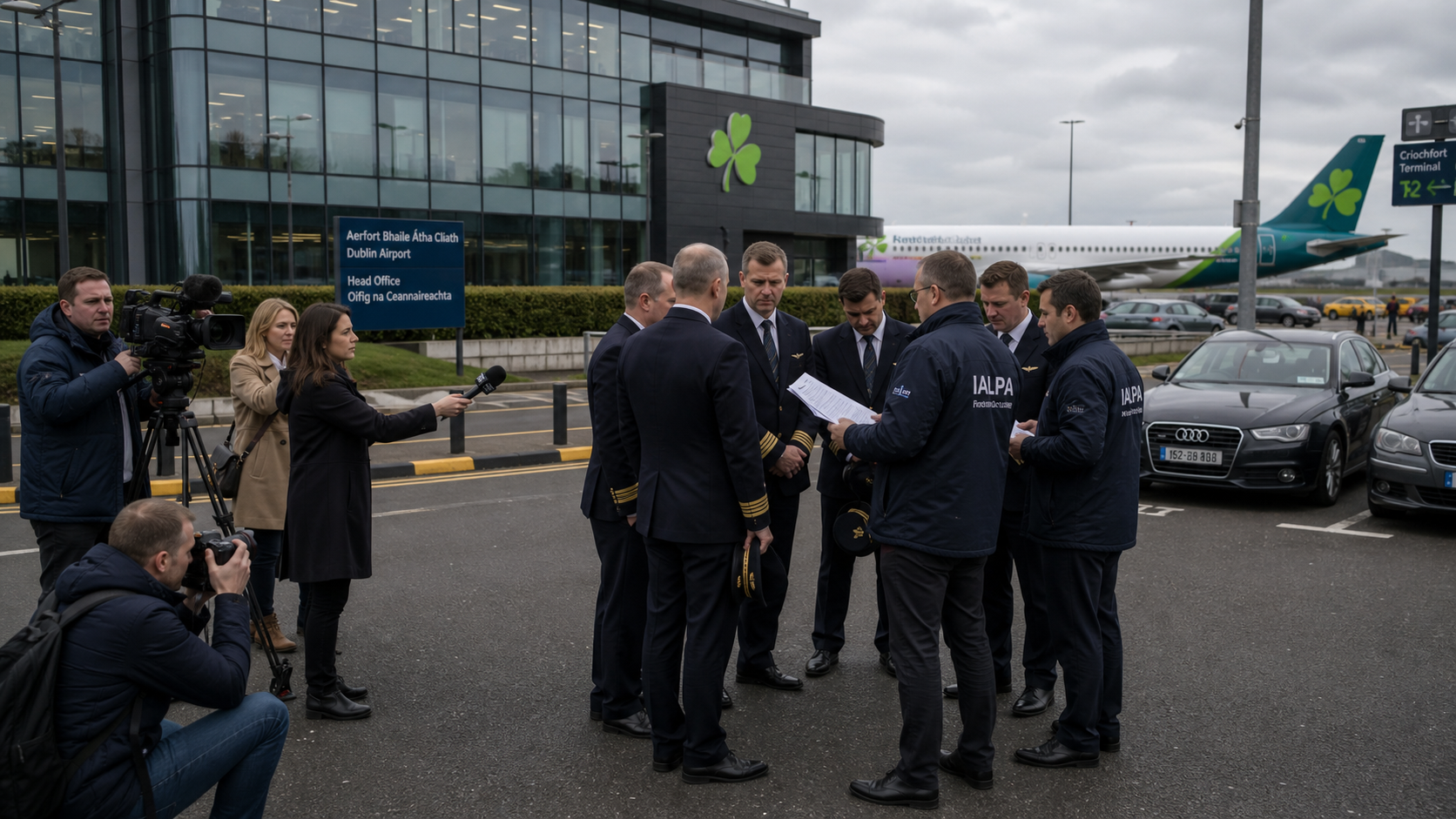
Unions, including Fórsa and the Irish Air Line Pilots' Association, have reacted with fury. Ialpa president Capt. Daniel Langan described the cuts as "corporate greed," arguing that Aer Lingus already outperforms many European carriers and that the strategic necessity of the recent cuts — particularly the closure of the profitable Manchester operations — is far from clear. Fórsa has called on the government to intervene, arguing that the restructuring threatens the airline's long-term viability as a national carrier and the jobs of hundreds of Irish workers.
The government has been cautious in its public response, acknowledging the airline's financial difficulties while stopping short of direct intervention. The Department of Transport has indicated that it is monitoring the situation closely and is in contact with Aer Lingus management, but ministers have been reluctant to be drawn into what they characterise as a commercial dispute between the airline and its parent company.
Why It Matters
Aer Lingus is not simply a commercial airline — it is a critical piece of Ireland's economic infrastructure. The transatlantic routes that are now under threat are not just convenient for holidaymakers; they are essential for the multinational companies that have made Ireland their European base and that depend on direct air connections to the United States for their operations. The loss of routes to Denver, Las Vegas, and Minneapolis would reduce Ireland's connectivity to key US markets and potentially make the country a less attractive location for foreign direct investment.
The job cuts, meanwhile, will have a direct impact on hundreds of families across Dublin and the wider country. Aviation is a high-skill, well-paid sector, and the loss of 500 positions would be a significant blow to the labour market. The broader question of whether IAG's ownership of Aer Lingus is compatible with the airline's role as a national carrier — a question that has been raised periodically since the acquisition — is likely to become more pressing as the restructuring unfolds.
Local Impact
The impact of the restructuring will be felt most acutely at Dublin Airport, where the majority of Aer Lingus's operations are based. The termination of transatlantic routes will reduce the number of flights operating through the airport and will have knock-on effects on the businesses — ground handlers, caterers, retailers — that depend on airport traffic. The Dublin Airport Authority has expressed concern about the impact of the route cuts on the airport's long-term growth plans, which are predicated on continued expansion of transatlantic connectivity. In Cork, where Aer Lingus also operates, the restructuring is expected to have a more limited but still significant impact on the local aviation economy.
What's Next
Formal consultation with unions on the proposed job cuts is expected to begin in the coming weeks, with the process governed by Irish employment law requirements for collective redundancies. The route terminations are planned for the autumn of 2026, with the affected services expected to cease by October. The government is expected to engage more directly with IAG and Aer Lingus management in the coming weeks, and there is speculation that the Oireachtas transport committee may hold hearings on the restructuring. The Labour Court may also become involved if the union consultation process fails to produce an agreed outcome.