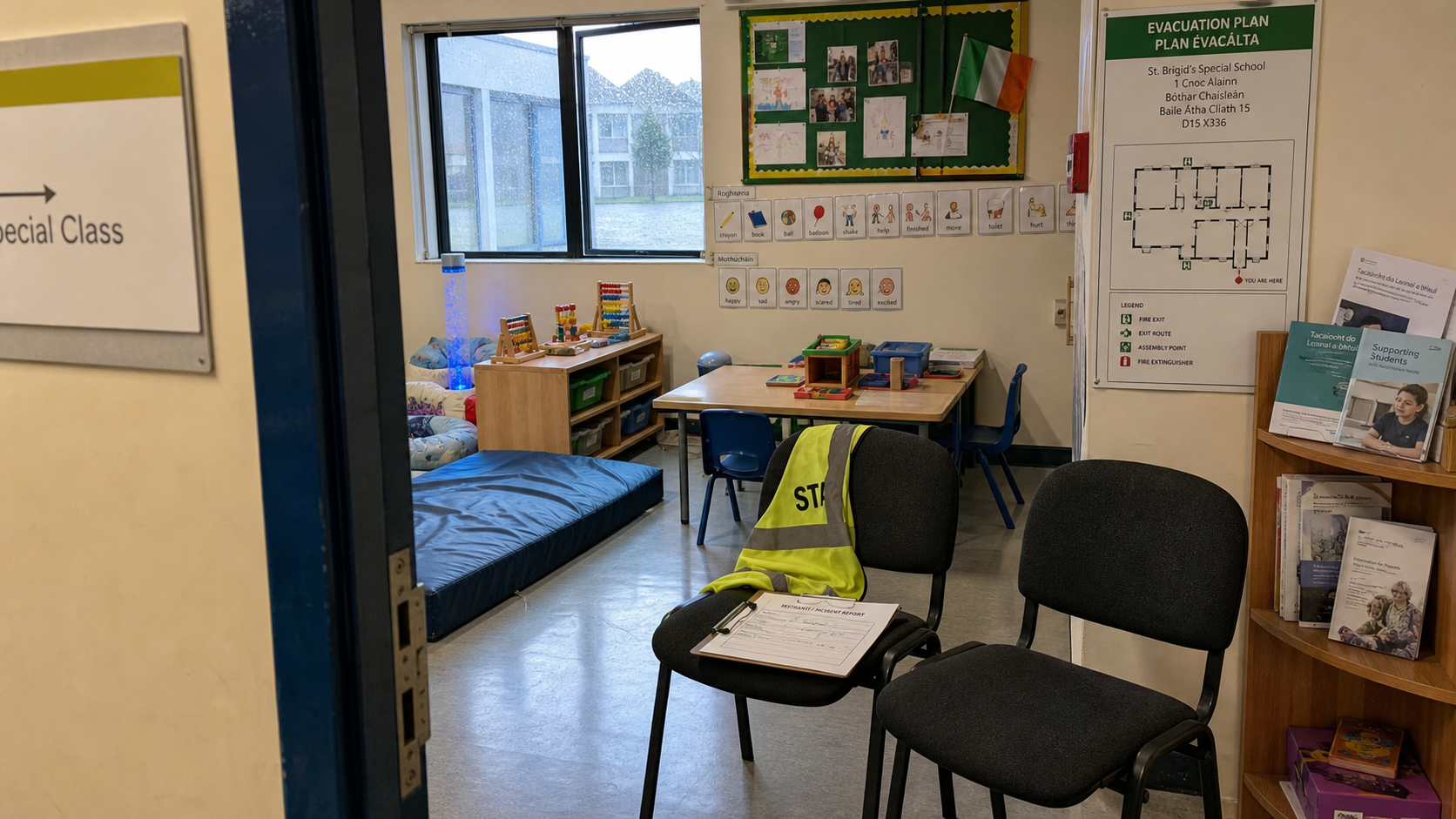
850 Instances of Physical Restraint in Irish Special Schools Since September as Crisis Deepens
There have been 850 instances of children in crisis being physically restrained in Irish special schools since last September, with 90 per cent of those restrained having special educational needs — figures that have prompted urgent calls for investment in therapeutic supports, a review of staff training, and a fundamental rethink of how the Irish education system supports children with the most complex needs.
Background
Physical restraint in schools — the use of physical force to restrict a child's movement in response to a crisis situation — is one of the most sensitive and contested issues in special education. When used appropriately, as a last resort to prevent a child from harming themselves or others, it can be a necessary and legitimate intervention. When used inappropriately, or as a substitute for adequate therapeutic support, it can be traumatic for the child, damaging to the therapeutic relationship, and potentially harmful to the staff involved.
Ireland does not have specific legislation governing the use of physical restraint in schools. The Department of Education has issued guidance on the matter, but the guidance is not legally binding and its implementation varies significantly between schools. The absence of a clear legal framework has been criticised by advocacy groups, who argue that it leaves children vulnerable to inappropriate use of restraint and makes it difficult to hold schools accountable when restraint is used in ways that are not consistent with best practice.
The figures published by the Irish Examiner — 850 instances of restraint in special schools since September 2025, with 90 per cent involving children with special educational needs — are the most comprehensive data yet published on the scale of the issue. They suggest that restraint is being used far more frequently than previously acknowledged, and that the children most affected are those who are already among the most vulnerable in the education system.
Key Developments
The data reveals that the 850 instances of restraint occurred across a range of special school settings, including schools for children with autism, intellectual disabilities, and emotional and behavioural difficulties. The frequency of restraint in some schools suggests that it is being used not as a last resort but as a routine response to challenging behaviour — a practice that is inconsistent with best practice guidance and that raises serious questions about the adequacy of the therapeutic supports available to these children.
Advocacy groups have called for an urgent review of the use of restraint in Irish schools, including the introduction of mandatory reporting requirements, independent oversight of restraint incidents, and a significant increase in the availability of therapeutic supports — including occupational therapy, speech and language therapy, and psychology services — that can address the underlying causes of challenging behaviour before it reaches crisis point.
The National Council for Special Education has acknowledged the issue and has indicated it is expanding its Educational Therapy Service, which provides occupational therapists and speech and language therapists to special schools. However, advocates say the expansion is too slow and too limited to address the scale of the problem, and that the fundamental issue — a chronic shortage of therapeutic professionals in the Irish education system — will not be resolved without a significant increase in training places and salaries for these professionals.
Why It Matters
The use of physical restraint in schools is a human rights issue as well as an educational one. Children with special educational needs have the same rights as all other children to be educated in an environment that is safe, supportive, and conducive to their development. When restraint is used as a routine response to challenging behaviour, rather than as a genuine last resort, it signals a failure of the system to provide the supports that these children need — and it can cause lasting psychological harm to children who are already among the most vulnerable in society.
The figures also raise questions about the wellbeing of the staff who are required to carry out restraints. Physical restraint is a stressful and potentially dangerous intervention for the staff involved, and the frequency with which it is being used in some schools suggests that staff are being placed in situations that they are not adequately trained or supported to manage. The unions representing special school staff have called for mandatory training in positive behaviour support and for a significant reduction in class sizes to allow staff to provide the individualised support that children with complex needs require.
Local Impact
The impact of the restraint crisis is felt most directly by the children and families involved. For a child with autism or an intellectual disability, being physically restrained can be a deeply traumatic experience that undermines their trust in the adults who are supposed to support them and that can trigger a cycle of escalating behaviour. For families, the knowledge that their child has been restrained at school is a source of enormous distress and often of anger — particularly when they feel that the restraint could have been avoided with better support. Parent advocacy groups across Ireland have been sharing their experiences and calling for systemic change, and their voices are beginning to be heard at a political level.
What's Next
The Department of Education is expected to publish a review of its guidance on physical restraint in schools before the end of the year, following the publication of the Irish Examiner's data. The review is expected to include consultation with schools, advocacy groups, and therapeutic professionals. The Dáil's education committee has indicated it will hold hearings on the issue in September, with a particular focus on the adequacy of therapeutic supports in special schools and the training available to staff. The NCSE has been asked to provide a detailed breakdown of restraint incidents by school type and region, which will allow for a more targeted response to the areas of greatest need.