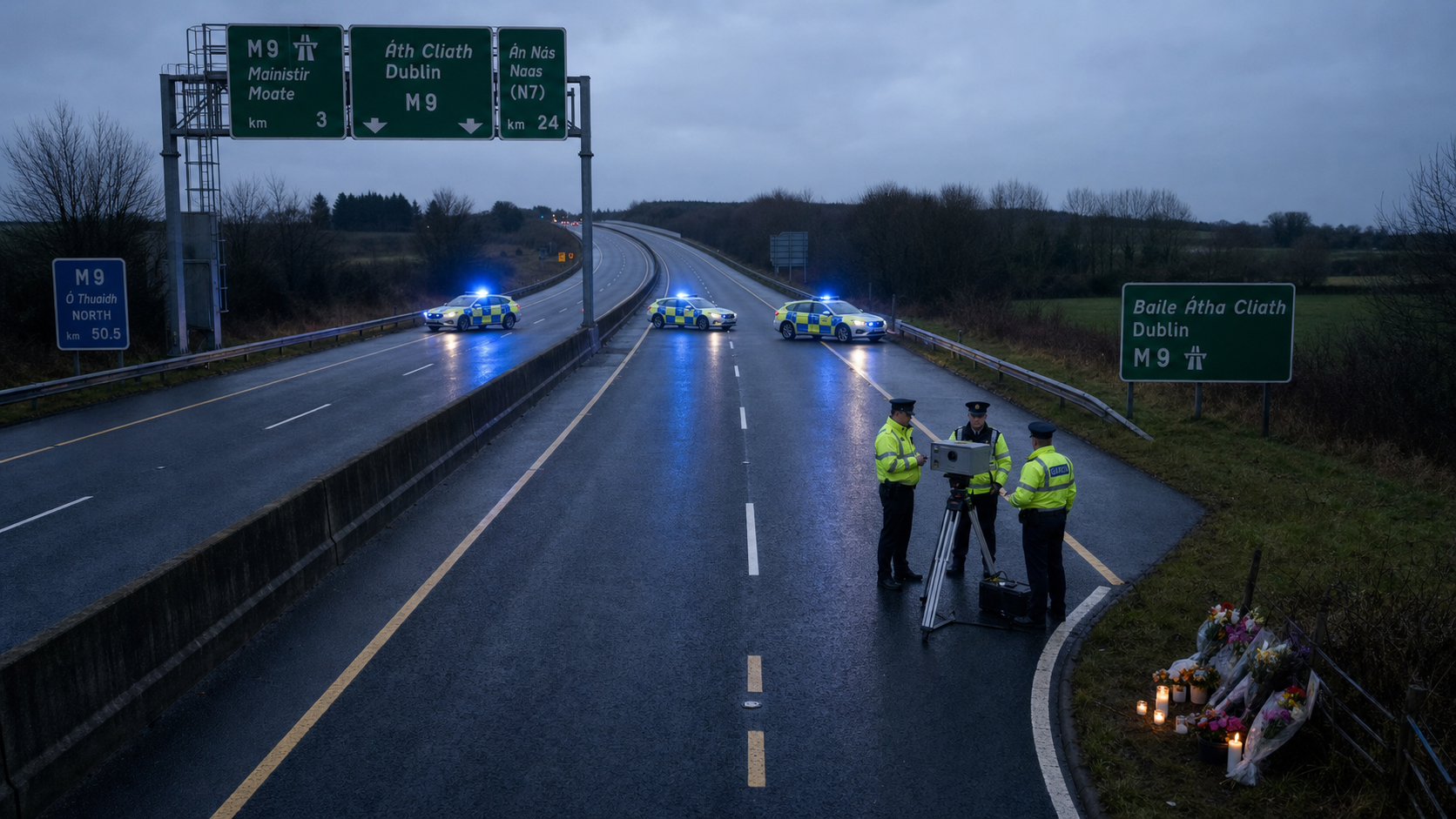
Wrong-Way Driving 'Out of Control' as 32% Rise in Incidents Detected and Garda Pursuit Training Accelerated
Ireland has recorded a 32% rise in detected wrong-way motorway driving incidents in 2026, with the Garda Commissioner warning that reckless drivers are speeding the wrong way down motorways for "social media likes" in a trend that has claimed five young lives in the M9 crash last week and left a Carlow family fighting for their lives. The crisis has prompted calls for legislative action, accelerated Garda pursuit training, and renewed pressure on social media platforms to remove content glorifying dangerous driving.
Background
Wrong-way driving on Irish motorways is not a new phenomenon, but the scale and frequency of incidents in 2026 has reached a level that the Garda Commissioner has described as "out of control." The trend has been driven in significant part by a subculture of young people — often in stolen vehicles — who film themselves driving at high speed in the wrong direction on motorways and post the footage to TikTok and other platforms, where it can accumulate hundreds of thousands of views.
Professor Mary Aiken, a forensic cyberpsychologist who has studied the phenomenon, has described it as a "hybrid" behaviour in which the act of driving recklessly and the act of filming it for social media are inseparable. The desire for peer validation and online notoriety creates a feedback loop that makes the behaviour self-reinforcing, with each viral video inspiring imitators. The Guardian described the trend as "deadly TikTok motorway driving" in a major investigation published last week.
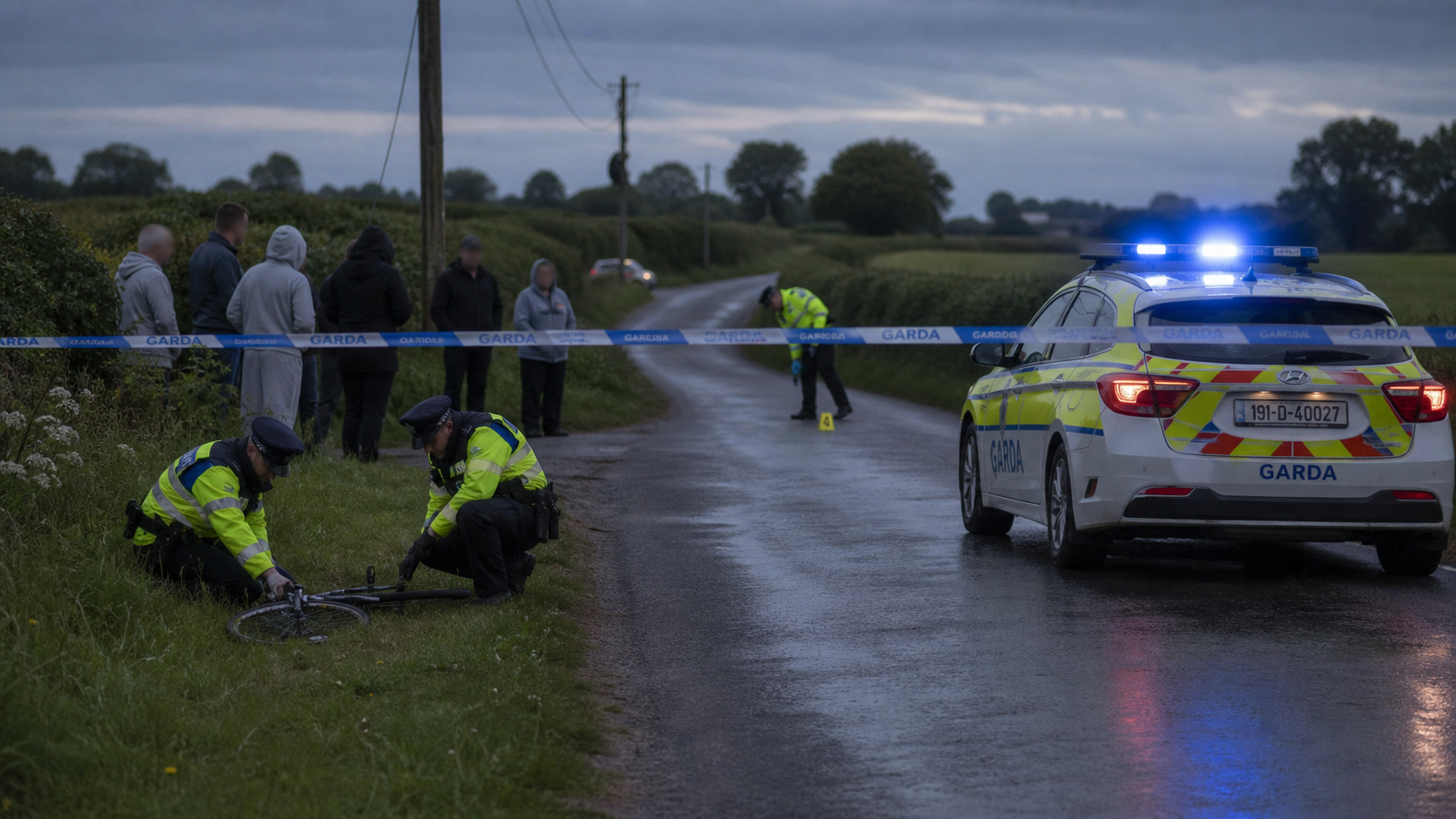
The M9 crash on 16 August, in which five teenagers travelling the wrong way on the motorway in County Kildare were killed when their vehicle struck a car carrying a family, brought the issue to national prominence in a way that previous incidents had not. The deaths of five young men — and the serious injuries sustained by the family in the other vehicle — prompted an outpouring of grief and anger, and a national conversation about how Ireland had arrived at this point.
Key Developments
The Irish Times reported on Monday that detected wrong-way driving incidents have risen 32% in 2026 compared to the same period in 2025, with the increase concentrated on the M50, M1, M7, M8, and M9 motorways. The Garda Commissioner has acknowledged that the force's current approach — which involves disengaging from pursuit when a vehicle is travelling the wrong way, due to the extreme danger of high-speed pursuit in those circumstances — has limitations, and has announced that specialist pursuit training is being accelerated in cooperation with British police forces.
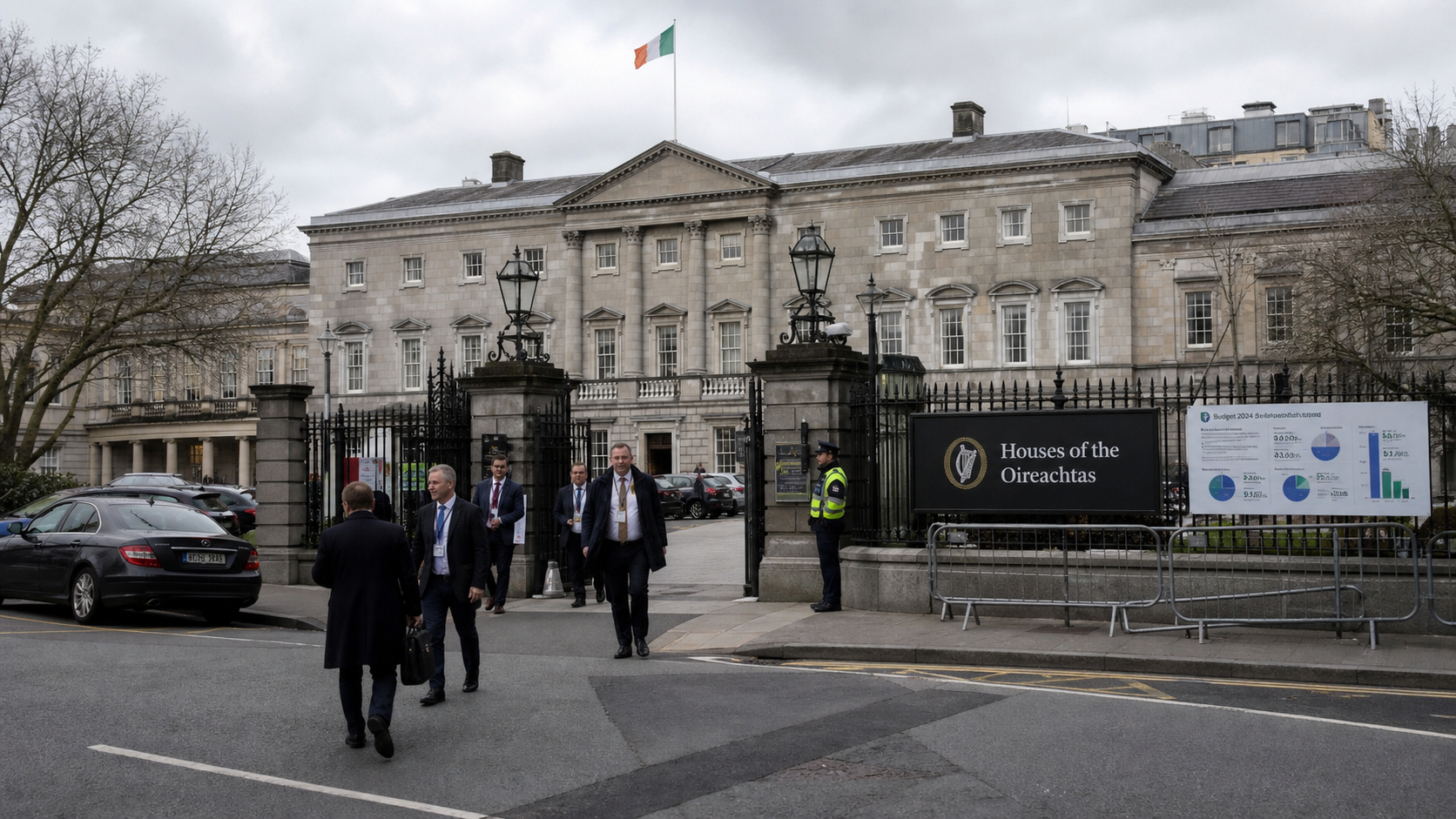
TikTok declined an invitation to appear before an Oireachtas committee last week to discuss content on its platform that glorifies dangerous driving, a refusal that has prompted calls for stronger regulation of social media companies in Ireland. The Journal reported that TikTok accounts dedicated to stolen cars and Garda pursuits have accumulated thousands of views, with some videos remaining on the platform for days before being removed.
Tusla, the Child and Family Agency, has confirmed that it had contact with three of the boys killed in the M9 crash, raising questions about the adequacy of the state's response to young people at risk of involvement in criminal activity. The Garda Representative Association has called for pursuit training to be rolled out to all frontline units by 2027, though the GRA president has acknowledged that the timeline may be challenging.
Why It Matters
The wrong-way driving crisis is a symptom of deeper social problems — youth marginalisation, the normalisation of criminality in certain communities, and the role of social media in amplifying and incentivising dangerous behaviour. Addressing it requires a response that goes beyond policing and legislation, though both have a role to play. The proposal to classify wrong-way motorway driving as attempted murder has been raised by several politicians, though legal experts have questioned whether it would be enforceable in practice.
Ireland's road death rate has been rising in recent years, bucking the trend in most of Europe, where improved road safety measures have driven sustained reductions in fatalities. The wrong-way driving phenomenon is a significant contributor to that trend, but it is not the only one: speeding, drink-driving, and distracted driving remain major factors. The Road Safety Authority has called for a comprehensive review of road safety policy in light of the 2026 data.
Local Impact
The M9 crash has had a devastating impact on the communities of south Carlow and north Kilkenny, where the five young men who died were known and where their families are grieving. A GoFundMe campaign for the three sisters and their young nephew injured in the crash has surpassed €500,000, reflecting the extraordinary solidarity of the Irish public. In Graiguecullen, hundreds attended a prayer vigil at St Clare's Church, with the Bishop of Kildare and Leighlin presiding over an overflowing congregation. The Dáil is expected to address the issue when it returns from recess, with the government under pressure to demonstrate that it is taking the crisis seriously.
What's Next
The Dáil is due to be recalled on 28 August, primarily to deal with fuel excise duty, but the wrong-way driving crisis is expected to dominate the political agenda. The government has indicated it will bring forward legislative proposals in the autumn, including measures to increase penalties for dangerous driving and to require social media platforms to remove content glorifying illegal driving within a specified timeframe. Garda pursuit training is expected to be rolled out to additional units by the end of 2026.