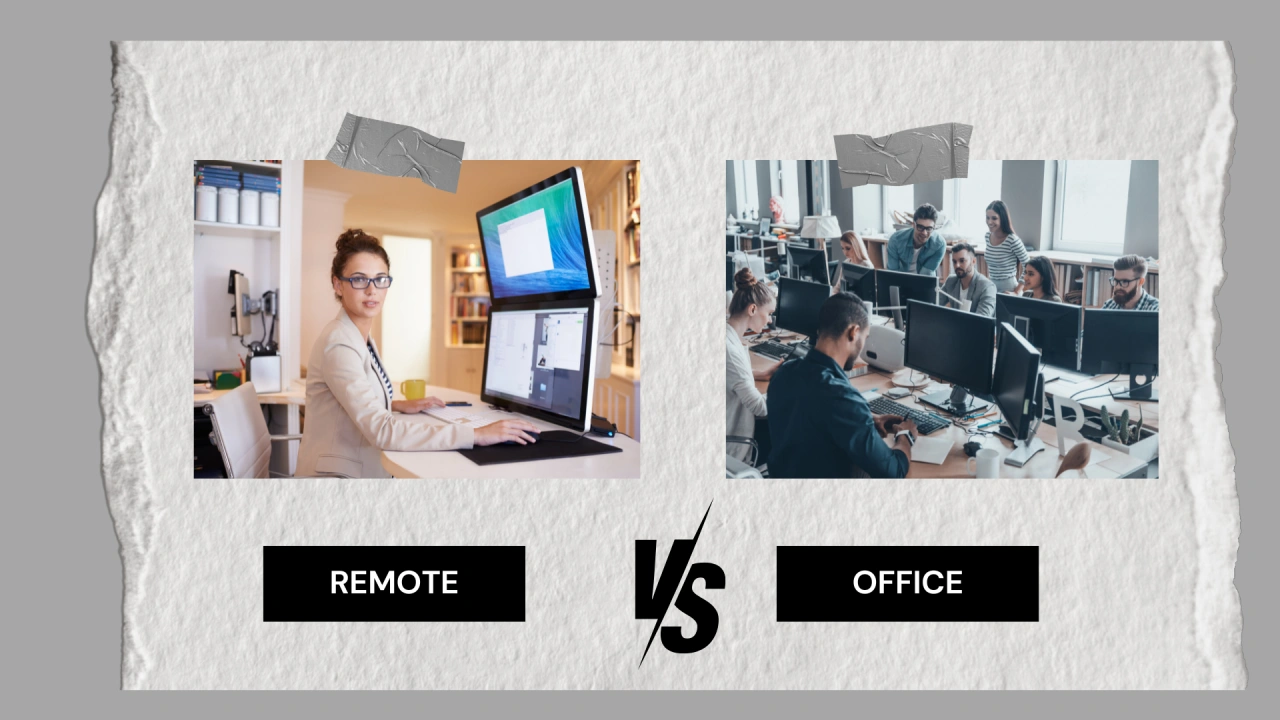
Working From Home Harms Wellbeing Without Clear Boundaries, Durham University Study Finds
The widespread shift to remote working can be detrimental to employees' wellbeing, productivity, and work-life balance unless clear boundaries are established between their professional and domestic lives, a new study from Durham University Business School has found. The research reveals that the constant "cross-domain interruptions" of home life can significantly increase stress and reduce the ability to focus, undermining the very flexibility that remote work is supposed to offer.Background
The COVID-19 pandemic acted as a massive global experiment in remote working, forcing millions of office-based employees to set up workspaces in their homes. While the initial transition was challenging, many workers quickly came to appreciate the benefits of greater flexibility, reduced commuting time, and a better work-life balance. As the world has emerged from the pandemic, hybrid and fully remote working models have become a standard feature of the modern employment landscape, with many employees now expecting this flexibility as a right.
However, the long-term implications of this shift are still being understood, and a growing body of research is beginning to highlight some of the potential downsides. The new study from Durham University, conducted in collaboration with several other academic institutions, is one of the most detailed investigations to date into the daily experiences of remote workers. The researchers sought to move beyond broad generalisations and to understand the specific mechanisms through which remote working can impact wellbeing and performance.
The study focused on the concept of "cross-domain interruptions," which refers to the small but frequent distractions that can occur when working from home, such as dealing with a family member, answering the door to a delivery, or being tempted to do a household chore. The researchers hypothesised that these interruptions, while seemingly minor in isolation, could have a cumulative negative effect on a worker's ability to concentrate and stay engaged in their tasks.
Key Developments
To test their hypothesis, the researchers conducted a 10-day diary study with 87 remote workers from a range of sectors, including finance, IT, and education. The participants were asked to record their experiences four times a day, providing a rich and detailed dataset on their workload, their level of focus, their wellbeing, and the number of interruptions they experienced. The results were striking.
The study found a clear correlation between the number of cross-domain interruptions and a range of negative outcomes. On days when workers experienced more interruptions, they reported higher levels of stress, a greater need for recovery at the end of the day, and lower overall levels of wellbeing. The blurred boundaries between work and home also made it harder for employees to mentally "switch off" after their working day was finished, leading to a sense of being "always on" that undermined their work-life balance.
However, the study also identified a key mitigating factor: the experience of "flow." Flow is a psychological concept that describes a state of deep focus and absorption in a task, where a person is so engrossed in what they are doing that they lose track of time. The researchers found that on days when workers were able to achieve a state of flow, the negative impact of interruptions was significantly reduced. The study also found that practising mindfulness at the start of the day could help workers to improve their focus and manage interruptions more effectively, acting as a valuable substitute on days when achieving a state of flow was more difficult.
Why It Matters
The findings of the Durham University study have significant implications for both employees and employers as they navigate the new world of hybrid and remote work. The research provides a powerful caution against a simplistic view of remote working as a universal good. It demonstrates that, without careful management and clear boundaries, the flexibility of working from home can quickly become a source of stress and burnout. The study highlights the critical importance of creating an environment that is conducive to deep work and minimises distractions.
For employers, the research is a call to be more proactive in supporting their remote workforce. It is not enough to simply provide a laptop and a VPN connection. Companies need to think carefully about how they can help their employees to establish clear boundaries, manage interruptions, and maintain a healthy work-life balance. This could involve providing training on time management and mindfulness, setting clear expectations around availability and response times, and fostering a culture that values deep work and respects employees' non-working hours. The study also has wider implications for the future of work — as companies continue to debate their return-to-office policies, the research suggests that a one-size-fits-all approach is unlikely to be effective. Unlike Scotland's approach of mandating minimum office days for public sector workers, the Durham research suggests the focus should be on quality of working environment rather than location.
Local Impact
The shift to remote working has had a profound impact on local communities across the UK and Ireland. On the one hand, it has offered the potential for people to live and work in a wider range of locations, potentially revitalising rural areas and smaller towns. On the other hand, it has led to a hollowing out of city centres, with significant consequences for local businesses that rely on the daily footfall of office workers. Local authorities and community groups have a role to play in supporting the development of co-working spaces and other facilities that can provide a "third space" for remote workers who are struggling with the isolation or distractions of working from home. The study also has implications for local housing markets, as the demand for homes with dedicated office space is likely to remain high.
What's Next
The Durham University study is a valuable contribution to the growing body of research on the future of work. The researchers have called for further investigation into the long-term effects of remote and hybrid working, and for more collaboration between academics and businesses to develop evidence-based best practices. For individual employees, the key takeaway is the need to be proactive in managing their own working environment. This means taking conscious steps to create clear boundaries between work and home, scheduling dedicated periods of focus time, and finding strategies, such as mindfulness, to manage distractions. For employers, the message is that supporting the wellbeing of their remote workforce is not just a "nice to have," but a business imperative.
Sources: Durham University | Apollo Technical