Westminster MPs Clash Over PSNI Powers to Remove Paramilitary Flags from Public Spaces
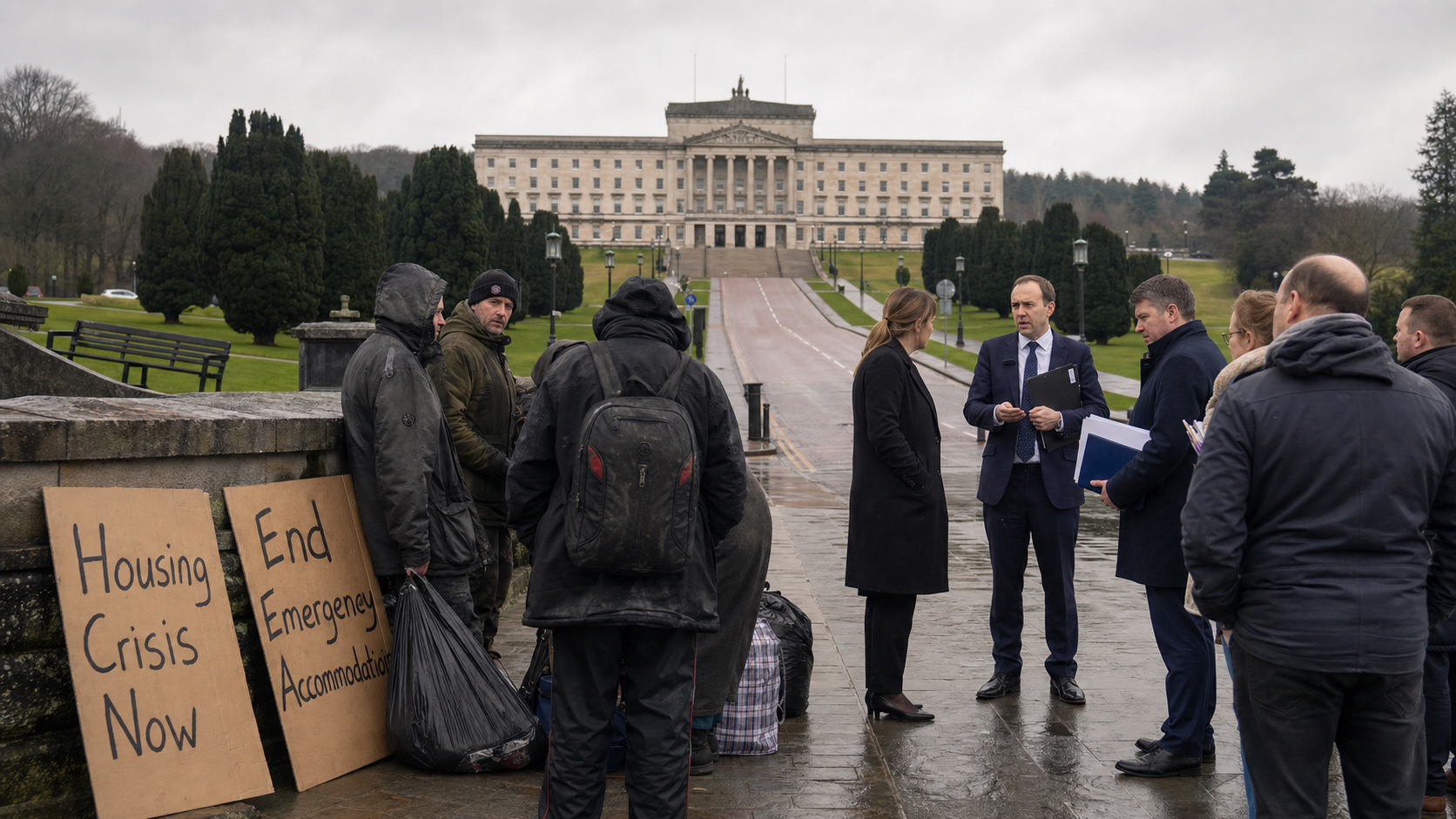
A heated debate took place in the House of Commons on 8 July 2026 concerning the powers of the Police Service of Northern Ireland to seize and remove paramilitary flags from public spaces. During Northern Ireland questions, SDLP leader Claire Hanna MP challenged the Northern Ireland Secretary, Hilary Benn, on the adequacy of current legislation. Ms Hanna argued that existing laws are insufficient to tackle the display of flags representing proscribed terrorist organisations, which she described as a means of marking territory and intimidating communities.
The Debate
The issue of paramilitary flags in public spaces is a perennial source of tension in Northern Ireland, particularly during the summer marching season when flags and emblems are displayed in greater numbers across loyalist and republican areas. The flags of proscribed organisations — including the UVF, UDA, and IRA — are regularly displayed on lamp posts and in public spaces in some parts of Northern Ireland, a practice that many residents and community leaders describe as intimidating and divisive.
Claire Hanna, the SDLP leader and MP for Belfast South and Mid Down, used Northern Ireland questions in the House of Commons to press the Northern Ireland Secretary on what action the government was taking to address the issue. She pointed out that while the PSNI has successfully used the Terrorism Act to prosecute individuals for wearing paramilitary-style clothing, there has been a reluctance to apply the same legislation to the flying of flags. She argued that this inconsistency sends a confusing message and leaves communities feeling unprotected.
The Legal Framework
The legal framework governing the display of flags and emblems in Northern Ireland is complex and contested. The Terrorism Act 2000 makes it an offence to wear clothing or carry articles in a public place in a way that arouses reasonable suspicion of support for a proscribed organisation. However, the application of this provision to flags displayed on lamp posts or buildings is less straightforward, as it requires evidence of intent and a judgment about whether the display constitutes "support" for the organisation in question.
The PSNI has historically been cautious about using the Terrorism Act to remove flags, citing concerns about the potential for such action to inflame community tensions and trigger disorder. The force has instead relied on a combination of community engagement, negotiation with local representatives, and the use of other legislative powers to manage the issue. Critics argue that this approach has been insufficiently robust and has allowed the display of paramilitary flags to become normalised in some areas.
The Secretary of State's Response
In response to Ms Hanna's challenge, Hilary Benn acknowledged the complexity of the issue, stating that police operations regarding flags and emblems are guided by a need to assess the risk to public order. He indicated that the government was aware of the concerns raised and was in dialogue with the PSNI about the most effective approach to the issue. However, he stopped short of committing to any specific legislative changes or new guidance to the police.
DUP MP Gavin Robinson intervened in the debate, suggesting that a focus solely on paramilitary flags was too narrow, and that any discussion should also include "other flags and emblems that cause deep offence." His intervention was widely interpreted as a reference to Irish tricolours and other republican symbols displayed in some areas, and it highlighted the deeply political nature of the flags debate in Northern Ireland, where the issue is rarely viewed in purely legal terms.
Community Impact
For residents in areas where paramilitary flags are displayed, the issue is not abstract. Community workers and residents' groups in affected areas have described the flags as a source of fear and intimidation, particularly for members of minority communities and those who do not share the political allegiances of the organisations whose flags are displayed. The flags are seen as a statement of territorial control and a reminder of the threat of paramilitary violence, even in areas that have been largely peaceful for many years.
The Alliance Party's justice spokesperson described the current situation as "unacceptable" and called for the PSNI to take a more proactive approach to removing flags that represent proscribed organisations. She argued that the police's reluctance to act was undermining public confidence in the rule of law and sending a message that some communities were above the law. The party has called for clearer guidance to be issued to the PSNI on the circumstances in which it should use its powers to remove paramilitary flags.
The Broader Context
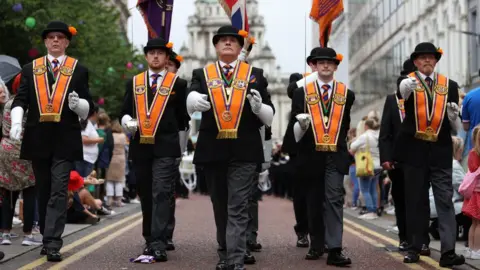
The debate over paramilitary flags takes place against the backdrop of the summer marching season, when tensions in some parts of Northern Ireland are traditionally at their highest. The Parades Commission, the PSNI, and community mediators work throughout the summer to manage the potential flashpoints that arise from parades, flags, and other contentious displays. The exchange in Westminster underscores the ongoing challenges of managing community relations in Northern Ireland and the limitations of the legal tools currently available to address them.