Stormont Housing Crisis: Northern Ireland Homelessness Costs Soar as Public Accounts Committee Demands Reform
Northern Ireland's Public Accounts Committee has demanded urgent and comprehensive reform of the housing system after new data revealed that the Housing Executive is spending record sums on emergency and temporary accommodation while the social housing waiting list continues to grow — a crisis that the committee has described as a systemic failure requiring immediate political intervention and sustained investment.
Background
Northern Ireland's housing crisis has been building for years, driven by a combination of factors including chronic underinvestment in social housing construction, a private rented sector that has become increasingly unaffordable, and a planning system that has struggled to deliver the volume of new homes needed to meet demand. The Northern Ireland Housing Executive (NIHE), which is responsible for managing social housing in the region, has been operating under severe financial pressure, with its budget insufficient to maintain its existing stock in good condition, let alone to build the new homes that are needed.
The social housing waiting list in Northern Ireland has grown steadily over the past decade, reaching levels that represent a significant proportion of the region's population. The waiting list includes families with children, older people, people with disabilities, and individuals who are homeless or at risk of homelessness. The average waiting time for social housing has increased significantly, with many applicants waiting years for a suitable property to become available.
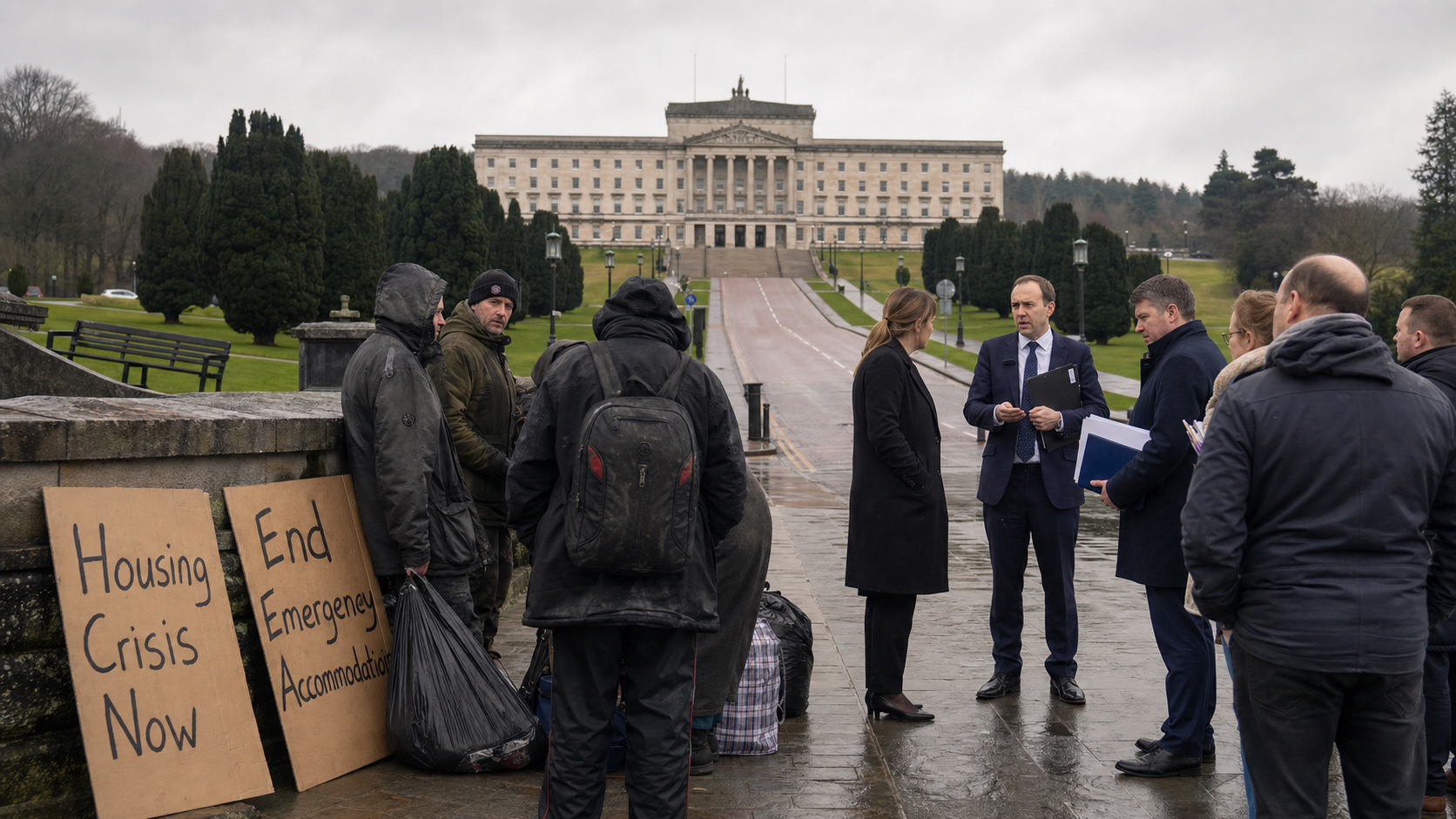
The homelessness crisis is the most acute manifestation of the housing shortage. When people cannot access social housing and cannot afford private rented accommodation, they have no option but to present as homeless and seek emergency accommodation. The cost of providing emergency and temporary accommodation has risen sharply as the number of homeless households has increased, placing additional pressure on the Housing Executive's already strained budget.
Key Developments
The Public Accounts Committee's intervention follows the publication of data showing that the Housing Executive's spending on temporary accommodation has reached record levels. The committee has expressed particular concern about the cost and quality of the temporary accommodation being provided, with evidence that some households are being placed in bed and breakfast accommodation or other unsuitable settings for extended periods. This is not only expensive — the cost of temporary accommodation is significantly higher than the cost of providing a permanent social housing tenancy — but it is also damaging to the wellbeing of the individuals and families involved, particularly children.
The committee has called for a comprehensive review of housing policy in Northern Ireland, encompassing several key areas. First, it has demanded a significant increase in investment in social housing construction, arguing that the current rate of new build is wholly inadequate to meet demand. Second, it has called for reform of the private rented sector, including stronger protections for tenants and measures to improve the quality and affordability of private rented accommodation. Third, it has called for a review of the planning system, arguing that the current system is too slow and too complex to deliver the volume of new homes that Northern Ireland needs.
The Communities Minister at Stormont has acknowledged the severity of the housing crisis and has indicated that the Executive is working on a new housing strategy. However, the committee has expressed frustration at the pace of progress, arguing that the scale of the crisis demands urgent action rather than further planning and consultation.
Why It Matters
Northern Ireland's housing crisis matters because it is causing real and lasting harm to thousands of families and individuals across the region. The combination of an inadequate social housing stock, an unaffordable private rented sector, and a planning system that cannot deliver new homes at the required pace has created a situation in which many people have no realistic prospect of accessing secure, affordable accommodation. The consequences — homelessness, overcrowding, insecurity, and the associated impacts on health, education, and wellbeing — are severe and are being felt disproportionately by the most vulnerable members of society.
The financial cost of the crisis is also significant. The record spending on temporary accommodation represents money that could be invested in building new social homes, which would provide a more sustainable and cost-effective solution to the housing shortage. The Public Accounts Committee's intervention is a recognition that the current approach is not working and that a fundamental change of direction is needed.
Local Impact
The housing crisis is felt across Northern Ireland, but its impact is particularly acute in Belfast, where the combination of high demand and limited supply has pushed rents to levels that are unaffordable for many working people. In areas including the Markets, the Lower Falls, and parts of North Belfast, the shortage of social housing has created significant community pressure, with long-established residents unable to access homes in the areas where they grew up. In Derry/Londonderry, the housing crisis has been exacerbated by the city's rapid economic growth, which has attracted new workers and students but has not been matched by a corresponding increase in housing supply. In rural areas of Tyrone, Fermanagh, and Armagh, the housing crisis takes a different form, with a shortage of affordable homes in small towns and villages making it difficult for young people to remain in their home communities.
What's Next
The Communities Minister is expected to bring a new housing strategy to the Stormont Executive before the end of the year. The strategy is expected to include targets for new social housing construction, measures to reform the private rented sector, and proposals for planning reform. The Public Accounts Committee has indicated it will continue to scrutinise the Executive's housing policy and will hold further hearings in the autumn to assess progress. The Housing Executive is expected to publish its annual report for 2025-26 in August, which will provide updated data on waiting lists, homelessness, and spending on temporary accommodation.