Fine Gael to Publish 'Blueprint for a Unified Island' at November Ard Fheis as Unity Debate Intensifies
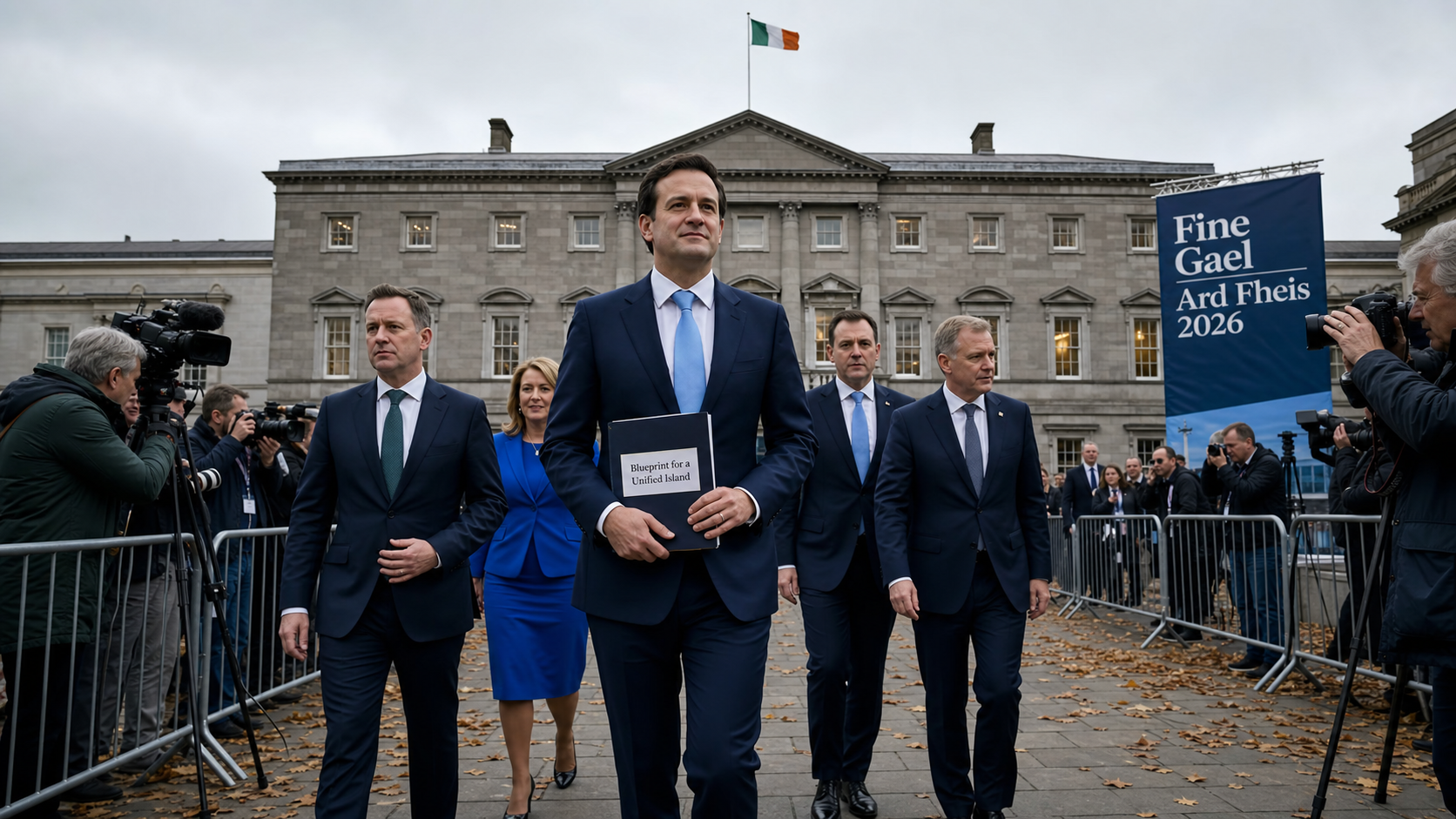
Fine Gael has announced it will publish a detailed "blueprint for a unified island" at its Ard Fheis in November 2026, with Tánaiste Simon Harris framing the initiative as a responsible, evidence-based approach to the unity question that moves beyond slogans and sentimentality — a significant strategic shift for one of Ireland's traditional parties of government, driven in part by anxiety about the implications of a potential future Reform UK administration in Westminster.
Background
Fine Gael's relationship with the question of Irish unity has historically been complex. As one of the two parties that has dominated government in the Republic since independence, Fine Gael has always maintained the constitutional aspiration to reunification while being deeply cautious about the pace and manner in which it might be pursued. The party's tradition has been one of gradualism and pragmatism — a belief that the best way to advance the cause of unity is through building relationships, demonstrating the benefits of cooperation, and waiting for the conditions to be right rather than forcing the issue.
That cautious approach has come under increasing pressure in recent years. The rise of Sinn Féin as a major electoral force in the Republic, the shock of Brexit, and the changing demographics of Northern Ireland have all contributed to a sense that the unity question is no longer a distant aspiration but an increasingly live political issue. Fine Gael has found itself in the uncomfortable position of being seen as the party least engaged with the question, at a time when its coalition partner Fianna Fáil and the main opposition party Sinn Féin are both actively developing their positions.
The decision to develop a formal blueprint represents a significant departure from this cautious tradition. It signals that Fine Gael's leadership has concluded that the party can no longer afford to be seen as passive on the unity question, and that it needs to develop a credible and detailed position that can withstand scrutiny from both supporters and opponents of reunification.
Key Developments
The blueprint project is being led by the Fine Gael Northern Ireland Engagement Group and facilitated by Professor Deirdre Heenan, a respected academic with expertise in health policy and cross-border cooperation. The choice of facilitator is significant — Heenan is known for her rigorous, evidence-based approach and her ability to engage with complex policy questions in a way that is accessible to a broad audience. Her involvement signals that Fine Gael intends the blueprint to be a serious policy document rather than a political manifesto.
Harris has been explicit about the ambition of the project. He has stated that the goal is to produce research on the fiscal, political, and societal realities of potential reunification — to move the conversation from the abstract to the concrete. This includes examining questions such as the cost of reunification, the implications for public services, the constitutional arrangements that would be required, and the process by which consent would be sought and secured from communities on both sides of the border.
A key motivation for the initiative, according to senior Fine Gael figures, is anxiety about the implications of a potential future Reform UK government in Westminster. There is a concern in Dublin that an unpredictable UK government might unilaterally push for a border poll, or might weaponise the cost of the Northern Ireland subvention in ways that could destabilise the political situation. By developing its own detailed position on unity, Fine Gael is attempting to ensure that the Republic is prepared for a range of scenarios, rather than being caught off guard by events beyond its control.
Why It Matters
Fine Gael's decision to develop a unity blueprint matters because it represents a fundamental shift in the political landscape of the Republic. For decades, the unity question was effectively owned by Sinn Féin and, to a lesser extent, Fianna Fáil. Fine Gael's entry into this space changes the dynamic significantly, potentially broadening the coalition of voices engaged in the debate and making it harder for any single party to claim ownership of the issue.
The initiative also matters because of what it reveals about the anxieties driving political decision-making in Dublin. The explicit reference to the risk of a Reform UK government suggests that Fine Gael's leadership is taking seriously the possibility of significant political disruption in the UK, and is attempting to position the party — and the state — to respond effectively. This is a form of strategic pre-emption that reflects a more sophisticated engagement with the unity question than Fine Gael has previously demonstrated.
Local Impact
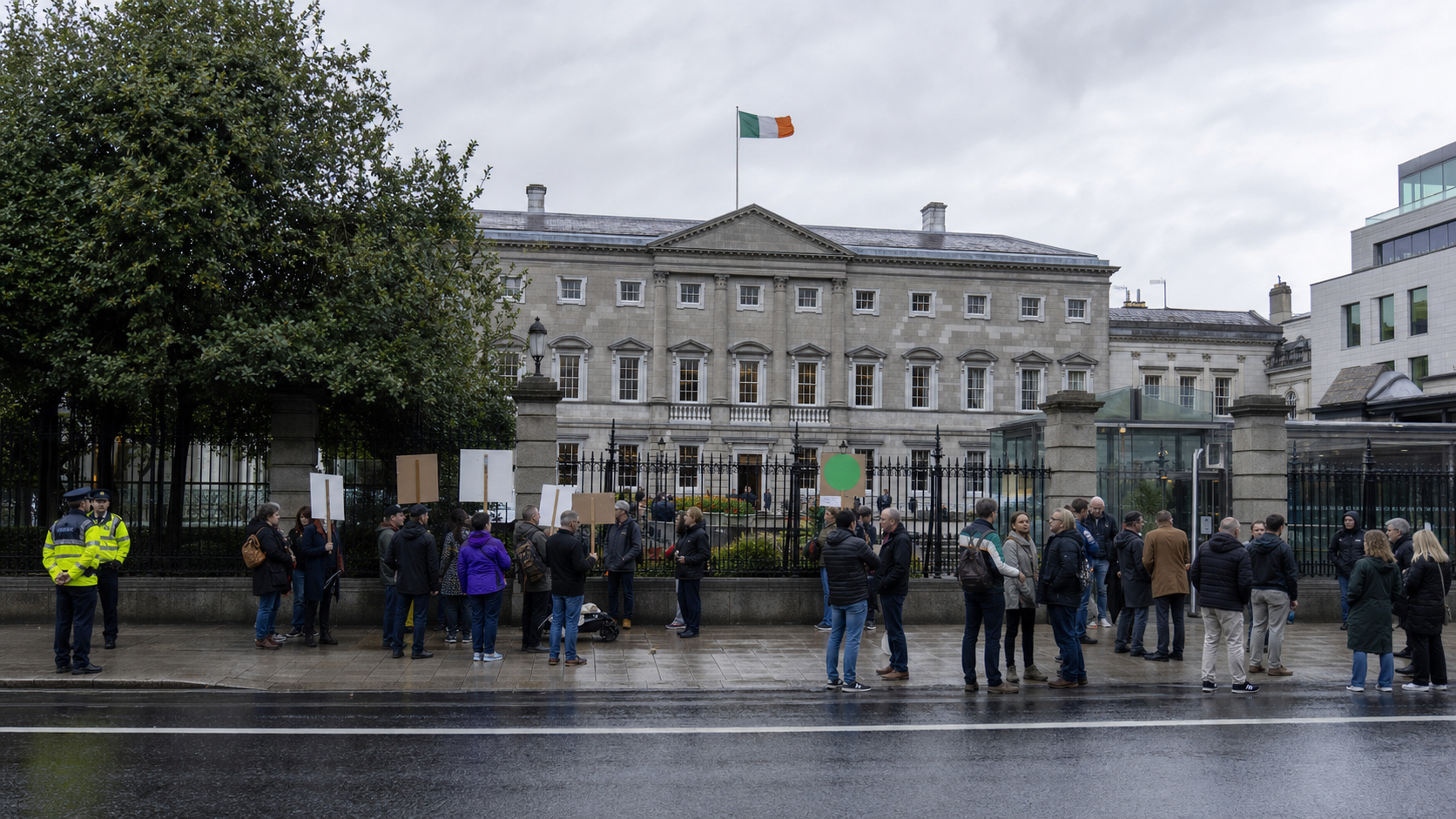
In Northern Ireland, Fine Gael's announcement has been received with a mixture of interest and scepticism. Nationalist parties have broadly welcomed the initiative as a sign that the political establishment in Dublin is taking the unity question seriously. Unionist parties have expressed concern, with the DUP arguing that the focus of political energy in Dublin should be on supporting Northern Ireland within the United Kingdom rather than planning for its departure. The Alliance Party has called for any unity planning to be conducted in a spirit of genuine inclusivity, with meaningful engagement with unionist and other communities in Northern Ireland. In the Republic, the announcement has generated significant media coverage and public debate, with opinion polls suggesting that while there is broad support for the aspiration to unity, there is considerable uncertainty about the practical details.
What's Next
The Fine Gael blueprint is scheduled for publication at the Ard Fheis in November 2026. In the intervening months, the Northern Ireland Engagement Group will conduct research and consultations, including engagement with communities in Northern Ireland. Professor Heenan has indicated that the process will involve a series of public events and submissions, designed to ensure that the blueprint reflects a broad range of perspectives. The publication of the blueprint is expected to be a significant moment in the unity debate, potentially prompting responses from other parties and from the Irish government's Shared Island unit.