West Belfast Residents 'Fearful for Their Homes' as Youths Throw Fireworks at Houses and Vehicles in Ongoing Anti-Social Behaviour
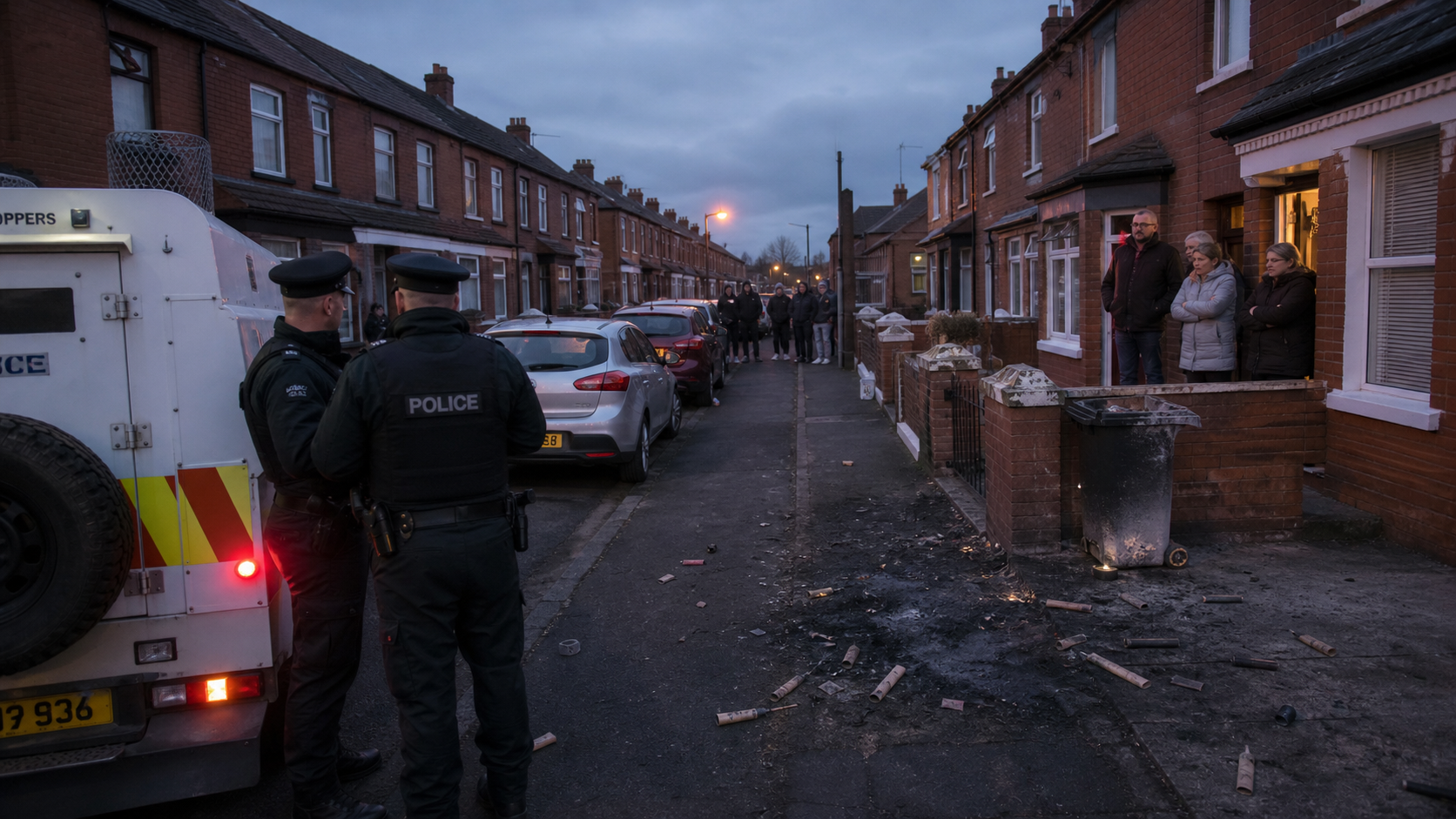
Residents in parts of West Belfast have described a climate of fear following a series of incidents in which groups of youths — some as young as primary school age — have been throwing fireworks at homes, parked vehicles, and oncoming traffic, with rockets seen bouncing off windows and residents reporting that police did not always attend when called.
Background
Anti-social behaviour involving fireworks has been a recurring problem in parts of Belfast in the weeks leading up to Halloween, but residents and community workers say the incidents this year have begun earlier and are more intense than in previous seasons. The PSNI has strict regulations governing the possession and use of fireworks in Northern Ireland: it is illegal to possess, sell, handle, or use fireworks without a valid licence, with offenders liable to a fine of up to £5,000. Despite this, the availability of fireworks through informal channels — including cross-border purchases and online sales — means that enforcement is difficult.
The areas most affected in recent days include streets in the Falls Road corridor and parts of the Andersonstown area, where residents have reported nightly disturbances involving groups of between twenty and thirty young people. The behaviour described goes beyond the opportunistic use of fireworks: residents say rockets are being deliberately aimed at houses and at cars, with the apparent intention of causing damage or provoking a reaction.
Community workers in West Belfast have been raising concerns about the erosion of youth services in the area for several years. The closure of a number of youth clubs and the reduction in funding for outreach workers — a consequence of the broader cuts to the voluntary and community sector that have accompanied Stormont's budget difficulties — has left fewer structured activities available for young people, particularly in the evenings and at weekends.
Key Developments
Residents who spoke to local media this week described the situation as "torturous," with some saying they were afraid to leave their homes after dark and others reporting that they had been unable to sleep due to the noise. One woman whose home was struck by a rocket said she had contacted the PSNI on three separate occasions but that officers had not attended, being told the incidents did not meet the threshold for an emergency response. The PSNI subsequently confirmed that it was monitoring the situation and maintaining a presence in affected areas, and that it was taking the community's concerns seriously.
Independent Councillor Paul Doherty, who represents the area, attributed part of the problem to the impact of funding cuts on youth services. "When you remove the outreach workers and close the youth clubs, you create a vacuum," he said. "Young people need somewhere to go and something to do. If we don't provide that, we should not be surprised when they find their own entertainment, and sometimes that entertainment causes harm." Doherty has written to the Education Authority and the Department for Communities requesting an emergency review of youth service provision in the affected areas.
Why It Matters
The fireworks incidents in West Belfast are a symptom of a wider problem that affects communities across Northern Ireland. The combination of budget pressures, reduced youth services, and the easy availability of fireworks creates conditions in which anti-social behaviour can escalate quickly. Unlike the Republic, where the government has introduced increasingly strict controls on the sale of fireworks and invested in community-based diversion programmes, Northern Ireland has struggled to develop a coherent strategy for managing the seasonal surge in fireworks-related incidents. The PSNI's capacity to respond to non-emergency anti-social behaviour has also been constrained by resource pressures, leaving communities feeling that they are being left to manage the problem themselves.
Local Impact
The immediate impact on affected streets in West Belfast is significant. Residents with young children and elderly people living alone are particularly vulnerable, and several families have reported that pets have been badly frightened by the noise. Local businesses on the Falls Road have reported that customers are avoiding the area in the evenings. A community centre that runs evening classes for adults has seen attendance drop sharply since the incidents began. The psychological impact on residents who lived through the Troubles — for whom the sound of explosions carries a particular resonance — should not be underestimated.
What's Next
The PSNI has indicated that it will increase patrols in the affected areas over the coming weeks and is working with community representatives to identify the individuals involved. Councillor Doherty has requested an urgent meeting with the Department for Communities to discuss emergency funding for youth outreach in the area. The Education Authority has been asked to respond to the request for a review of youth service provision by the end of September. In the meantime, residents have been advised to report incidents to the PSNI via the 101 non-emergency number and to preserve any CCTV or doorbell camera footage that might assist with identification.