Voters Head to Polls in Dublin Central and Galway West Byelections
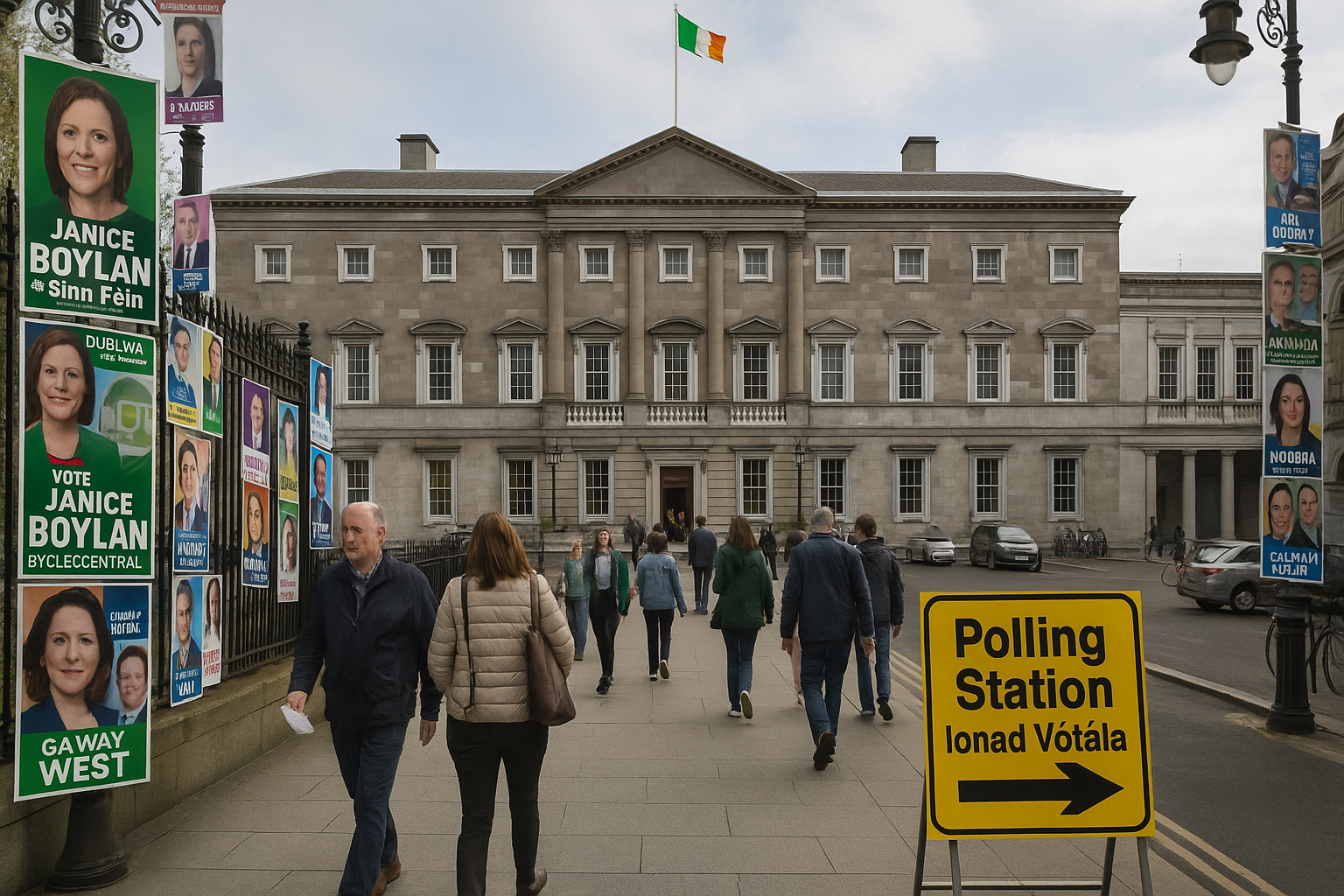
Voters in Dublin Central and Galway West headed to the polls on 22 May 2026 in two byelections that will test the strength of the coalition government, the momentum of Sinn Féin, and the appetite for change in two of the Republic's most politically significant constituencies. The contests, triggered by high-profile departures from Dáil Éireann, are being watched closely in Belfast and across Northern Ireland for what they may signal about the trajectory of all-island politics.
Background
The Dublin Central byelection was triggered by the resignation of Fine Gael's Paschal Donohoe, a former Minister for Finance, who left national politics to take up a senior role at the World Bank. In Galway West, a vacancy arose after the incumbent independent TD, Catherine Connolly, was elected President of Ireland — a role that requires the holder to step down from any parliamentary seat. Both departures removed significant political figures from the Dáil, creating contests that carry weight beyond the simple filling of vacant seats.
The current coalition government — a partnership of Fianna Fáil and Fine Gael with the support of some independents — holds a majority of 89 seats in the 174-seat Dáil. The opposition has 79 seats, with two vacancies. While the loss of one or both byelections would not topple the government, it would reduce its working majority and make it more vulnerable to defeats on key votes. For Sinn Féin, winning both seats would be a major victory, demonstrating that the party is on course for a strong performance in the next general election.
Key Developments
Dublin Central is a particularly charged contest. The constituency is the political home of Sinn Féin leader Mary Lou McDonald, and a failure to win the seat would be seen as a significant blow to her party's momentum. Fine Gael has selected the current Lord Mayor of Dublin, Councillor Ray McAdam. Fianna Fáil is running Councillor John Stephens. Sinn Féin has put forward Councillor Janice Boylan. The Green Party is represented by its Cathaoirleach, Janet Horner. The campaign has been fought primarily on housing costs, community safety, and immigration — issues that have dominated Dublin politics in recent years.
In Galway West, thirteen candidates have declared, making the outcome highly unpredictable. Fine Gael is running Senator Seán Kyne, a former TD who is fluent in Irish — a significant advantage in a constituency with large Gaeltacht areas. Sinn Féin has selected Mark Lohan, a trade union activist. A fascinating development is the emergence of a "vote left, transfer left" pact among six left-wing candidates, a strategic move to maximise the chances of a left-wing candidate winning the seat in a crowded field. The Mayor of Galway, Mike Cubbard, is also running as an independent.
Why It Matters
These byelections are a barometer of public opinion on the coalition government's handling of the cost-of-living crisis, the housing emergency, and the broader economic pressures facing Irish households. They are also a test of whether Sinn Féin's support has held firm since the last general election, or whether the party's momentum has softened — a question that has been fuelled by some recent opinion polls in both the North and the South. The results will be analysed by political strategists across the island for what they signal about the next general election and the long-term direction of Irish politics.
Local Impact
For observers in Belfast and Northern Ireland, these byelections carry a particular significance. Sinn Féin is an all-island party, and its performance in the Republic directly affects the political dynamics at Stormont. A strong showing in Dublin Central and Galway West would be seen as a boost for the party's all-island ambitions and could increase pressure for a border poll on Irish unity — a prospect that unionists view with deep concern and that nationalists regard as an increasingly realistic medium-term possibility. The results will be scrutinised by all parties in Northern Ireland for what they might signal about the future of North-South relations and the prospects for constitutional change on the island of Ireland.
What's Next
Counting is expected to take place over the days following polling day, with the proportional representation system and multiple candidates in both constituencies likely to require several counts before winners are declared. The results will be reported in full as they emerge. Political analysts will be watching not just the winners, but the first-preference vote shares of each party — the most reliable indicator of underlying support levels heading into the next general election cycle. The turnout figures will also be closely scrutinised, as low participation in either constituency could complicate the interpretation of the results and fuel further debate about voter engagement with the political process in the Republic.
Sources: RTÉ News; The Irish Times