Ireland's Housing and Homelessness Crisis Deepens as One in Ten Homeless Live on Single Dublin Street
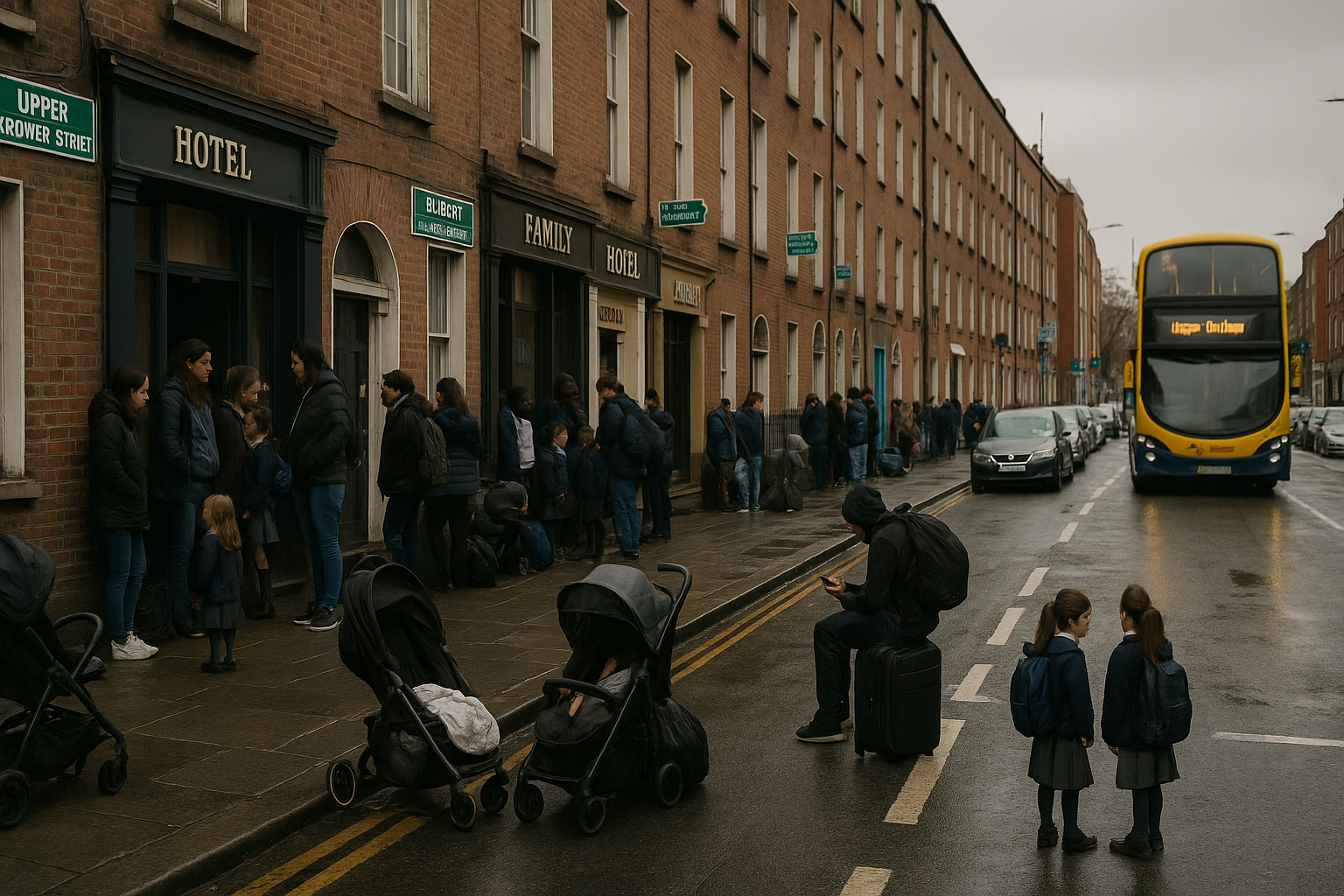
A shocking new report has revealed that one in ten of Ireland's entire homeless population is now housed in emergency accommodation on a single street in Dublin's north inner city, as the country's housing and homelessness crisis reaches new depths of severity — with the total number of people in emergency accommodation rising to a record 17,308 in February 2026, a 12.5% increase in just one year.
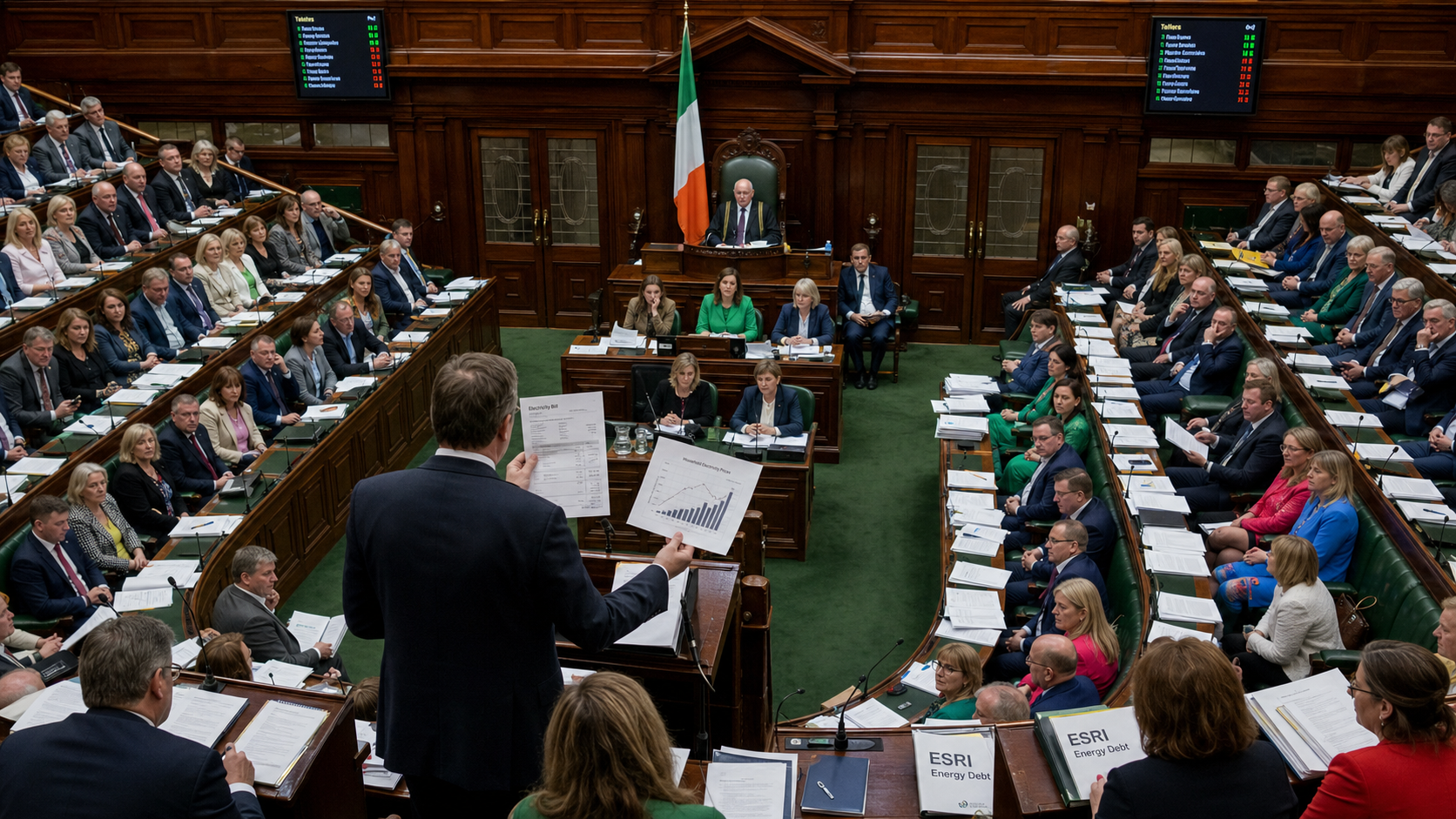
The revelation comes as Tánaiste Simon Harris ruled out an emergency mini-budget to address cost-of-living pressures, and as cities across Ireland continue to fall behind their housing targets in a crisis that is devastating thousands of families and children.
Background
Ireland's housing crisis has been building for years, driven by a chronic shortage of supply, rising construction costs, and a surge in demand that successive governments have failed to adequately address. The February 2026 homelessness figures — 17,308 people in emergency accommodation, including 5,457 children across 2,609 families — represent the starkest evidence yet of a system that has reached its limits. These figures do not capture the full extent of the problem, as they exclude "hidden homeless" individuals who are sleeping rough, sofa-surfing, or residing in domestic violence refuges.
The root of the crisis lies in a severe and persistent housing supply shortfall. In 2025, only 36,284 new homes were completed, falling significantly short of the government's target of 41,000 and the estimated annual need of 50,000 to 60,000 units. While the government has set a new goal of building 300,000 homes by 2030, housing advocates and opposition parties argue that a history of missed targets and failed policies makes this ambition deeply questionable. Budget 2026 introduced measures to incentivise apartment construction and increase funding for social and affordable housing, but critics argue these are insufficient to address the scale of the emergency.
Key Developments
The report highlighting the concentration of homeless people on Gardiner Street in Dublin's north inner city — where an estimated 1,700 individuals, approximately one in ten of the country's homeless population, are housed — has shocked commentators and advocacy groups, who describe it as a symptom of systemic failure in housing policy. One local school has reported that 20% of its students are living in homeless accommodation, a statistic that illustrates the profound human cost of the crisis. According to RTÉ Prime Time, the concentration of emergency accommodation on a single street has placed immense strain on local services and created what advocates have termed a "homeless ghetto."
Clare County Council has announced plans to acquire 20 derelict properties to bolster its housing supply, while debates over the use of modular homes have intensified in Limerick. In a separate but related development, a report found that substance use and addiction have reached "epidemic" levels within the Traveller community, pointing to a severe public health challenge closely linked to housing insecurity and social marginalisation. The College of Psychiatrists of Ireland also voiced significant concern over the new Mental Health Bill, which has passed its final stage in the Seanad. According to The Irish Times, the homelessness figures represent a national emergency that demands an urgent and comprehensive government response.
Why It Matters
The concentration of homeless people in a single location reflects the failure of Ireland's emergency accommodation system to provide dignified, dispersed housing for those in need. It also highlights the inadequacy of current housing supply measures in addressing the scale of the crisis, which affects tens of thousands of people across the country. The presence of over 5,400 children in emergency accommodation is particularly alarming, with research consistently showing that homelessness in childhood has severe and lasting consequences for educational attainment, mental health, and life outcomes. The government's refusal to consider an emergency mini-budget, despite the scale of the crisis, has drawn sharp criticism from opposition parties and housing advocacy groups who argue that the situation demands extraordinary measures.
Local Impact
The housing crisis is not confined to the Republic of Ireland. In Northern Ireland, the housing market faces its own significant challenges, with a lack of new housing supply driving up house prices and rental costs across Belfast and beyond. While the specific dynamics differ — Northern Ireland has not experienced the same scale of homelessness as the Republic — the underlying problem of inadequate housing supply is common to both jurisdictions. For communities in Belfast and across Northern Ireland, rising rents, long social housing waiting lists, and the increasing unaffordability of home ownership are creating pressures that mirror, in important ways, the crisis unfolding in Dublin. The housing emergency on both sides of the border underscores the need for a fundamental shift in housing policy across the island of Ireland.
What's Next
The government is under pressure to accelerate housing delivery and reform the emergency accommodation system. The upcoming byelections in Dublin Central and Galway West are expected to put housing at the centre of the political debate, with all parties competing to offer credible solutions to the crisis. The concentration of homeless people on Gardiner Street is likely to become a focal point for campaigners and politicians alike, and the government will face intense scrutiny over its response in the weeks and months ahead. Without a significant acceleration in housing delivery, the homelessness figures are expected to continue rising throughout 2026.