Ireland's Housing Crisis Deepens as Cost-Rental Scheme Branded Broken
Ireland's housing crisis has deepened to emergency levels in 2026, with the cost-rental scheme designed to provide affordable accommodation branded as fundamentally broken, and the Housing Assistance Payment scheme rendered almost non-functional by the chasm between its payment limits and soaring market rents.
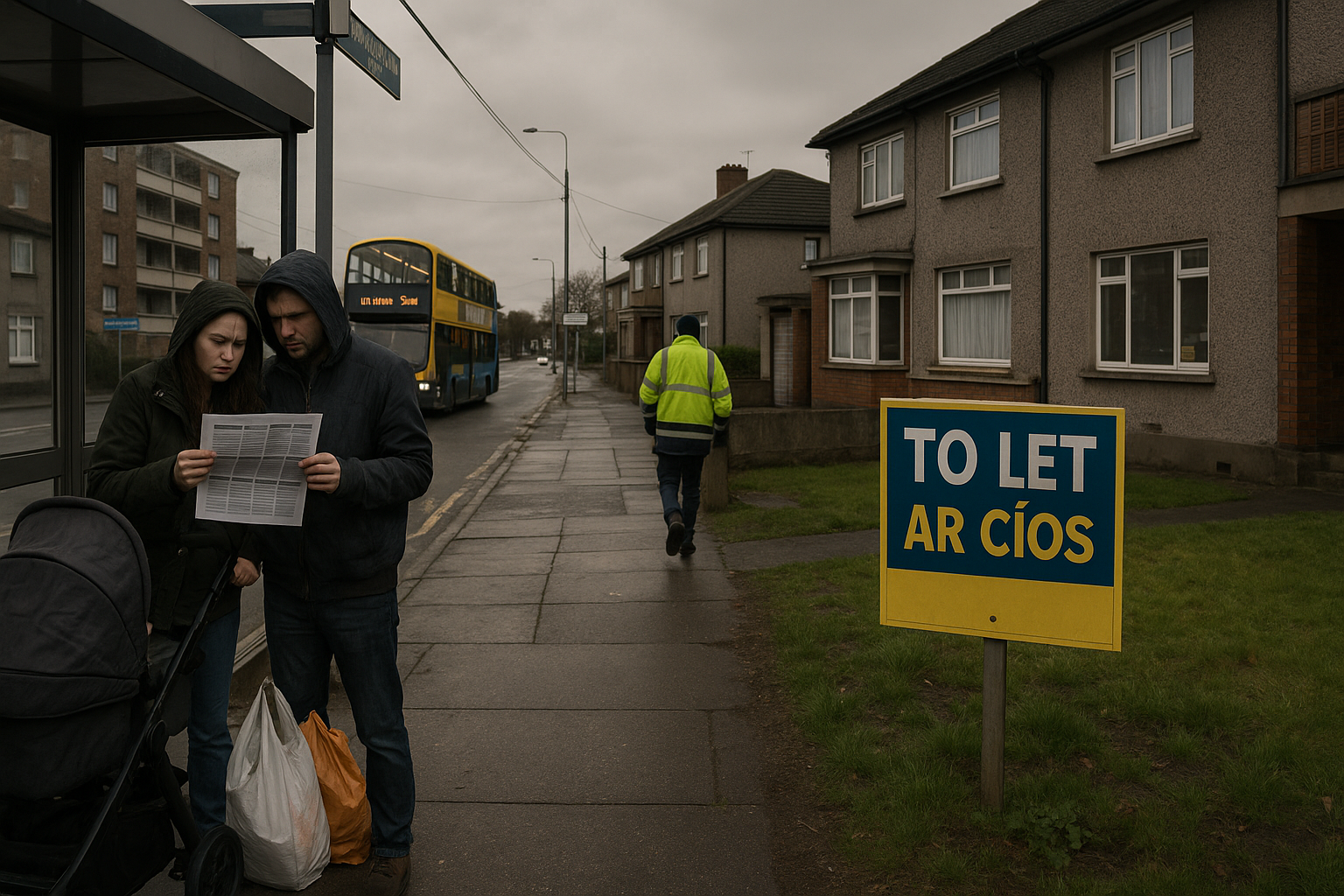
New data reveals the acute shortage of affordable rental options for low-income families, with figures from the Simon Communities of Ireland showing that just 14 properties were available for rent within HAP limits across 16 study areas in March 2026 — a figure that has halved in three months and collapsed from 41 properties a year earlier. In December 2025, not a single property was available within standard HAP limits nationwide.
Background
Ireland's housing crisis has been the dominant social and economic issue for over a decade, driven by a fundamental mismatch between housing supply and demand that has pushed property prices and rental costs to unsustainable levels. In 2025, only 30,330 new dwellings were completed — a 6.7% decrease from 2023 and significantly short of the 50,000 annual target outlined in the Revised National Planning Framework. More alarmingly, new housing starts plummeted by over 75% in 2025, threatening future supply for late 2026 and early 2027. Activity in crucial Dublin areas saw an even steeper decline of nearly 84%.
The rental sector is experiencing an unprecedented supply shock. On 1 February 2026, fewer than 1,800 homes were available for rent across the entire country — the lowest February figure since records began two decades ago and a 22% drop from the previous year. Nationwide rents climbed by 4.4% in 2025, now standing 34% above pre-Covid levels and nearly 80% higher than a decade ago. The average monthly rent for a two-bedroom apartment was €2,086 nationwide and €2,438 in Dublin. The median price for a residential property stood at €370,000 in June 2025, while the median new dwelling price hit €440,000 by December 2025 — an €85,000 increase in just one year. As of early 2026, 16,535 people, including thousands of children, were living in emergency accommodation, a 5% increase since the government was formed in January 2025.
The government has deployed several large-scale schemes to address affordability, including the cost-rental model, the Help to Buy scheme, and significant investment in social housing. However, analysis in 2026 shows that these flagship initiatives are buckling under the pressure of market realities, with critics arguing that the measures have not been sufficient to address the scale of the problem.
Key Developments
The cost-rental model, introduced as a cornerstone of the government's affordable housing strategy, requires rents to cover only the cost of construction, management, and maintenance over a 40-year period, with rents set at least 25% below the prevailing market rate. While highly oversubscribed — with thousands of applications for a handful of homes — the scheme is faltering. In April 2026, Clúid, one of Ireland's largest Approved Housing Bodies, announced it was scrapping the cost-rental component of a development at Bannow Road in Cabra, converting 40 planned cost-rental homes to 100% social housing because rising maintenance and management costs rendered the cost-rental element unviable. Critics point to fundamental design flaws: the 40-year loan repayment period is considered too short compared to international best practices, where 60-year terms are common and would allow for lower rents.
The HAP figures paint a stark picture of the rental market for lower-income households. In March 2026, 10 of the 16 areas surveyed — including major urban centres like Limerick, Galway, and Cork city — had zero properties available to rent under any HAP rate. Of the 14 HAP-eligible properties available nationwide, 11 were located in Dublin, leaving those outside the capital with virtually no options. Advocacy groups have labelled the disparity between HAP rates and market rents a primary driver of family homelessness. Meanwhile, Dublin's commercial property market is showing signs of heating up, with forecasts predicting a 10% rise in office rents over the next year, a development that will further complicate the city's already fraught housing situation.
Why It Matters
The housing crisis is having a profound impact on the lives of hundreds of thousands of Irish people, particularly young people and families who are unable to afford to buy or rent in the private market. The inability to access affordable and secure housing is driving a brain drain of skilled professionals, delaying major life milestones such as starting a family, and contributing to a documented decline in the national birth rate. The failure of the cost-rental scheme to deliver on its promise is a significant political embarrassment for the government, and the near-collapse of the HAP scheme as a functional support for low-income households represents a genuine crisis for the most vulnerable in Irish society.
Local Impact
For communities in Northern Ireland, the contrast with the Republic's housing market is stark. While Northern Ireland faces its own housing pressures, the scale of the crisis in the Republic — with rents nearly 80% higher than a decade ago and homelessness at record levels — has significant implications for cross-border economic activity and population movement. The housing crisis in the Republic is also a live political issue in Northern Ireland, where Sinn Féin's all-island housing policy platform is closely watched. The party's alternative budget proposals, which include a massive state-led programme to deliver 300,000 homes over five years and a rent freeze, represent a fundamentally different approach to the one pursued by the coalition government in Dublin.
What's Next
The government is expected to announce further housing measures in the coming months, ahead of Budget 2027. The Department of Housing has initiated a review of HAP rent limits, though advocacy groups argue that incremental adjustments will not address the fundamental structural failures of the scheme. Opposition parties, particularly Sinn Féin, are likely to use the housing crisis as a central issue in the upcoming bye-elections in Dublin Central and Galway West. More from The Irish Times. Housing coverage from RTÉ News.