Varadkar Apologises for Rural Ireland Comments as Irish Government Faces Turbulent Week
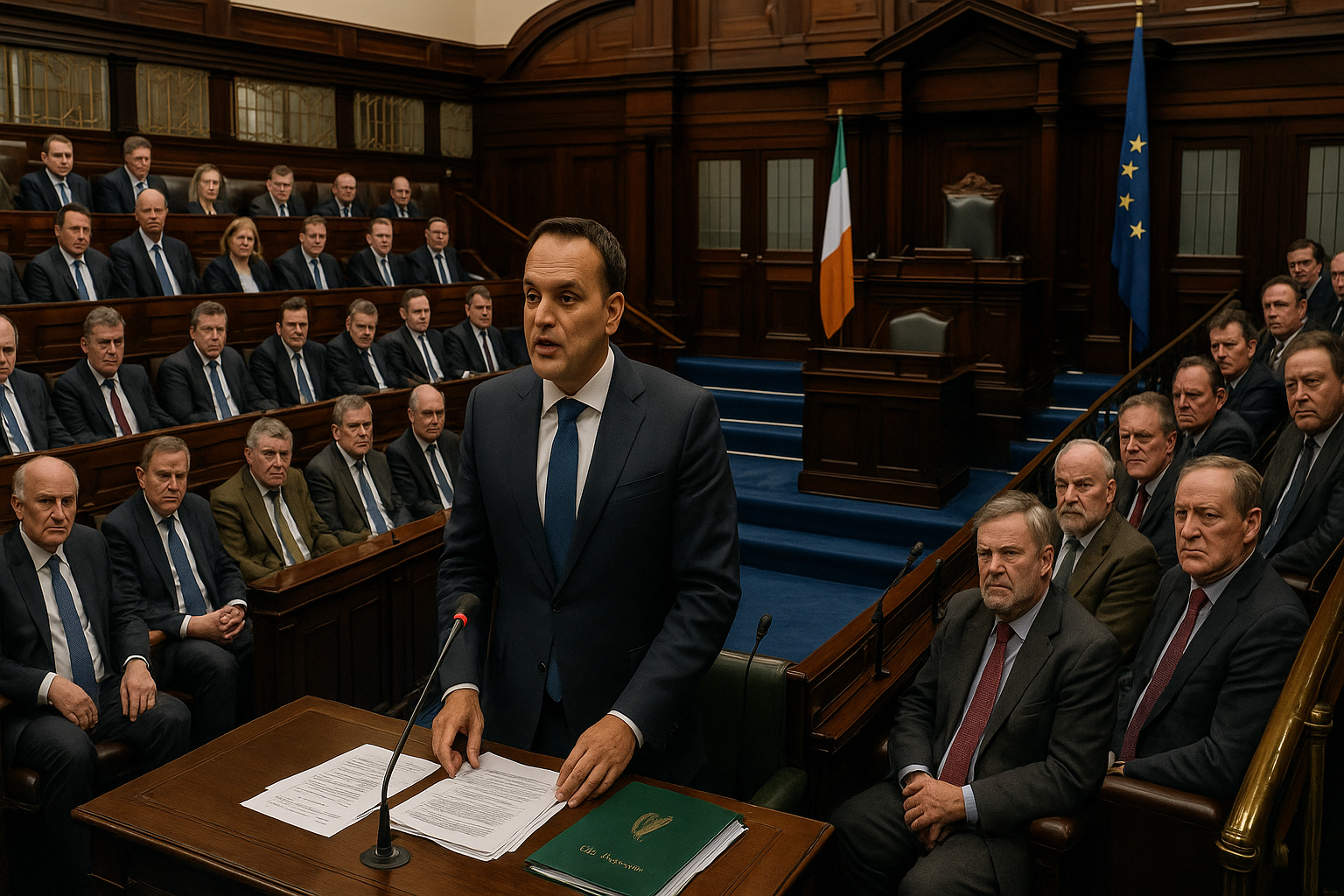
Taoiseach Leo Varadkar apologised on Wednesday for comments suggesting urban Ireland contributes more financially while rural areas receive disproportionate subsidies, after the remarks drew a furious response from rural TDs, Fine Gael colleagues, and the Irish Farmers' Association — adding to a turbulent week for the coalition government already managing fuel protests and the signing of the controversial International Protection Bill.
The apology came four days after Varadkar made the remarks on the "Path to Power" podcast, in which he called for a more "blunt" conversation about the urban-rural economic relationship — comments that landed with the force of a political grenade in a country where the farming community wields significant electoral influence.
Background
Speaking on the podcast released on 18 April 2026, Varadkar argued that urban areas in Ireland are the primary taxpayers while rural areas are significant beneficiaries of subsidies and tax advantages. He suggested that urban Ireland should point out: "actually, that's not the case. We're the ones paying all the bills and you're the ones who are in receipt of a lot of subsidies and a lot of tax benefits that other people don't get." He further claimed that the interests of the agriculture industry are "by and large not in the interest of Ireland as a nation."
The remarks landed at a particularly sensitive moment. Ireland was already gripped by major fuel protests led by farmers and hauliers, responding to soaring fuel prices exacerbated by the Iran conflict and a broader cost-of-living crisis. Protesters had organised convoys and blockades of major roads, fuel depots, and the country's only oil refinery at Whitegate, causing widespread disruption and fuel shortages. The government had responded with a €505 million support package, including cuts to excise duty, and deployed Gardaí and the army to clear the blockades.
Key Developments
Varadkar issued his apology on 22 April, admitting he "went too far" and "overstated his case," though he maintained that some of his points were valid, particularly regarding the concentration of tax revenue from urban areas. The climbdown did little to quell the anger. Several Fine Gael TDs publicly condemned the remarks: Michael Murphy (Tipperary South) described them as "very angry" and "out-of-touch," while David Maxwell (Cavan-Monaghan) called them "ill-judged" and "ill-timed." Brian Brennan (Wicklow-Wexford) and Joe Cooney (Clare) labelled the statements "way out of order" and "awful."
IFA President Francie Gorman rejected Varadkar's assertions, arguing that farmers provide "really good value" for the support they receive and pointing to €19 billion in annual food exports as a key contribution to the national economy. Tánaiste and Fine Gael leader Simon Harris publicly distanced himself from the comments, emphasising the need to "pull together" rather than divide people by where they live.
The government also faced and survived a no-confidence motion tabled by Sinn Féin in the wake of the fuel protests, adding to the sense of a coalition under sustained pressure from multiple directions simultaneously.
Why It Matters
The controversy reignited a long-standing and often contentious debate about the economic and social relationship between urban and rural Ireland. The timing of Varadkar's remarks — during a period of acute economic stress for farming communities already struggling with rising input costs and fuel prices — was seen as particularly damaging and politically inept. The episode exposed a significant fault line within Fine Gael itself, a party that has traditionally relied on rural constituencies for a substantial portion of its electoral support.
The broader political context is one of a coalition government managing multiple simultaneous crises: fuel protests, an immigration controversy, and now an internal party row over comments from its own Taoiseach. The cumulative effect has been to raise questions about the government's political management and its sensitivity to the concerns of communities outside the major urban centres.
Local Impact
In Northern Ireland and across the island, the urban-rural debate resonates strongly. Border communities in counties like Cavan, Monaghan, and Donegal — which straddle the economic and cultural divide between the Republic and Northern Ireland — are acutely aware of the ways in which policy decisions made in Dublin can affect rural livelihoods. The fuel protests, which drew significant participation from farming communities on both sides of the border, underscored the shared economic pressures facing rural Ireland regardless of constitutional jurisdiction. For many in these communities, Varadkar's comments felt like a dismissal of their economic contribution and their way of life.
What's Next
The political fallout from the controversy is likely to linger, particularly as the government prepares for the next phase of its response to the fuel crisis and the implementation of the International Protection Bill, which was signed into law by President Catherine Connolly on 22 April despite significant human rights concerns. The bill, which overhauled Ireland's asylum system to align with the EU Migration and Asylum Pact, drew criticism from the Irish Human Rights and Equality Commission and UNHCR Ireland over provisions including the potential detention of children and a two-year waiting period for family reunification. The Irish Times coverage of Varadkar's apology and The Journal's fact-check on the urban-rural tax debate provide essential context.