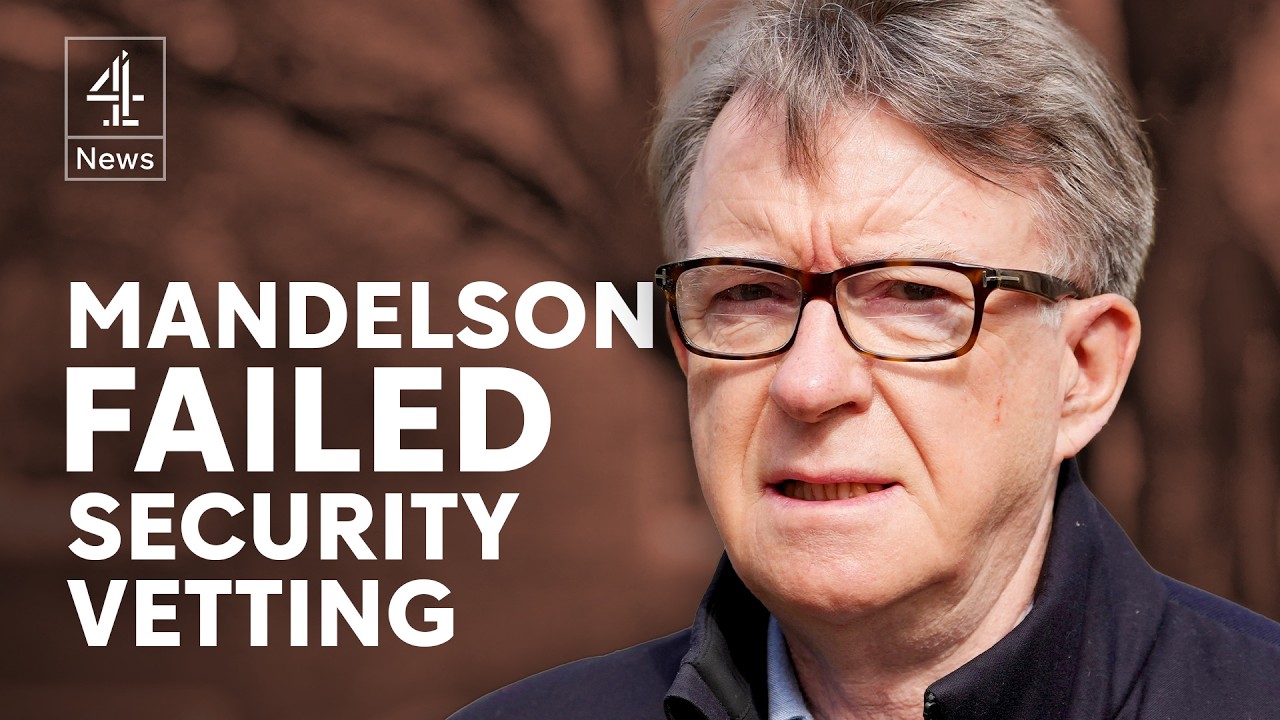
Mandelson Security Vetting Scandal Deepens as Starmer Faces Fresh Calls to Resign
Prime Minister Keir Starmer is facing mounting pressure to resign after explosive new revelations confirmed that Peter Mandelson failed his security vetting for the role of UK Ambassador to the United States — yet was granted the position anyway after Foreign Office officials overruled the recommendation of security services.
Background
Mandelson was appointed as UK Ambassador to Washington in late 2024, with Starmer citing his trade expertise as vital for negotiations with the Trump administration. The appointment was controversial from the outset due to Mandelson's known association with convicted sex offender Jeffrey Epstein. Starmer had previously insisted that "full due process" was followed in the appointment process, and that Mandelson had undergone an "intensive security vetting exercise."
Key Developments
Documents released this week as part of the ongoing "Mandelson Files" disclosure have revealed that Mandelson failed the highest level of security clearance — known as "developed vetting" — during the background check process. Despite this, Foreign Office officials used a rarely exercised authority to override the recommendation and grant him the clearance anyway.
Starmer has now stated that neither he nor any government minister was aware that the vetting recommendation had been overruled until the week of 16 April 2026. He has since instructed officials to investigate why the clearance was granted and ordered the Foreign Office to update Parliament urgently. Sir Olly Robbins, the Foreign Office's most senior civil servant, has been summoned to appear before Parliament's Foreign Affairs Committee.
Further documents show that Starmer's national security adviser, Jonathan Powell, expressed concerns about the appointment to the PM's former chief of staff Morgan McSweeney, and described the process as "weirdly rushed." A Cabinet Office due diligence report had also flagged a "general reputational risk" due to Mandelson's relationship with Epstein, noting he had reportedly stayed at Epstein's house in 2009.
At Wednesday's Prime Minister's Questions, Conservative leader Kemi Badenoch pressed Starmer repeatedly on whether he personally spoke to Mandelson about his Epstein links before the appointment. Starmer acknowledged the appointment was a "mistake" and apologised to Epstein's victims, but declined to confirm whether he had a direct conversation with Mandelson on the matter. He stated that Mandelson had "asked questions and gave untruthful replies" during the vetting process.
Calls for Resignation
The revelations have triggered resignation demands from across the opposition. Kemi Badenoch, Ed Davey of the Liberal Democrats, and Nigel Farage of Reform UK have all called on Starmer to step down, accusing him of misleading Parliament. Badenoch stated that Starmer should resign if it is proven he misled the House over the vetting process.
Mandelson was ultimately sacked from the ambassadorship in September 2025 following further Epstein-related revelations. He was subsequently arrested in February 2026 on suspicion of misconduct in public office, relating to allegations that he passed sensitive government information to Epstein in 2009. He has denied any wrongdoing and was released on bail.
Implications and Next Steps
The government has committed to releasing all documents requested by Parliament's Intelligence and Security Committee, with the committee having final say on what is too sensitive for publication. Further tranches of the Mandelson Files are expected to be released in the coming days, with political analysts warning the disclosures could cause sustained damage to Starmer's administration.
The affair raises serious questions about the integrity of the UK's senior appointments process and the extent to which security concerns can be overridden by political considerations. For Starmer, the central challenge is now to demonstrate that he was genuinely unaware of the overruled vetting — a claim that opposition parties are openly contesting. Read more at Metro.