'Unprecedented' Security Challenges Surround Upcoming Kinahan Trial in Ireland
Security and legal authorities in Ireland are grappling with what have been described as "unprecedented" challenges surrounding the upcoming trial of Daniel Kinahan, the alleged head of one of Europe's most dangerous criminal organisations, following his arrest in Dubai on 15 April 2026 in a covert international operation that marked the culmination of years of painstaking law enforcement work.
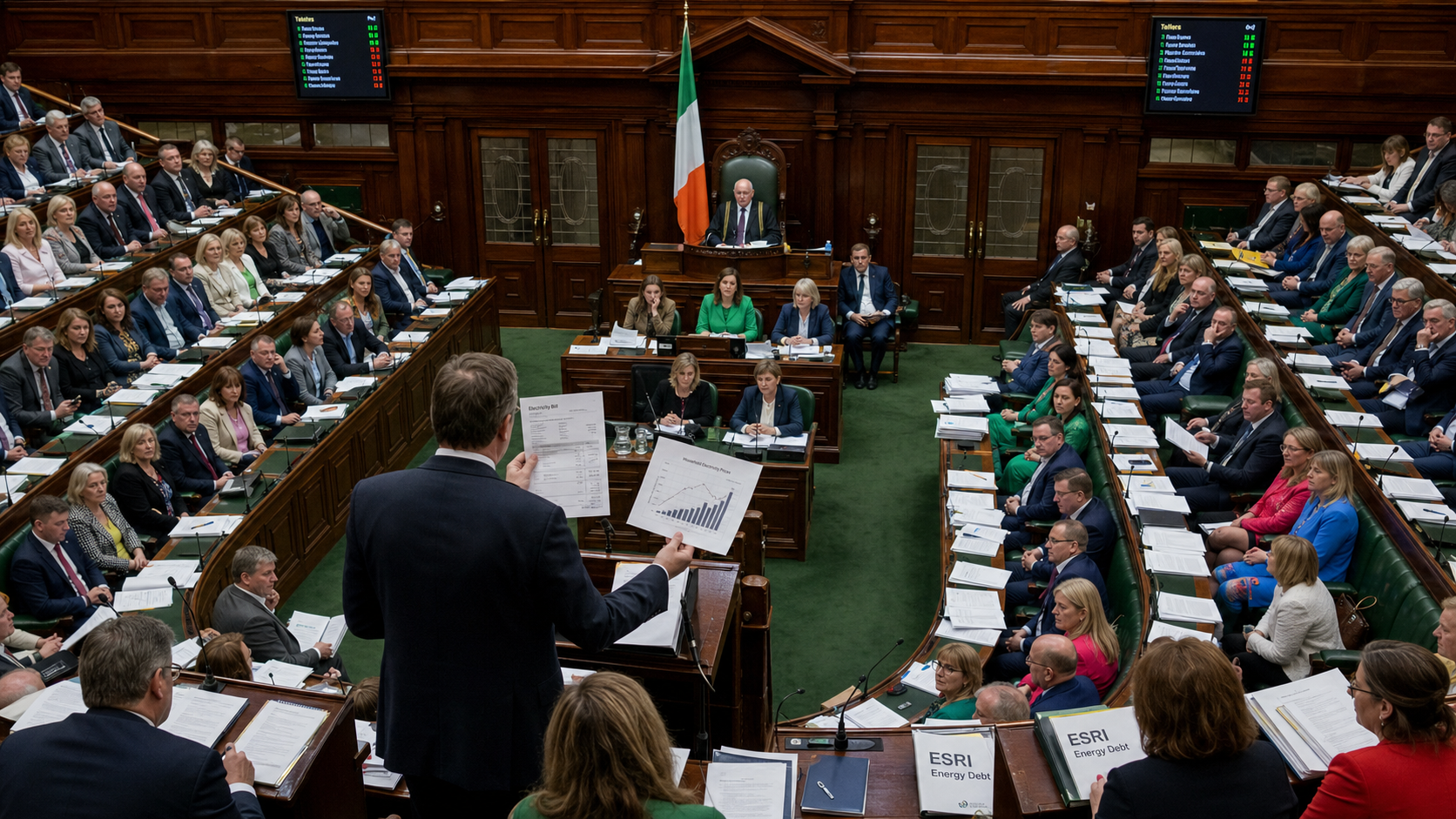
The logistical and security planning for the high-profile case is described as a massive undertaking, reflecting the serious nature of the charges, the international reach of the Kinahan cartel — estimated to be worth up to €1.5 billion — and the enormous public and media interest in proceedings that are expected to be among the most significant in the history of the Irish state. Authorities are reportedly considering a range of extraordinary measures to ensure the safety of witnesses, jurors, and court personnel, given the cartel's well-documented history of intimidation and violence.
Background
Daniel Kinahan was arrested in Dubai following an intensive surveillance operation conducted by Dubai police, based on an Irish arrest warrant for his alleged involvement in serious organised crime. The arrest was made possible by a bilateral extradition treaty signed between Ireland and the United Arab Emirates in October 2024, which came into force in May 2025 — the first major test of the new treaty, and a landmark moment in the fight against organised crime that had been years in the making.
The Kinahan cartel, with operations spanning Ireland, the United Kingdom, Spain, and the UAE, is involved in large-scale drug trafficking — particularly cocaine — money laundering, arms trafficking, and numerous murders. The cartel has forged alliances with other major international criminal organisations, solidifying its position as a significant player in the global crime landscape. The United States has played a crucial role in the international effort to dismantle the cartel, imposing financial sanctions on key members and offering substantial rewards for information leading to their capture. The DEA designated Daniel Kinahan as a Specially Designated Narcotics Trafficker in 2022, a designation that effectively froze his assets and cut him off from the international financial system.
Key Developments
The extradition process is expected to be complex and could take up to a year, as legal challenges are anticipated. Once in Ireland, Kinahan will face trial at the Special Criminal Court, with authorities planning a "ring of steel" security presence, armed convoys for transportation, and extensive counter-terrorism measures. There are also significant concerns about managing potential conflicts and maintaining security within the prison system during his incarceration, given the cartel's reach and resources.
An Garda Síochána has worked closely with the UK's National Crime Agency, the United States' Drug Enforcement Administration, and Europol in the operation to dismantle the cartel. The sustained international pressure has significantly weakened the cartel's dominance within Ireland, with the bloody feud with the rival Hutch gang — which resulted in numerous deaths and terrorised communities across Dublin — having largely subsided. However, the organisation is believed to maintain a significant international presence, and the European cocaine market remains a lucrative and resilient enterprise that will not be dismantled by a single arrest, however significant.
Why It Matters
The Kinahan trial represents a defining moment for the Irish justice system and for the country's ability to hold the leaders of major criminal organisations to account. The outcome of the trial will have significant implications for organised crime in Ireland and across Europe, and will test the capacity of the Irish state to manage a security challenge of unprecedented complexity. For the families of those killed in the Kinahan-Hutch feud, the trial represents a long-awaited opportunity for justice — a chance for the courts to deliver the accountability that violence and intimidation have so long denied them.
The case also highlights the importance of international cooperation in tackling transnational organised crime. The extradition treaty with the UAE, the DEA's financial sanctions, and the intelligence-sharing between multiple law enforcement agencies were all essential components of the operation that led to Kinahan's arrest. It is a model that other countries will study closely as they grapple with their own organised crime challenges.
Local Impact
For communities in Dublin and across Ireland that have been scarred by the violence of the Kinahan-Hutch feud, the arrest of Daniel Kinahan is a moment of profound significance. The feud claimed numerous lives and cast a shadow over entire neighbourhoods, leaving families bereaved and communities traumatised. The prospect of a trial, however complex and lengthy, offers the possibility of accountability and closure. For An Garda Síochána, the arrest is a vindication of years of painstaking investigative work and a demonstration that even the most powerful criminal organisations are not beyond the reach of the law — a message that will resonate far beyond the borders of Ireland.
What's Next
A date for the trial has yet to be formally set, with security and logistical planning still ongoing. Further details are expected to emerge in the coming weeks as the legal process advances. For more, see BBC News and The Irish Times.