Ireland Fuel Protests: Government Offers €600 Million Package as Further Demonstrations Threatened
The Irish government has announced a comprehensive €600 million package of fuel supports — including a 10-cent per litre reduction on diesel and petrol, a postponement of the planned carbon tax increase, and targeted schemes for hauliers and farmers — as fuel protest groups threaten further disruptive action in May following weeks of demonstrations that have shaken the coalition and cost it a junior minister.
Background
Soaring fuel prices, driven largely by the closure of the Strait of Hormuz and the resulting global oil supply disruption, have hit Irish hauliers, farmers, and ordinary motorists particularly hard. Ireland's heavy dependence on imported fuel has made it especially vulnerable to the global energy shock, with prices at the pump reaching record levels in recent weeks. The price of green diesel — the agricultural fuel used by farmers and contractors — nearly doubled between late February and April 2026, threatening the viability of many rural businesses and triggering the most significant civil unrest in Ireland in years.
The protests, which have seen hauliers and farmers stage go-slow convoys and blockade fuel infrastructure — including the State's only oil refinery in Whitegate, Co. Cork, and fuel depots in Dublin, Galway, Limerick, and Mayo — have drawn comparisons to the Yellow Vests movement in France. Grassroots protest spokespeople emerged from the farming and haulage communities, with demonstrators demanding a cap on fuel prices, the suspension of carbon taxes, and a further reduction in excise duty.
Key Developments
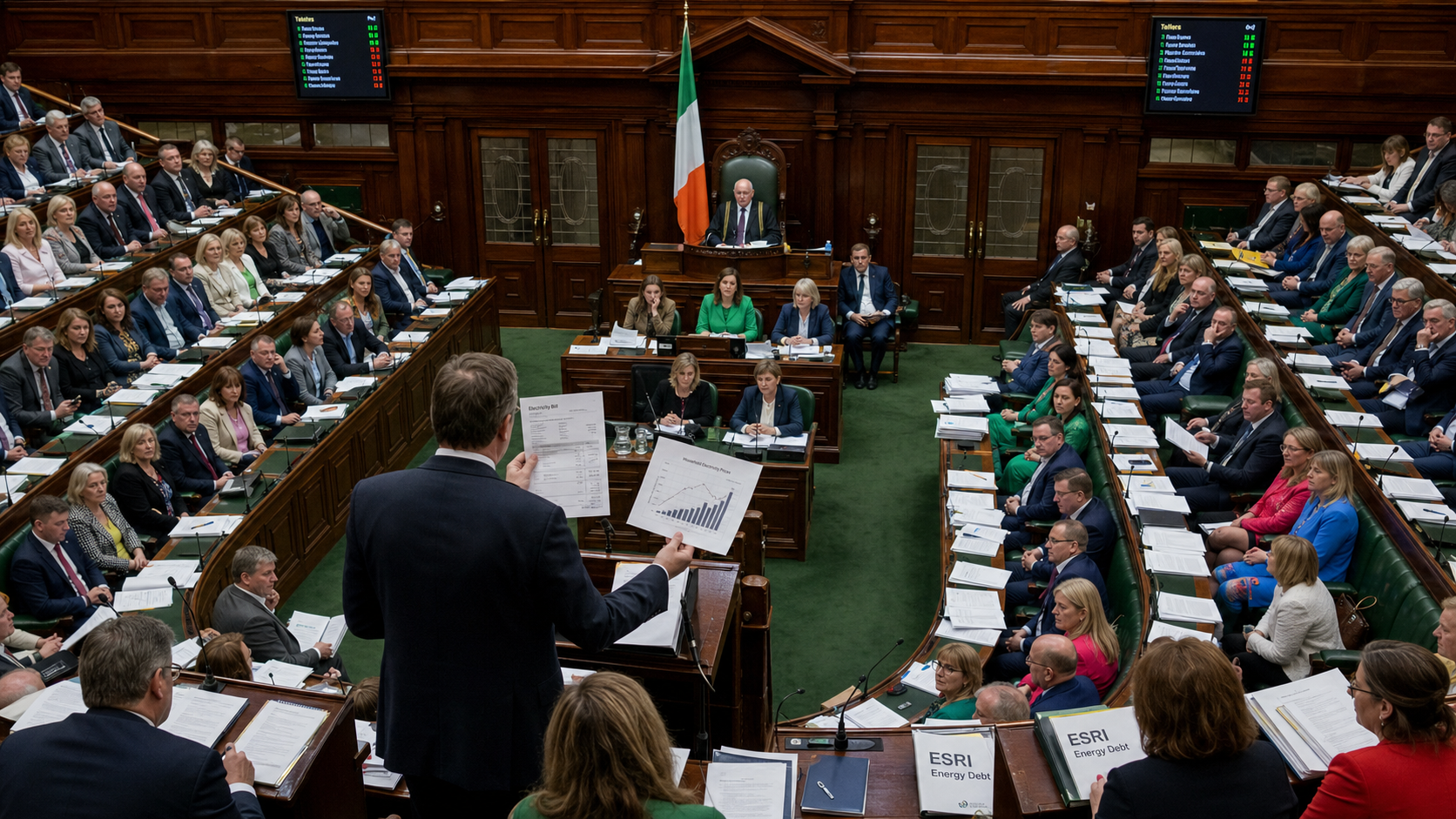
The government survived a Sinn Féin-led confidence motion in the Dáil on 14 April 2026, winning the vote by 92 votes to 78. However, the vote came at a significant political cost: junior minister Michael Healy-Rae resigned as Minister of State at the Department of Agriculture before the vote, stating that the government had "let the people of Ireland down" and was not listening to the concerns of the public. He then voted against the government, in a dramatic break that underscored the depth of rural anger at the coalition's handling of the crisis.
The government's fuel support package — which brings total support since the start of the crisis to approximately €600 million — includes an extension and increase of excise duty cuts on petrol and diesel, a delay in the planned carbon tax increase until October 2026, a €120 million Road Transporters Support Scheme for licensed haulage and coach operators, and a €100 million Fuel Subsidy Support Scheme for farmers, agricultural contractors, and fishers. Service stations are slowly recovering fuel supplies, with approximately 300 still without fuel as of Monday, down from over 600 at the height of the disruption.
Protest groups have dismissed the package as "insulting" and "not enough," with calls for further demonstrations in May if their demands for a fuel price cap and other measures are not fully met. Byelections have been called for Friday, 22 May 2026, in Dublin Central and Galway West — contests that will be seen as a direct referendum on the coalition's handling of the fuel crisis.
Why It Matters
The fuel crisis has exposed deep tensions between the government and rural communities, farmers, and the transport sector. The scale of the protests, the resignation of a junior minister, and the narrow margin of the confidence vote suggest that the political fallout is far from over. Taoiseach Simon Harris has confirmed that energy supports and income-tax cuts will be central to Budget 2026, signalling that the government intends to use the autumn budget to address the underlying cost-of-living pressures. But with protest groups threatening further action and byelections looming, the coalition's stability remains under pressure. The crisis has also reignited debate about Ireland's dependence on fossil fuels and the pace of the transition to renewable energy in the agricultural and transport sectors.
Local Impact
The fuel crisis has had a direct cross-border dimension, with fuel prices also rising sharply in Northern Ireland — petrol up 19% and diesel up 35% since the end of February 2026. A price gap between the two jurisdictions widened in April, with fuel in Northern Ireland becoming approximately 12 pence per litre cheaper than in the Republic, partly attributed to the reinstatement of excise duty in the South. In solidarity with the protests in the Republic, some tractor convoys also caused disruptions in Northern Ireland, notably in Belfast, highlighting the shared pressures facing farmers and hauliers on both sides of the border. For cross-border businesses and commuters, the divergence in fuel costs has added a new layer of complexity to an already challenging economic environment.
What's Next
The byelections in Dublin Central and Galway West on 22 May will be the first electoral test of the coalition's handling of the fuel crisis. Protest groups have warned of further demonstrations if the government does not go further in addressing fuel costs, and the Taoiseach's emphasis on fiscal sustainability suggests that the room for additional concessions is limited. The government's budget planning for 2027 will need to balance the demands of targeted support with the broader imperative of maintaining Ireland's strong fiscal position — a balancing act that will define the political landscape for the remainder of the year.
Sources: The Irish Times; RTÉ News; RTÉ News