Ulster American Folk Park Marks 50 Years Celebrating the Deep Ties Between Ulster and the United States
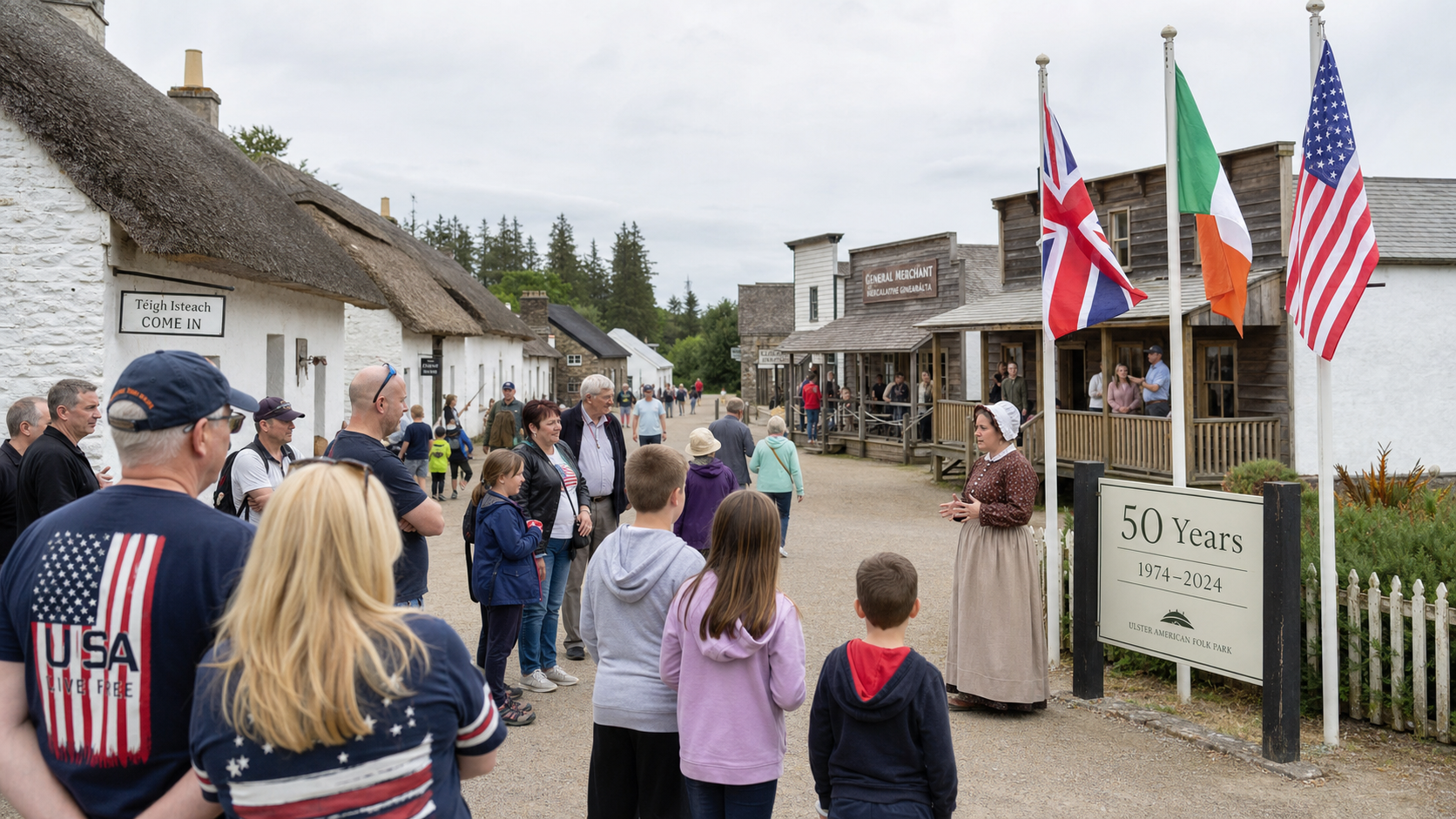
The Ulster American Folk Park in Omagh, County Tyrone, has celebrated its 50th anniversary, marking half a century of telling the story of Ulster emigration to America and the profound cultural, historical, and familial connections between the province of Ulster and the United States. The milestone anniversary was marked during the US Independence Day weekend, a fitting occasion given the central role that Ulster emigrants played in the founding and development of the American republic. The Folk Park, which is one of the most visited heritage attractions in Northern Ireland, has welcomed millions of visitors since its opening in 1976.
Background
The Ulster American Folk Park was established in 1976 on the site of the ancestral home of the Mellon family in Camphill, near Omagh in County Tyrone. The Mellons — who emigrated from Tyrone to Pennsylvania in the nineteenth century and went on to become one of the most prominent banking and industrial families in American history — provided the initial funding for the park, which was conceived as a way of telling the story of Ulster emigration to America and of preserving the material culture of the communities from which the emigrants came.
The story of Ulster emigration to America is one of the most significant chapters in the history of the Irish diaspora. Between the seventeenth and twentieth centuries, hundreds of thousands of people left Ulster for the New World, driven by a combination of economic hardship, religious persecution, and the desire for a better life. Many of these emigrants were Scots-Irish — the descendants of Scottish settlers who had come to Ulster in the seventeenth century — and they played a disproportionately important role in the development of American society, culture, and politics. Eleven US presidents have claimed Ulster-Scots ancestry, including Andrew Jackson, James Buchanan, and Woodrow Wilson.
The Folk Park tells this story through a combination of reconstructed buildings, living history demonstrations, and museum exhibitions. The outdoor section of the park features a series of authentic buildings from both Ulster and America, including a thatched cottage, a forge, a schoolhouse, and a replica of an emigrant ship, which visitors can walk through to experience the conditions of the transatlantic crossing. The indoor museum section houses a comprehensive collection of artefacts, documents, and photographs relating to the Ulster-American connection.
Key Developments
The 50th anniversary of the Ulster American Folk Park was marked during the US Independence Day weekend, a deliberate choice that underlines the connection between Ulster emigration and the founding of the American republic. The anniversary celebrations included a series of special events, exhibitions, and living history demonstrations, as well as a programme of talks and lectures on the history of Ulster emigration and its legacy in America. The Newsletter reported on the anniversary, noting the significance of the milestone for the park and for the broader story of the Ulster-American connection.
The anniversary comes at a time when the Folk Park is in the process of developing new exhibitions and facilities to enhance the visitor experience and to tell the story of Ulster emigration in new and more engaging ways. The park has been working with the National Museums NI and with partner institutions in the United States to develop new content that reflects the latest historical research on the Ulster-American connection and that engages with the full diversity of the emigrant experience, including the experiences of those who did not achieve the success of the Mellons.
The park attracts visitors from across Northern Ireland, the Republic of Ireland, Britain, and the United States, many of whom come specifically to research their family history and to connect with the places from which their ancestors emigrated. The genealogy service offered by the park is one of its most popular features, and the 50th anniversary has generated renewed interest in the park's resources among the Irish-American community.
Why It Matters
The Ulster American Folk Park's 50th anniversary is an opportunity to reflect on the enduring significance of the Ulster-American connection and on the role that emigration has played in shaping both Ulster and American society. The story of Ulster emigration is not simply a historical curiosity — it is a living connection that continues to shape the relationship between Northern Ireland and the United States in the present day. The US government's engagement with the Northern Ireland peace process, the significant Irish-American political lobby in Washington, and the substantial American investment in the Northern Ireland economy are all, in part, expressions of this connection. The Folk Park plays an important role in keeping this story alive and in making it accessible to new generations of visitors from both sides of the Atlantic.
Local Impact
The Ulster American Folk Park is one of the most important heritage attractions in County Tyrone and in the wider north-west of Northern Ireland. The park generates significant economic activity for the Omagh area, attracting visitors who spend money in local hotels, restaurants, and shops. The park is also an important employer in the area, providing jobs for historians, educators, craftspeople, and hospitality staff. The 50th anniversary celebrations have generated additional visitor interest, with the park reporting strong attendance figures for the anniversary period. The Omagh area, which was devastated by the 1998 bomb that killed 29 people, has worked hard to rebuild its economy and its sense of community in the years since, and the Folk Park has been an important part of that recovery.
What's Next
The Ulster American Folk Park will continue its 50th anniversary programme throughout the summer, with a series of special events and exhibitions planned for the coming months. The park is also in the process of developing a new masterplan for its future development, which will set out its ambitions for the next fifty years. The masterplan is expected to include proposals for new exhibition spaces, enhanced visitor facilities, and expanded educational programmes. National Museums NI, which manages the park, is in discussions with the Department for Communities about funding for the masterplan's implementation. The park's genealogy service will also be expanded as part of the anniversary programme, with new digital resources being developed to make it easier for people to research their Ulster-American ancestry.