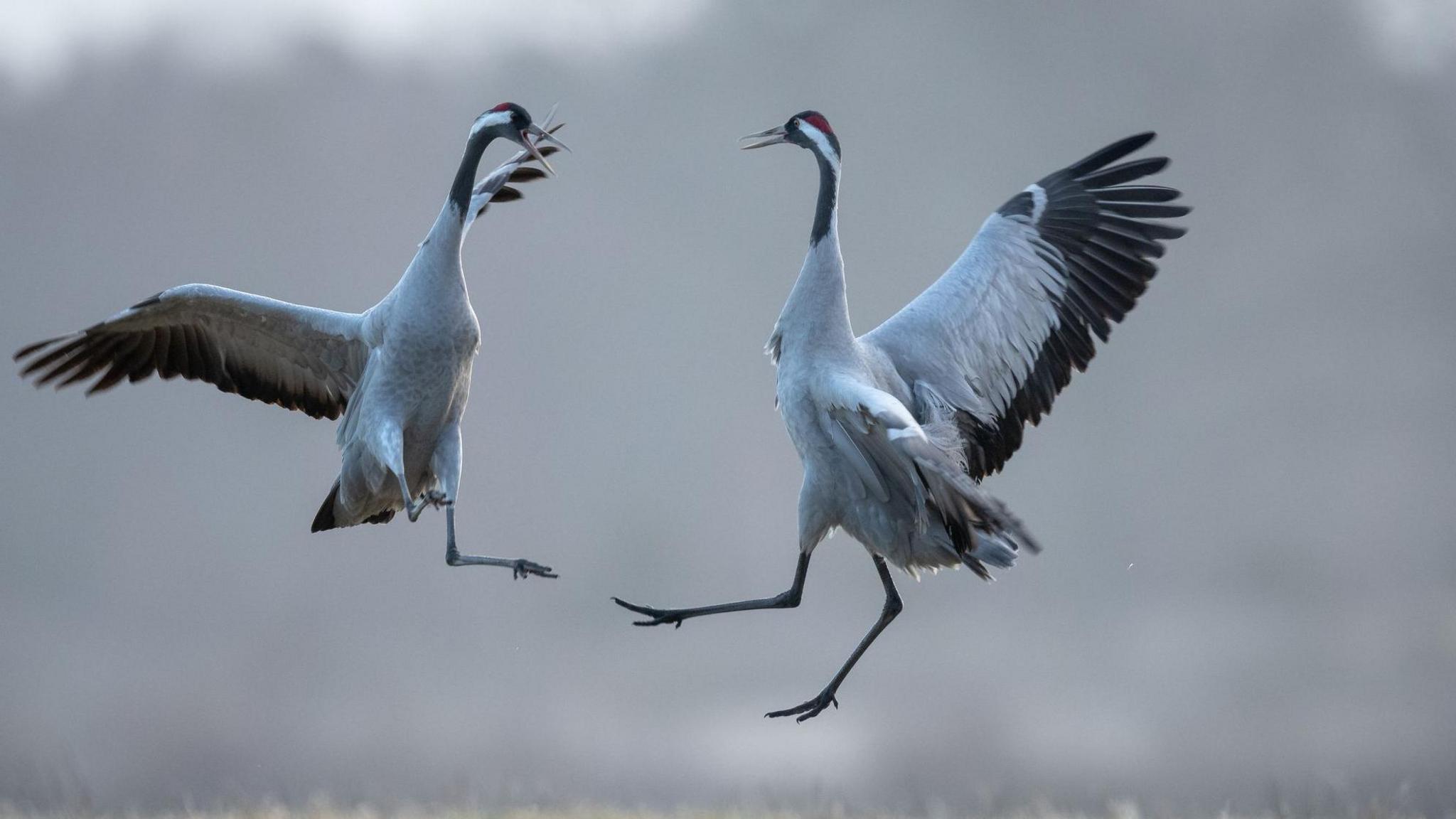
UK's Tallest Bird Soars to Record High as Crane Population Hits 250
The common crane — the UK's tallest bird, once hunted to extinction — has staged a remarkable comeback, with a record 87 breeding pairs raising 37 chicks across the country in 2025, bringing the total population to approximately 250 birds, conservationists have announced.
The figures, published this week by the RSPB and the Wildfowl and Wetlands Trust (WWT), represent the highest breeding numbers ever recorded in the UK and offer a powerful testament to what decades of patient conservation work can achieve. Winter gatherings of over a hundred cranes are now observed in the Fens — a sight that would have been unimaginable just two decades ago.
Background
Cranes went extinct in the UK around 400 years ago, driven out by overhunting and the widespread drainage of wetland habitats. Their return began in 1979 when a small number of wild cranes naturally migrated from mainland Europe to Norfolk. Since then, a combination of habitat restoration and targeted conservation efforts has allowed the population to gradually expand across England and into Scotland.
A major boost came from the Great Crane Project — a collaboration between the RSPB, the WWT, and the Pensthorpe Conservation Trust — which between 2009 and 2014 involved hand-rearing and releasing cranes into the Somerset Levels and Moors, while working with local farming families to restore suitable nesting habitats.
Key Developments
Scotland enjoyed a particularly successful year, with at least 10 breeding pairs producing nine chicks — Scotland's most successful breeding season since the 16th century. At least 80% of the UK's breeding pairs now nest on protected land, with a significant proportion on RSPB reserves including West Sedgemoor in Somerset and Lakenheath Fen in Suffolk.
In Lincolnshire, 2026 marks the seventh breeding season for cranes at Willow Tree Fen, with the population growing from one to four breeding pairs and over 50 individuals now roosting on site. Martin McGill, a reserve manager at WWT Slimbridge, emphasised the importance of protecting and restoring bigger, more connected wetlands for the long-term survival of this iconic bird.
Why It Matters
The crane's comeback is one of British conservation's great success stories — proof that with sustained effort, habitat restoration, and community involvement, species can be brought back from the brink. For birdwatchers and nature lovers across the UK, the sight and sound of cranes — their distinctive bugling calls can be heard up to 3.5 miles away — is an increasingly joyful part of the British countryside.
What's Next
Despite the record numbers, conservationists caution that the population remains relatively small and vulnerable to threats including climate change impacts on wetland habitats and avian influenza. Continued monitoring and habitat protection will be essential to sustain the recovery. Members of the public are encouraged to log crane sightings on the iRecord citizen science app to help build a picture of the species' distribution.
Full details are available at RSPB.