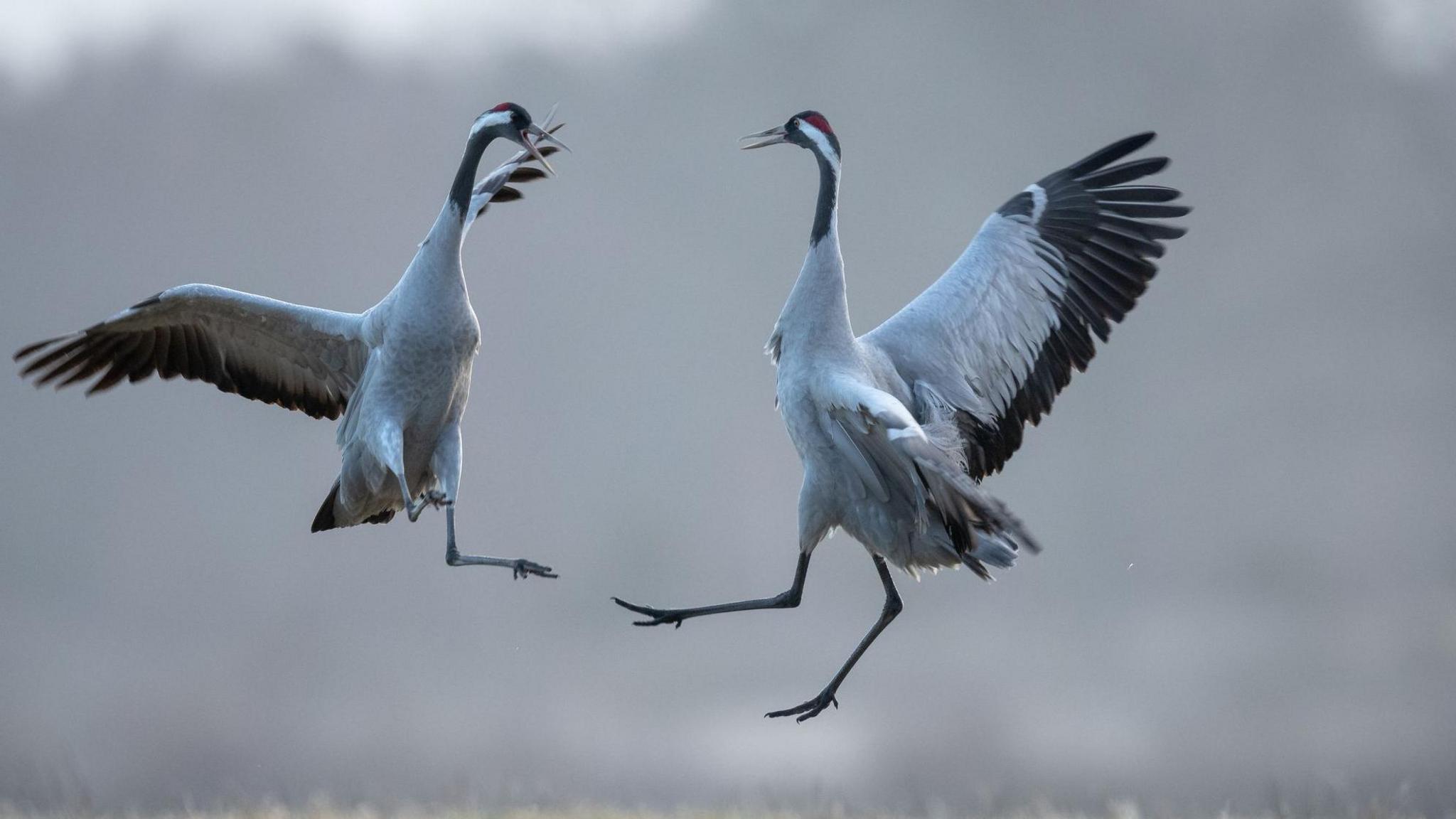
UK's Tallest Bird Soars Back: Record Crane Breeding Season Marks Remarkable Comeback
The common crane — the UK's tallest bird, standing at over a metre high — has recorded its best breeding season in centuries, with 87 breeding pairs successfully raising 37 chicks in 2025, according to figures that have delighted conservationists and birdwatchers across Britain.
The record-breaking numbers, reported by the BBC and conservation organisations, represent a stunning turnaround for a species that was extinct as a breeding bird in the UK for around 400 years before a small population began re-establishing itself in the Norfolk Broads in the 1980s. The crane's comeback is now one of the most celebrated conservation success stories in British wildlife history.
Background
Common cranes were once widespread across Britain but were hunted to extinction as a breeding species by the 17th century, with wetland drainage destroying their habitat. The modern recovery began when a small group of cranes naturally recolonised the Norfolk Broads, and was accelerated by the Great Crane Project — a partnership between the RSPB, the Wildfowl and Wetlands Trust (WWT), Durrell Wildlife Conservation Trust, and Natural England — which reintroduced cranes to the Somerset Levels from 2010 onwards.
Key Developments
The 2025 breeding season saw cranes nesting across a wider range of sites than ever before, including new locations in Scotland and northern England. The 87 breeding pairs represent a significant increase on previous years, and the 37 chicks successfully raised to fledging age is a record for the modern era. Conservationists attribute the success to a combination of improved wetland habitat management, reduced disturbance at nesting sites, and the growing maturity of the reintroduced population.
The BBC's Newsround covered the story with enthusiasm, helping to introduce a new generation of young nature lovers to the crane's remarkable story. The birds, which stand up to 130cm tall with a wingspan of over two metres, are an awe-inspiring sight in the British countryside and have become a symbol of what is possible when conservation efforts are sustained over decades.
Why It Matters
The crane's recovery is a beacon of hope at a time when many UK wildlife species are under severe pressure from habitat loss, climate change, and agricultural intensification. It demonstrates that with sustained effort, political will, and community support, even species that have been absent for centuries can be brought back. For birdwatchers and nature lovers across the UK and Ireland, the crane's return is a source of profound joy.
What's Next
Conservation organisations are now working to expand the crane's range further, with plans to create and restore additional wetland habitats across England, Scotland, and Wales. The long-term goal is a self-sustaining population of several hundred breeding pairs distributed across suitable habitats throughout Britain. With each record-breaking season, that ambition feels increasingly within reach.