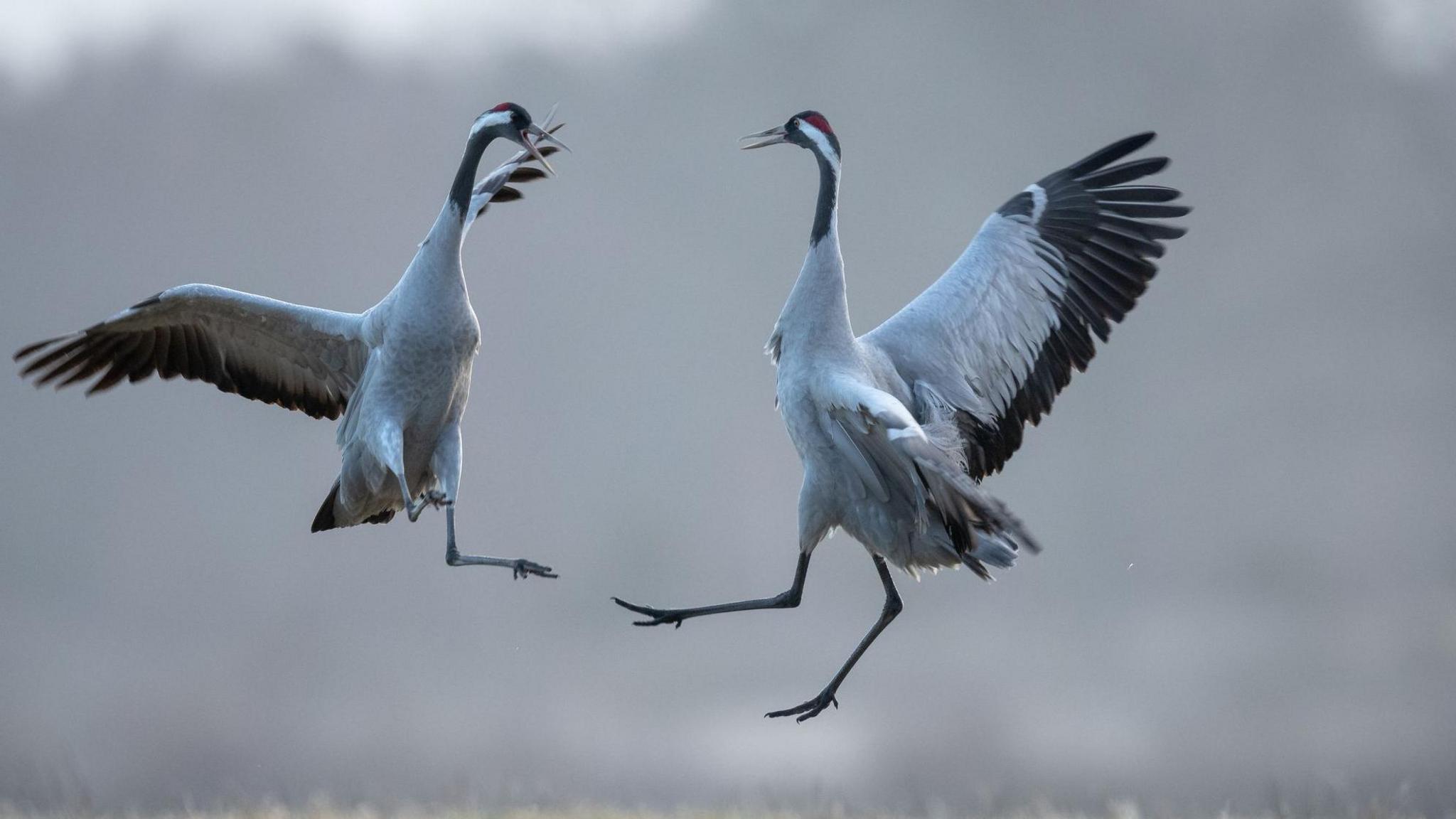
Britain's Tallest Bird Soars Back: Record 87 Crane Breeding Pairs Mark Landmark Conservation Year
The common crane — Britain's tallest bird, once hunted to extinction in the UK around 400 years ago — has achieved a record-breaking breeding year, with 87 pairs successfully raising 37 chicks in 2025, bringing the total UK population to approximately 250 adults and younger birds in a triumph for conservation efforts.
The figures, published by the RSPB and confirmed by wildlife surveys, represent the highest breeding numbers ever recorded for the species in the UK and offer a powerful reminder of what patient, sustained conservation work can achieve. Flocks of over a hundred cranes can now be seen in the Fens during winter — a sight that would have been unimaginable just two decades ago.
Background
Common cranes disappeared from Britain around 400 years ago, driven to extinction by habitat destruction and over-hunting. Historical records show they were once a prized delicacy — 115 were reportedly served at King Henry III's Christmas feast in 1251. Their return began in 1979, when a small number of birds from mainland Europe were spotted in Norfolk, beginning a slow and fragile recolonisation.
The recovery accelerated thanks to the Great Crane Project, a collaboration between the RSPB, the Wildfowl and Wetlands Trust (WWT), and Pensthorpe Conservation Trust. Between 2009 and 2014, the project hand-reared and released cranes in the Somerset Levels and Moors, while working with local farmers to create suitable nesting habitats. Approximately 80% of breeding cranes now nest on protected land, with a significant proportion on RSPB reserves.
Key Developments
In Scotland, 10 pairs bred in 2025, fledging nine chicks — up from just four pairs in 2024. The re-emergence of cranes in Aberdeenshire in 2012 marked their return to Scotland after centuries of absence. Reserve managers at sites like Lakenheath Fen in Suffolk have played a crucial role, cutting reeds in winter to create landing spots and secluded nest sites for the birds.
Standing around 1.2 metres tall with a wingspan of approximately 2 metres, cranes are unmistakable birds. Their elaborate courtship displays — involving bows, pirouettes, jumps, and synchronised movements — and their distinctive bugling call, audible up to 3.5 miles away, make them one of Britain's most spectacular wildlife spectacles.
Why It Matters
The crane's comeback is a rare and genuinely uplifting conservation success story at a time when many UK wildlife species are in decline. It demonstrates that with the right combination of habitat restoration, reintroduction programmes, and community engagement with farmers and landowners, even species that have been absent for centuries can return and thrive. For birdwatchers and nature lovers across the UK, the sight of cranes in the wild is a profound and moving experience.
What's Next
Despite the record numbers, conservationists caution that the crane population remains relatively small and vulnerable, particularly to the long-term impacts of climate change on wetland habitats. The RSPB is calling for continued protection and restoration of larger, more connected wetlands to ensure the species' long-term survival. For now, however, the crane's return is a story worth celebrating — proof that nature, given a chance, can recover in remarkable ways.
Full details are available via RSPB and BBC Newsround.