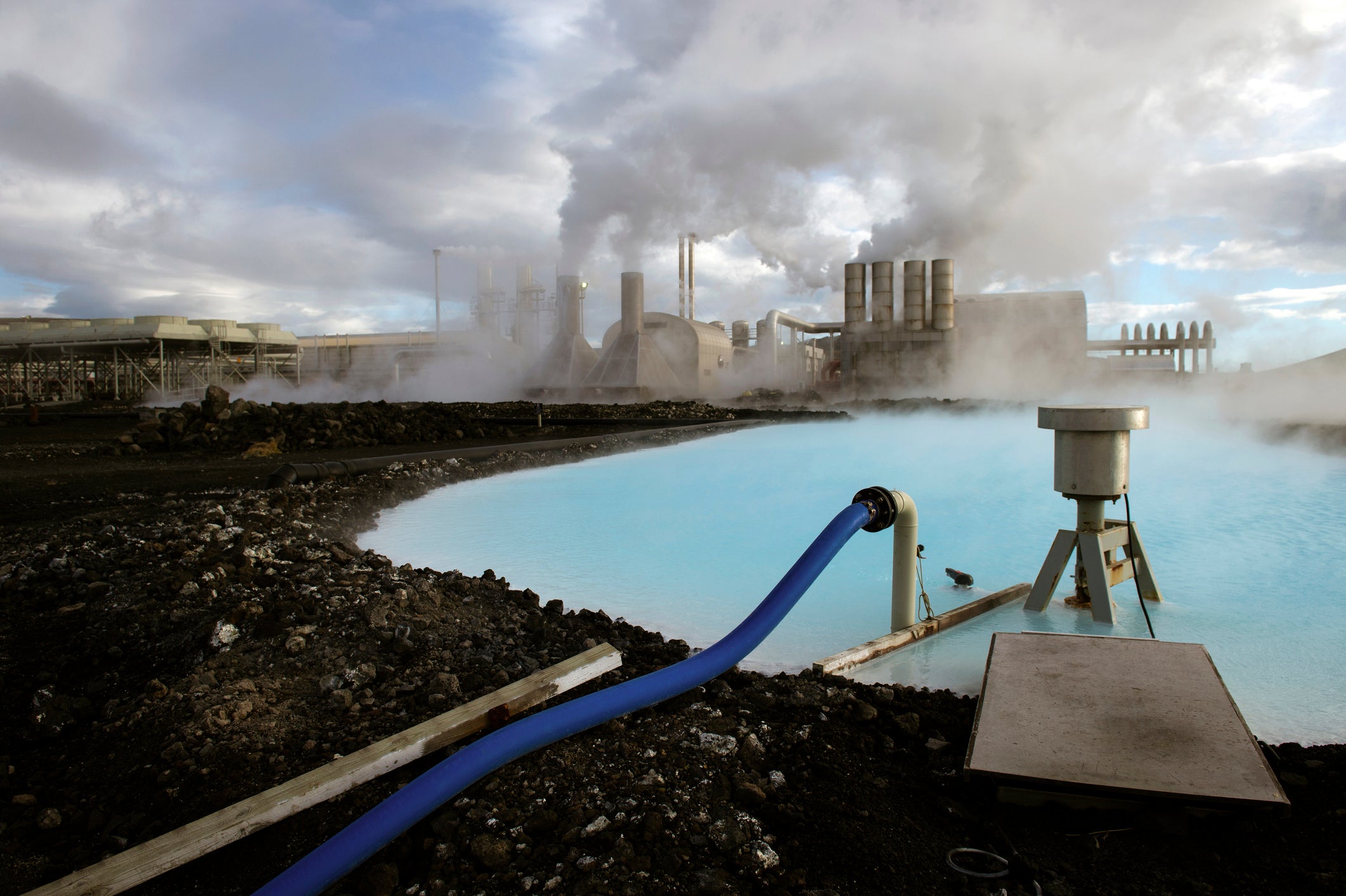
UK's First Geothermal Power Plant Goes Live in Cornwall, Powering 10,000 Homes
After two decades of development, the United Downs Deep Geothermal Power project near Redruth, Cornwall has become the UK's first operational geothermal power plant — generating round-the-clock renewable electricity for 10,000 homes and pioneering the domestic production of lithium, a critical material for the electric vehicle revolution.Background
Cornwall's geology has been exploited for its mineral wealth for centuries — the county's tin and copper mines once made it one of the most industrially significant regions in the world. But beneath the worked-out mines and the dramatic moorland landscape lies a different kind of resource: the heat of the Earth itself. Cornwall sits on a granite batholith — a massive body of granite that generates heat through the natural decay of radioactive elements — making it one of the most geothermally active regions in the UK.
The idea of harnessing this geothermal energy has been discussed since the 1970s, when the global oil crisis prompted a search for alternative energy sources. Early research demonstrated the potential, but the technology and economics were not yet viable. Geothermal Engineering Ltd (GEL), the company behind the United Downs project, was founded in 2009 specifically to develop Cornwall's geothermal potential, and has spent the intervening years securing funding, developing the technology, and navigating the complex regulatory and planning processes involved in drilling to depths of over five kilometres.
The project has been backed by a combination of public and private funding, including from the European Regional Development Fund, Cornwall Council, and Thrive Renewables. The involvement of Octopus Energy — one of the UK's most innovative energy suppliers — as the offtaker for the plant's electricity output has provided the commercial foundation that the project needed to reach operational status.
Key Developments
The United Downs plant has become operational, with Octopus Energy signing a long-term agreement to purchase at least 3MW of baseload power — enough to supply 10,000 homes continuously. The facility uses a closed-loop system, pumping hot geothermal fluid from a production well drilled to a depth of 5,275 metres, where temperatures exceed 190°C. The heat is used to drive an Organic Rankine Cycle turbine to generate electricity before the cooled fluid is reinjected into the ground. The plant generates zero-emission power around the clock, providing a form of renewable energy that is not dependent on weather conditions — unlike solar or wind power.
The plant's lithium production capability is equally significant. The geothermal fluid contains a high concentration of lithium, measured at over 340 parts per million — one of the world's richest geothermal lithium sources. The plant is currently producing battery-grade lithium carbonate with an initial capacity of 100 tonnes per year. GEL aims to scale production to over 18,000 tonnes annually within the next decade, an output that could supply the lithium needed for approximately 250,000 electric vehicle batteries per year — providing the UK with a domestic source of a critical material that is currently almost entirely imported.
Why It Matters
The United Downs plant is significant for several reasons that go beyond its immediate energy output. First, it demonstrates that geothermal energy is a viable technology in the UK context — a proof of concept that could unlock investment in similar projects across Cornwall and potentially in other geothermally active regions of the UK. Second, the plant's lithium production capability addresses a critical vulnerability in the UK's electric vehicle supply chain. The UK currently imports virtually all of its lithium from Australia, Chile, and China, creating a dependency that is both economically and strategically problematic. A domestic lithium supply would reduce that dependency and support the UK's ambitions to become a major manufacturer of electric vehicles and batteries. For context, the UK government has committed to ending the sale of new petrol and diesel cars by 2035, creating an enormous demand for battery materials that the current supply chain is not equipped to meet. The United Downs plant is a small but symbolically important step towards addressing that challenge.
Local Impact
For Cornwall, the United Downs plant represents a new chapter in the county's long history of mining and energy production. The project has created skilled jobs in a region that has historically struggled with unemployment and economic deprivation, and the planned expansion of lithium production could create hundreds more. For the UK as a whole, the plant demonstrates that the country has the geological resources and technical capability to develop a domestic geothermal energy industry — a development that could contribute meaningfully to the UK's net zero targets. In Ireland, where geothermal energy has also been identified as a potential resource, the success of the United Downs project will be watched closely by policymakers and energy developers. For communities across the UK and Ireland who are concerned about energy security and the cost of living, the development of domestic renewable energy sources — including geothermal — offers the prospect of greater energy independence and more stable prices over the long term.
What's Next
GEL is planning to expand the United Downs plant's capacity and to develop additional geothermal projects in Cornwall and potentially in other parts of the UK. The company is also working with the UK government on a regulatory framework for geothermal energy development that would make it easier and cheaper to develop new projects. The lithium production expansion — from 100 tonnes per year to 18,000 tonnes — will require significant additional investment and is expected to take several years to achieve. Watch for GEL's announcement of its next development phase, expected in the second half of 2026, which will provide the clearest indication of the pace at which the UK's geothermal energy industry is likely to develop.
Sources: Ground Engineering — Cornwall geothermal plant, March 2026; Geothermal Engineering Ltd — United Downs project