Jamia Usmania Mosque Initiative Aims to Make Community Hub More Inclusive for Older Men
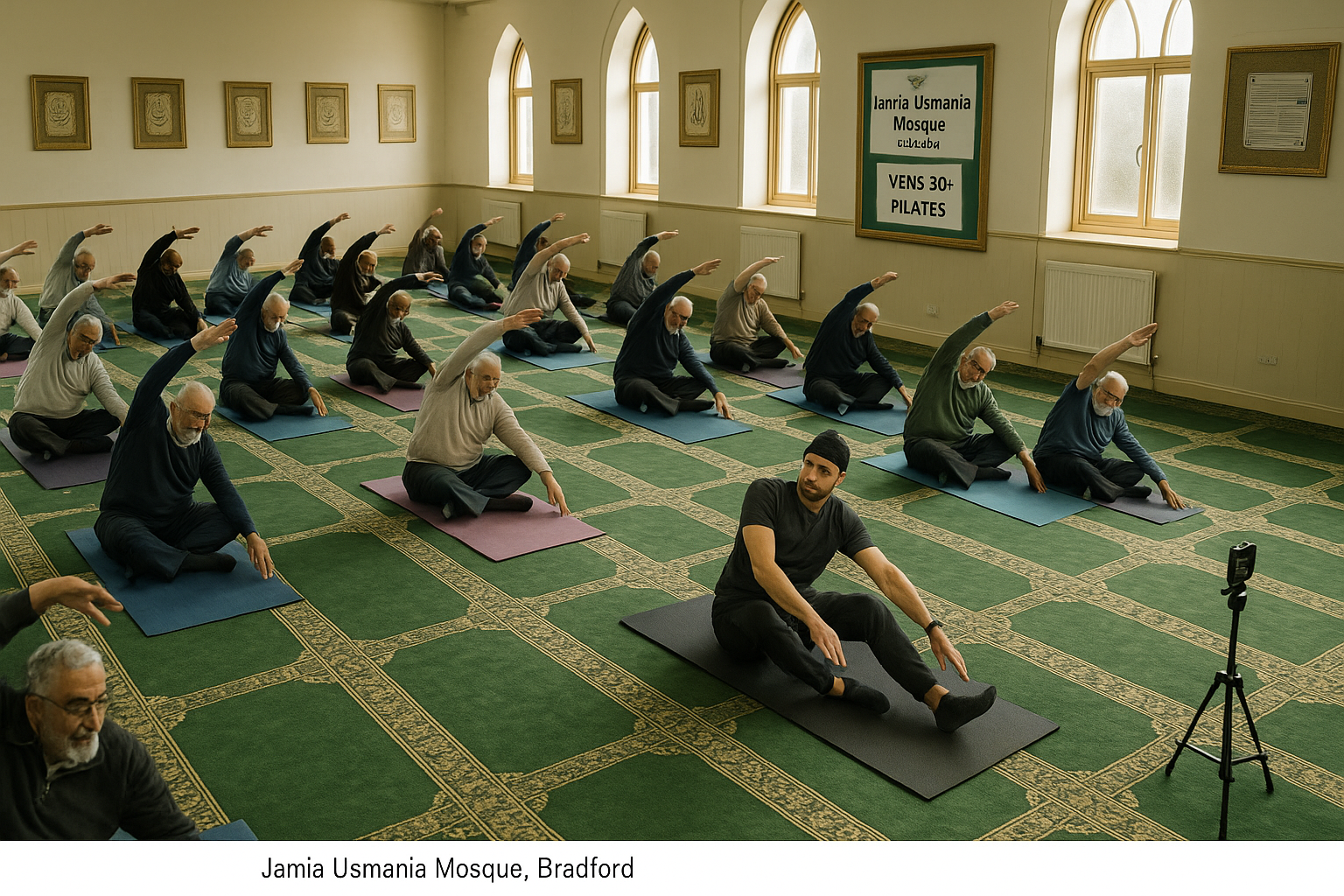
A men's Pilates class for individuals over 50 at the Jamia Usmania Mosque in Bradford has gone viral on TikTok, capturing hearts across the UK and beyond with footage of older men stretching, laughing, and supporting one another in a setting that many would not have expected — and the mosque's secretary has confirmed that plans are already under way to expand the initiative to women's sessions and make the mosque a more inclusive community hub for all.
Background
Bradford is one of the UK's most diverse cities, with a large South Asian Muslim community that has been part of the city's fabric for generations. The Jamia Usmania Mosque, like many mosques across the UK, has traditionally served primarily as a place of worship and religious education. In recent years, however, mosques across Britain have been exploring ways to expand their role in the community — offering social services, mental health support, food banks, and community events that serve the broader population, not just worshippers.
The men's Pilates class is part of this broader trend. Older men — particularly those from South Asian backgrounds — are statistically among the least likely to engage with formal exercise programmes or seek help for physical and mental health problems. Cultural factors, including expectations around masculinity and stoicism, can make it difficult for older men to admit to health difficulties or to participate in activities that might be perceived as outside their comfort zone. A Pilates class in a familiar, trusted community setting — the mosque — removes many of these barriers.
The class was established with the specific aim of improving the health and well-being of older men in the community, addressing a recognised gap in provision. Bradford has some of the highest rates of cardiovascular disease, diabetes, and other chronic conditions in the UK — conditions that are strongly associated with physical inactivity and that disproportionately affect South Asian men.
Key Developments
The TikTok video showing the Pilates class has attracted significant attention, with viewers across the UK and internationally responding warmly to the sight of older men — many of them in traditional dress — engaging enthusiastically with an exercise form more commonly associated with yoga studios and leisure centres. The video's viral spread has brought the mosque and its community initiative to a national audience.
The mosque's secretary confirmed that the response to the class has been overwhelmingly positive, with attendees reporting both physical and emotional benefits — improved flexibility and strength, but also new friendships and a sense of belonging. Plans are already under way to expand the initiative to women's sessions, which would make the mosque's health and well-being programme accessible to the whole community. The secretary noted that the goal is to make the mosque a more inclusive community hub, welcoming people for reasons beyond worship.
Attendees have spoken about the class as a place where they can be themselves — where the combination of familiar surroundings, shared cultural background, and gentle exercise creates a space for connection and mutual support that many had not found elsewhere. For some, it has been the first time they have engaged in regular physical activity in years.
Why It Matters
The Bradford mosque's Pilates class matters because it demonstrates what community institutions can achieve when they are willing to innovate and respond to the needs of the people they serve. Mosques, churches, temples, and other faith institutions are among the most trusted and deeply embedded organisations in many UK communities — and their potential as platforms for health and social interventions is enormous and largely untapped.
For older men specifically, the class addresses a genuine public health challenge. Men over 50 are significantly less likely than women of the same age to engage with preventive health services, exercise programmes, or mental health support. The consequences — in terms of higher rates of cardiovascular disease, depression, and social isolation — are well documented. An initiative that reaches this group through a trusted community institution, in a culturally appropriate setting, is exactly the kind of creative, community-led solution that public health experts have been calling for.
Local Impact
The Jamia Usmania Mosque's initiative has already inspired interest from other mosques and community organisations across Bradford and beyond. In Northern Ireland, where community organisations — including churches and cultural centres — play a vital role in social cohesion, the Bradford model offers a template that could be adapted to local contexts. In Belfast, organisations working with older men in communities across the city have noted the potential of faith-based settings as venues for health and well-being programmes. The viral spread of the TikTok video has also brought positive attention to Bradford — a city that has sometimes struggled with its public image — and to the Muslim community's contribution to British civic life.
What's Next
The mosque is planning to launch women's Pilates sessions in the coming months, with the aim of making the health and well-being programme accessible to the whole community. The initiative has attracted interest from Bradford Council's public health team, which is exploring whether the model could be supported and replicated across other community venues in the city. Watch for any announcement from the mosque about the expansion of its programme — and for the inevitable follow-up TikTok videos, which are likely to be equally heartwarming.
Sources: Rest Less, Positive News