UK Inflation Set to Hit 4% as Bank of England Holds Rates Amid Hormuz Energy Shock
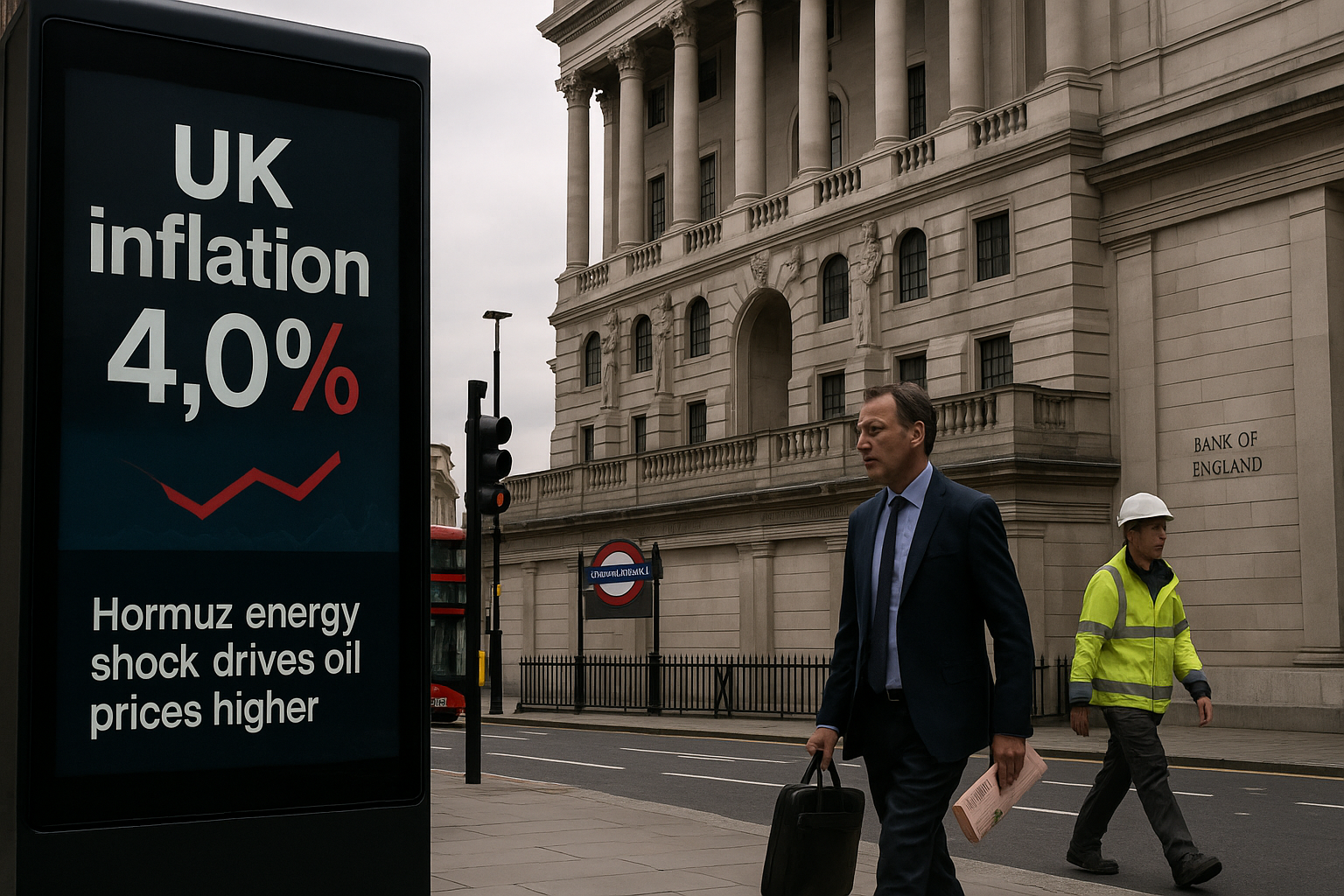
Britain's economy faces a fresh inflationary shock as disruption to global energy supplies caused by Iran's military action in the Strait of Hormuz pushes inflation forecasts to between 3.5% and 4%, forcing the Bank of England to hold its base rate at 3.75% and revise GDP growth projections down to 1.1% for 2026.
Background
The Strait of Hormuz is the world's most strategically important oil and gas chokepoint, through which approximately 20% of global oil supply and a significant proportion of liquefied natural gas passes. Any disruption to shipping in the strait has immediate and severe consequences for global energy markets, and by extension for the UK economy, which remains heavily dependent on imported gas for electricity generation and domestic heating.
The conflict between the United States and Iran, which escalated sharply on 4 May 2026 with Iranian drone and missile attacks in the strait, has created precisely the kind of supply shock that central banks and finance ministries most fear. The Bank of England had been cautiously cutting interest rates from their post-pandemic highs, with the base rate standing at 3.75% — down from a peak of 5.25% in 2023. That carefully managed easing cycle is now under threat.
The UK economy entered 2026 in a fragile state. Growth had been sluggish, consumer confidence remained subdued following years of cost-of-living pressure, and the housing market had only partially recovered from the shock of high mortgage rates. The last thing the economy needed was another energy price spike.
Key Developments
Economic analysis reported by NewsNow indicates that UK inflation is now projected to peak between 3.5% and 4% as a direct result of the Hormuz disruption — a significant upward revision from earlier forecasts. GDP growth projections for 2026 have been cut to 1.1%, reflecting both the direct impact of higher energy costs on business and consumer spending, and the broader uncertainty created by the geopolitical situation.
The Bank of England has opted to hold its base rate at 3.75%, a decision that reflects the difficulty of the position it now faces. Cutting rates further would risk stoking inflation at precisely the moment when energy prices are rising; raising rates would risk choking off what little growth the economy is generating. The Monetary Policy Committee is expected to signal a more cautious approach to future rate cuts at its next meeting.
HMRC has separately awarded Capgemini a £600 million contract to provide new contact centre services, effective from 15 May 2026, in a deal that will run until 2034. The contract represents one of the largest public sector technology deals of the year and underscores the government's continued reliance on large technology suppliers for critical public services.
Why It Matters
The Hormuz energy shock arrives at a moment of particular vulnerability for UK households. Energy bills have already risen significantly over the past year, and a further spike driven by global supply disruption would represent the third major energy price shock in four years — following the post-pandemic surge and the Russia-Ukraine crisis of 2022. For context, the UK average household energy bill peaked at over £2,500 per year during the 2022 crisis, and many families have not fully recovered from that shock.
The Bank of England's decision to hold rates also has direct consequences for mortgage holders. Millions of UK homeowners are on variable or tracker mortgages, and the prospect of rates remaining higher for longer will weigh on household finances. Unlike the European Central Bank, which has more room to manoeuvre given the eurozone's different energy exposure, the Bank of England faces a particularly difficult trade-off between growth and inflation.
Local Impact
The economic consequences of the Hormuz crisis are being felt from Belfast to Bristol. In Northern Ireland, where energy costs have historically been higher than the GB average due to the region's reliance on imported gas and its lack of connection to the GB electricity grid, the inflationary pressure is particularly acute. Small businesses across the province — already squeezed by post-Brexit trading costs — face higher energy bills at a time when consumer spending is under pressure. In the Republic of Ireland, the Irish medicines pricing deal is reported to be under pressure from both tariffs and the Iran conflict, adding to the economic headwinds facing the island as a whole.
What's Next
The Bank of England's next Monetary Policy Committee meeting will be closely watched for any revision to the interest rate outlook. The Office for Budget Responsibility is expected to update its economic forecasts in light of the Hormuz disruption. The government's energy security strategy, which has been under review since the start of the year, is likely to be accelerated. The Capgemini HMRC contact centre contract comes into effect on 15 May, and its implementation will be monitored by parliamentary committees scrutinising public sector technology spending.
Sources: NewsNow — UK Economy; Public Technology — HMRC picks Capgemini for £600m deal