Governments Announce Reforms to Troubled Legacy Legislation
The UK and Irish governments have announced a joint programme of reforms to the Troubles Legacy Act, following sustained pressure from victims' groups, political parties, and human rights organisations who argued that the original legislation — passed by the previous UK government in 2023 — failed to deliver justice for those affected by the conflict in Northern Ireland.
The reforms, which were announced following a bilateral meeting between the UK Secretary of State for Northern Ireland and the Irish Minister for Foreign Affairs, include changes to the Independent Commission for Reconciliation and Information Recovery (ICRIR), the body established under the original act to investigate Troubles-era deaths and serious injuries.
Background to the Reforms
The Troubles Legacy Act 2023 was one of the most controversial pieces of legislation passed in relation to Northern Ireland in recent years. The act introduced a conditional immunity scheme for those who cooperated with the ICRIR, effectively ending the prospect of criminal prosecutions for Troubles-era offences. It also placed a moratorium on new civil cases and inquests relating to the conflict.
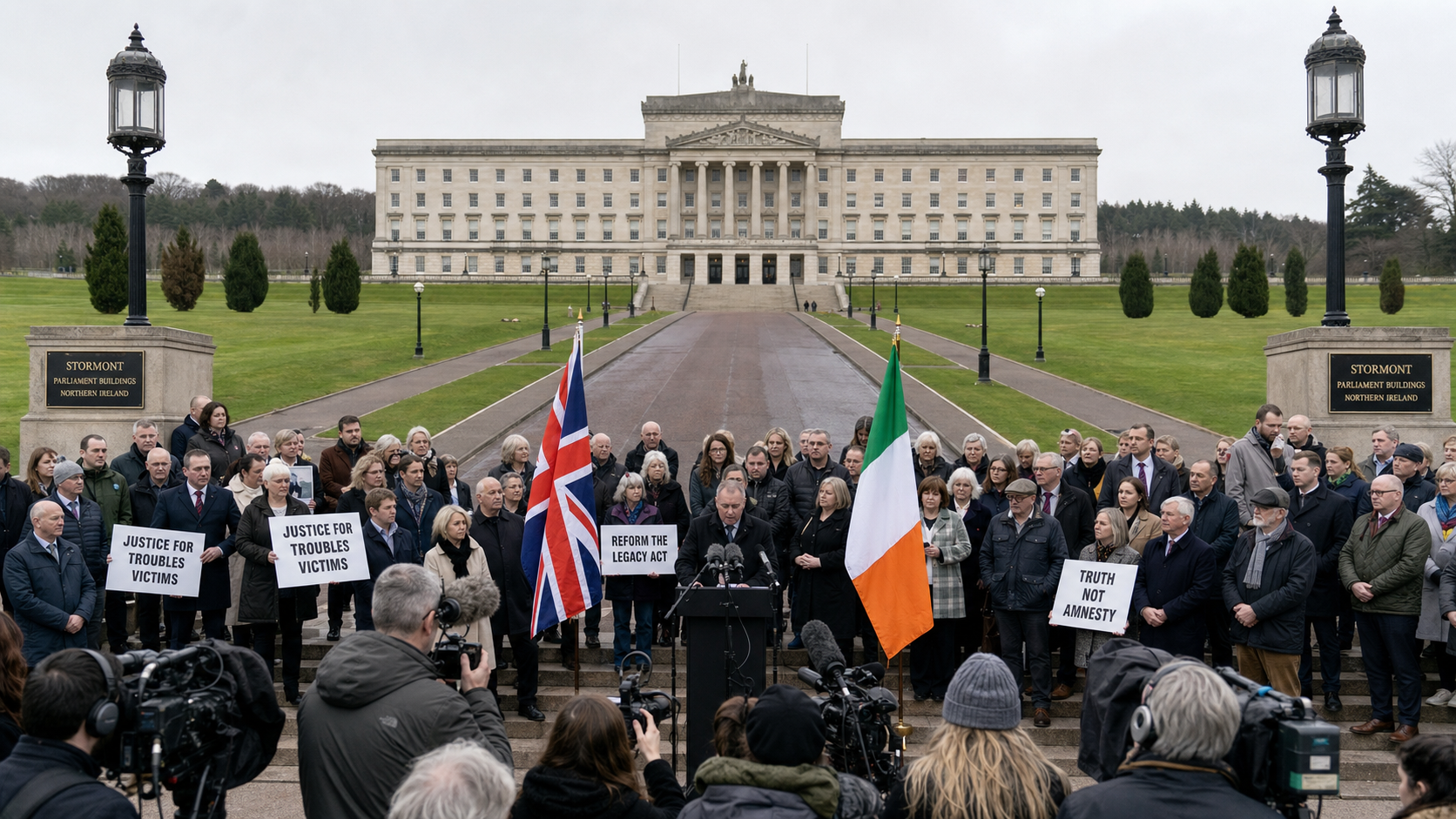
The legislation was opposed by virtually every political party in Northern Ireland, by the Irish government, by victims' groups, and by human rights organisations. Critics argued that it prioritised reconciliation over justice and that it denied victims and their families the right to know the truth about what happened to their loved ones.
The UK Supreme Court subsequently ruled that several provisions of the act were incompatible with the European Convention on Human Rights, and the new UK government committed to reforming the legislation following its election in 2024.
Key Elements of the Reforms
The reforms announced this week include the removal of the conditional immunity scheme, which will be replaced by a new framework that allows for prosecutions in cases where there is sufficient evidence and where the public interest requires it. The moratorium on civil cases and inquests will also be lifted, allowing families to pursue legal remedies that had been blocked under the original act.
The ICRIR will be retained but with a revised mandate that places greater emphasis on information recovery and truth-telling. The commission will be given enhanced powers to compel the disclosure of documents and to require witnesses to give evidence, and its findings will be made public in all cases.
The Irish government has welcomed the reforms as a significant step forward, while acknowledging that they do not fully address all of the concerns that have been raised about the original legislation. Taoiseach Micheál Martin said the reforms represented "a genuine effort to do right by the victims and survivors of the Troubles" and expressed hope that they would help to bring some measure of closure to those who had been waiting decades for answers.
Victims' Groups React
Reactions from victims' groups have been mixed. Some have welcomed the removal of the immunity scheme and the lifting of the moratorium on civil cases as significant improvements on the original legislation. Others have expressed concern that the reforms do not go far enough and that the ICRIR, even in its reformed state, will not be able to deliver the kind of independent, thorough investigations that victims deserve.
The Pat Finucane Centre, which campaigns for truth and justice for victims of the conflict, said the reforms were a step in the right direction but called for further changes to ensure that the process was genuinely independent and that families had meaningful participation in investigations into the deaths of their loved ones.