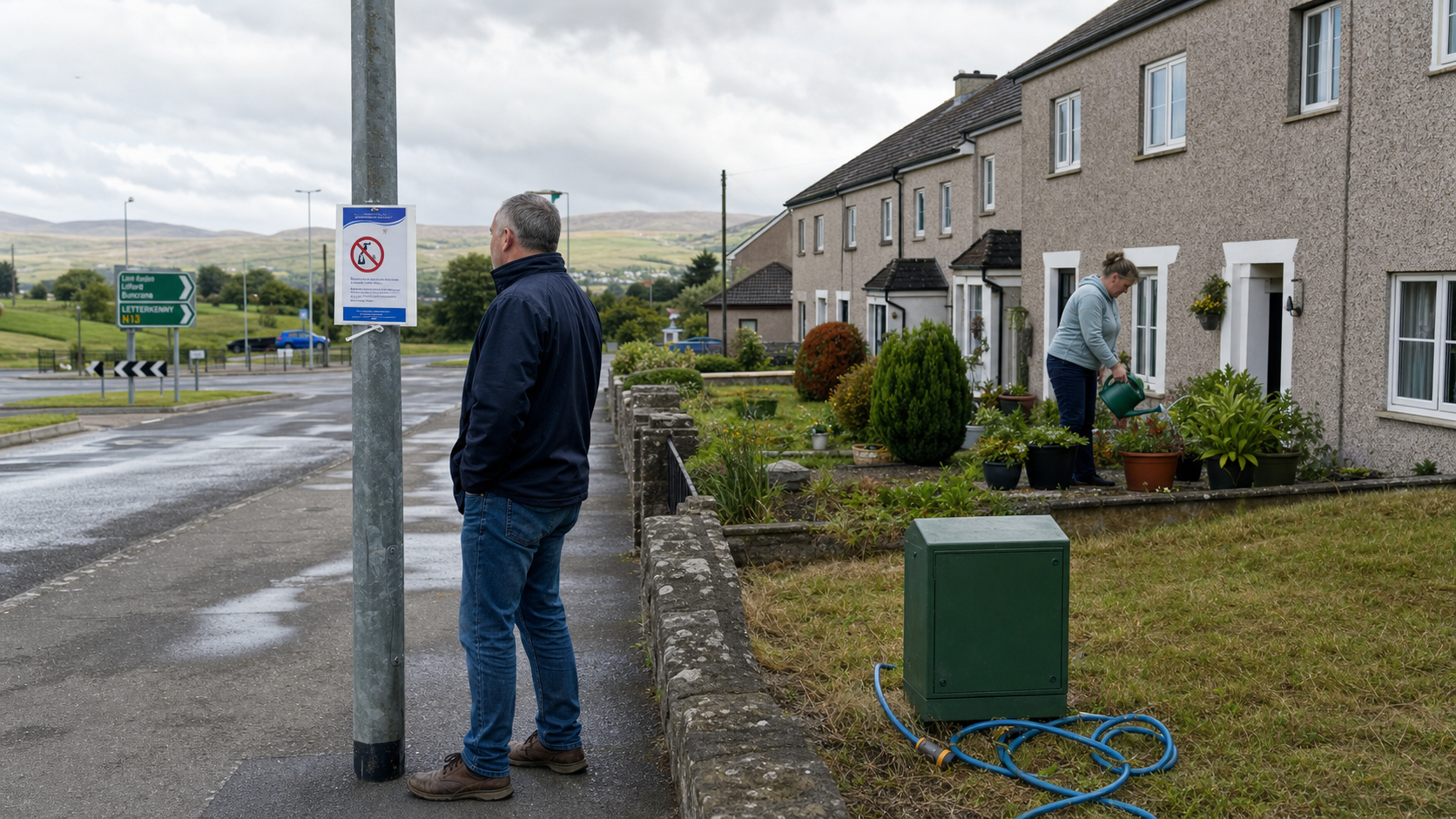
Uisce Éireann Weighs Regional Extension of Hosepipe Ban as Nationwide Order Approaches August 26 Expiry
Uisce Éireann is actively considering whether to extend the nationwide hosepipe ban beyond its scheduled August 26 expiry date, with the utility's Head of Water Operations indicating that a regional extension is possible for areas still experiencing severe supply pressure, even as improved rainfall in the northwest has eased conditions in some parts of the country.
Background
The Water Conservation Order that has prohibited hosepipe use across all 26 counties since July 24 was introduced following an extended period of exceptionally warm and dry weather that placed the country's water supply infrastructure under sustained stress. The ban — which covers garden watering, car washing, filling domestic swimming pools, and topping up ornamental ponds — was the first nationwide hosepipe ban in Ireland in several years, reflecting the severity of the drought conditions that developed through June and July.
Ireland's water supply system, managed by Uisce Éireann since the utility's establishment in 2014, draws on a combination of surface water sources — rivers, lakes, and reservoirs — and groundwater. Both categories were affected by the prolonged dry spell, with lake and river levels falling significantly below seasonal norms and groundwater recharge effectively halted by the high soil moisture deficit that prevented rainfall from penetrating to aquifer level.
The ban has been broadly observed, with Uisce Éireann reporting a meaningful reduction in demand since its introduction. However, the utility has also had to implement night-time water restrictions in some areas — cutting supply between midnight and 6am to allow reservoirs to recover for daytime use — a measure that indicates the underlying supply situation remains precarious in parts of the country.
Key Developments
Margaret Attridge, Head of Water Operations at Uisce Éireann, confirmed on Tuesday that the utility is monitoring conditions closely ahead of the August 26 expiry date. While she noted that some regions — particularly in the northwest, where rainfall has been more consistent in recent weeks — have seen sufficient improvement to suggest the ban could be lifted there, other areas remain under severe pressure.
"We are keeping all options under review," Attridge said. "If we do extend the order, it is likely to be on a regional basis rather than a nationwide one, reflecting the different conditions across the country." She indicated that the decision will be based on ongoing monitoring of lake, river, and groundwater sources, as well as the persistent soil moisture deficit that continues to limit effective recharge in many areas.
The Irish Times reported that the decision on whether to extend the ban is due shortly, with Uisce Éireann expected to make an announcement before the current order expires. The utility has urged continued compliance in the meantime, noting that premature relaxation of restrictions could undo the gains made through public cooperation over the past month.
Why It Matters
The hosepipe ban is a relatively blunt instrument — it reduces demand at the margins but does not address the structural vulnerabilities in Ireland's water supply infrastructure that the drought has exposed. Ireland's water system has been chronically underinvested for decades, with leakage rates among the highest in Europe and treatment capacity in some areas insufficient to meet peak demand even in normal conditions.
The 2026 drought has accelerated a conversation about climate adaptation that Irish water policy has been slow to engage with. As average temperatures rise and rainfall patterns become more variable, the frequency and severity of drought events is expected to increase. The current ban may be a preview of conditions that become routine rather than exceptional within a decade or two.
Uisce Éireann's capital investment programme, which is funded through the government's National Development Plan, includes significant spending on leakage reduction and supply resilience. But the pace of that investment has been criticised as insufficient given the scale of the challenge, and the 2026 drought has given renewed urgency to calls for acceleration.
Local Impact
The practical impact of the ban varies significantly by location. In Dublin, where the Vartry and Liffey systems provide relatively robust supply, the restrictions have been felt primarily as an inconvenience. In parts of the midlands, the south-east, and the west — where smaller, more vulnerable supply schemes serve rural communities — the situation has been more acute, with some areas experiencing pressure drops and intermittent supply even during daytime hours.
Farmers have been among the most affected, with the ban compounding the impact of the dry spell on livestock watering and crop irrigation. The Irish Farmers' Association has called for clarity on the extension decision as quickly as possible, noting that agricultural planning for the autumn period depends on knowing what water restrictions will be in place.
What's Next
Uisce Éireann is expected to announce its decision on the ban's extension before August 26. If a regional extension is implemented, it will be accompanied by maps showing which counties or supply zones remain under restriction. The utility has also indicated that it will publish a post-drought review of supply resilience, with recommendations for infrastructure investment, before the end of 2026.