Uisce Éireann Extends Water Restrictions to 39 Supplies Nationwide as Heatwave Pushes Demand 20% Above Normal
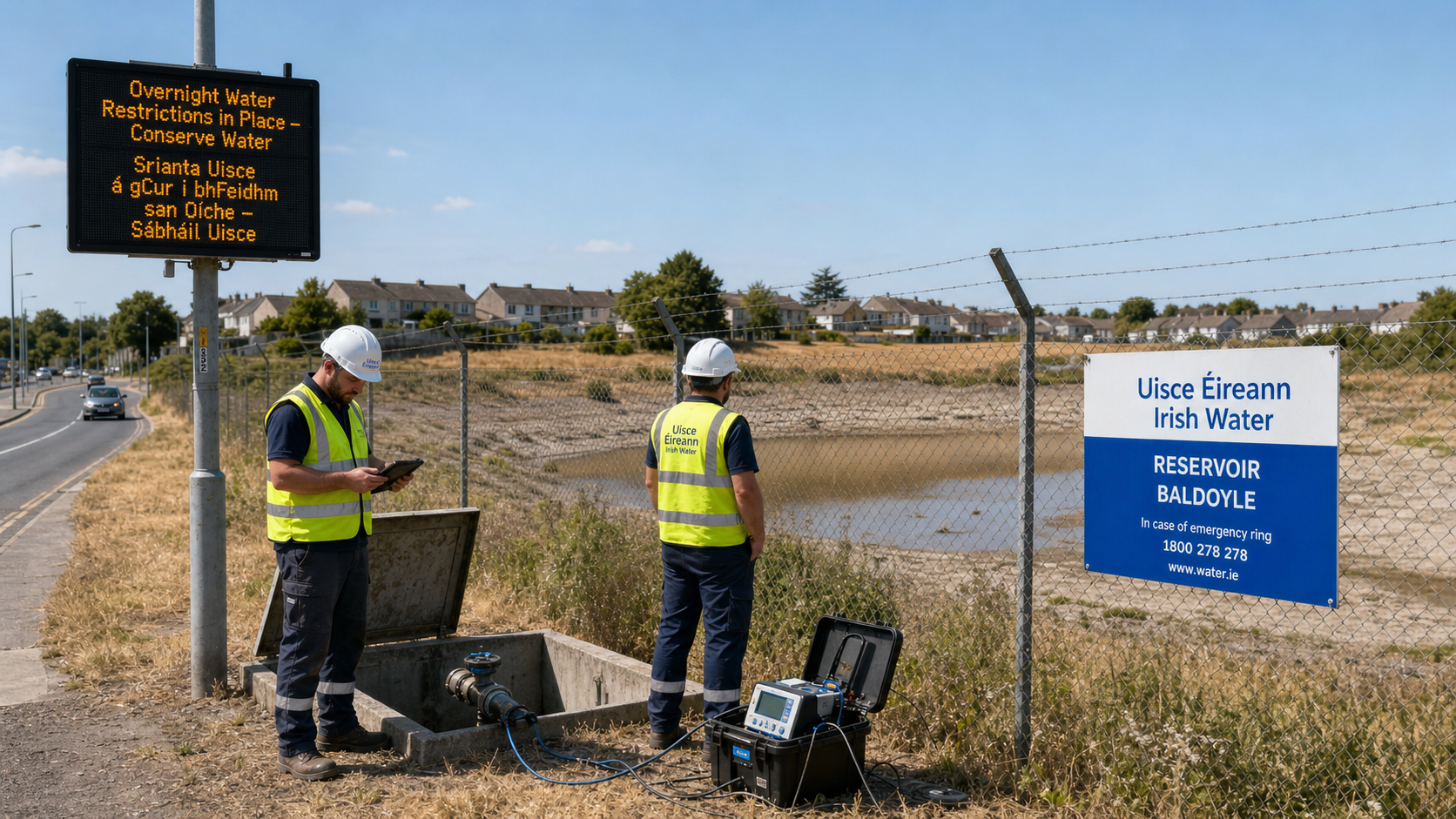
Uisce Éireann has extended overnight water restrictions to 39 water supplies across nine counties as Ireland's ongoing heatwave pushes demand in the Greater Dublin Area to 693 million litres per day — approximately 20% above normal levels — with the national water utility warning that the combination of exceptional heat, low rainfall, and surging consumption is placing the country's water infrastructure under severe strain.
Background
Ireland's water infrastructure has been a subject of sustained public and political concern for more than a decade, with chronic underinvestment in the network leaving it poorly equipped to handle the demands of a growing population and increasingly variable weather patterns. Uisce Éireann, established in 2013 to take over responsibility for water services from local authorities, has been working to address a legacy of deferred maintenance and inadequate capacity, but progress has been slow and the scale of the challenge remains formidable.
The current heatwave has exposed the fragility of the system in stark terms. Ireland's water treatment and distribution infrastructure was designed for a climate characterised by relatively consistent rainfall throughout the year, with summer demand typically only modestly above the annual average. The combination of an extended dry spell — with rainfall significantly below average across most of the country since late June — and a surge in consumption driven by the exceptional heat has created conditions that the system was not designed to manage.
The hosepipe ban that came into effect on 16 July, covering Dublin, south Tipperary, and parts of Kildare, Meath, Wexford, and Wicklow, was the first such measure implemented by Uisce Éireann since its establishment. The ban, which will remain in place until 26 August, prohibits the use of hosepipes for garden watering, car washing, and other non-essential purposes, and carries a potential fine for non-compliance.
Key Developments
The extension of overnight restrictions to 39 water supplies across nine counties represents a significant escalation of the conservation measures already in place. The overnight restrictions — typically implemented between 11pm and 6am — are designed to allow reservoirs and storage tanks to replenish during the period of lowest demand, ensuring that supplies are available for essential uses during the day. The counties affected include Donegal, Cavan, Galway, Laois, Limerick, Kerry, Cork, Waterford, and Kilkenny, reflecting the nationwide reach of the current dry spell.
Uisce Éireann has urged all households and businesses to reduce their water consumption, providing practical guidance on measures including fixing leaking taps and pipes, taking shorter showers, using dishwashers and washing machines only when full, and avoiding the use of paddling pools and garden sprinklers. The utility has also activated its emergency response protocols, deploying additional tankers to supplement supplies in areas where network pressure has fallen below acceptable levels.
Met Éireann has maintained a Status Yellow high temperature warning for nine counties, with temperatures reaching up to 30°C in parts of the country. The forecast for the coming week suggests some easing of the heat, but meteorologists have cautioned that further dry spells are possible before the end of the summer.
Why It Matters
The water crisis of summer 2026 is a preview of the challenges that climate change will increasingly pose for Ireland's infrastructure and public services. The combination of higher temperatures, more variable rainfall, and a growing population creates a structural mismatch between supply and demand that cannot be resolved simply by asking people to use less water during heatwaves. Ireland needs sustained, long-term investment in water storage, treatment, and distribution capacity — investment that has been repeatedly deferred in favour of more politically visible spending priorities. The current crisis also highlights the particular vulnerability of rural communities, where water supplies are often served by smaller, less resilient networks that are more susceptible to the effects of drought. The 39 supplies affected by overnight restrictions are predominantly in rural areas, where the consequences of supply failure — including the inability to water livestock or maintain basic sanitation — can be severe.
Local Impact
The impact of the water restrictions is being felt differently across the country. In Dublin, the hosepipe ban has prompted a visible change in behaviour, with garden centres reporting a sharp drop in sales of garden watering equipment and car washes experiencing reduced demand. In rural Galway, Kerry, and Donegal, the overnight restrictions have required households to adapt their routines, with some residents filling containers during the day to ensure they have water available for essential uses overnight. Farmers across the affected counties are managing the dual challenge of reduced water availability and the impact of the dry weather on grass growth and fodder supplies. Agricultural advisers have urged farmers to monitor soil moisture levels carefully and to consider early housing of livestock if the dry spell continues.
What's Next
Uisce Éireann will review the water restriction measures on a weekly basis, adjusting them in response to rainfall, reservoir levels, and demand patterns. The hosepipe ban covering Dublin and surrounding counties will remain in place until 26 August unless reservoir levels recover sufficiently to allow its early lifting. The utility has indicated it will publish a detailed post-event review of the 2026 water crisis, examining the performance of the network under exceptional demand conditions and identifying the infrastructure investments needed to improve resilience. The government is expected to announce additional capital funding for water infrastructure in the context of the autumn budget, with the current crisis providing a powerful political impetus for action.