Taoiseach Calls on Cork City Council to Explore All Options for Bessborough Mother and Baby Home Site
Taoiseach Micheál Martin has intervened in the controversy surrounding the former Bessborough mother and baby home site in Cork, calling on Cork City Council to engage directly with the owners of the property to explore 'all available future options' — a move welcomed but deemed insufficient by survivors and campaigners who are demanding a Compulsory Purchase Order to secure the grounds, where hundreds of children are believed to be buried in unmarked graves, as a permanent memorial.
Background
Bessborough House in Cork was one of Ireland's largest and most notorious mother and baby homes, operated by the Sacred Hearts of Jesus and Mary religious congregation from 1922 to 1998. During its decades of operation, thousands of unmarried mothers were sent to the institution, where they gave birth in conditions that the 2021 Commission of Investigation into Mother and Baby Homes described as characterised by 'a culture of shame and secrecy.' The commission's final report documented appalling mortality rates among infants at Bessborough, with the death rate for babies in the institution's early decades reaching levels that the commission described as 'shocking.'
The commission's report identified Bessborough as one of the institutions where significant numbers of children may have been buried in unmarked graves on the grounds. Ground-penetrating radar surveys conducted in subsequent years have identified anomalies consistent with the presence of human remains in several areas of the site, though definitive archaeological excavation has not yet been completed. The uncertainty about the precise location and extent of any burials has complicated efforts to determine what should happen to the site.
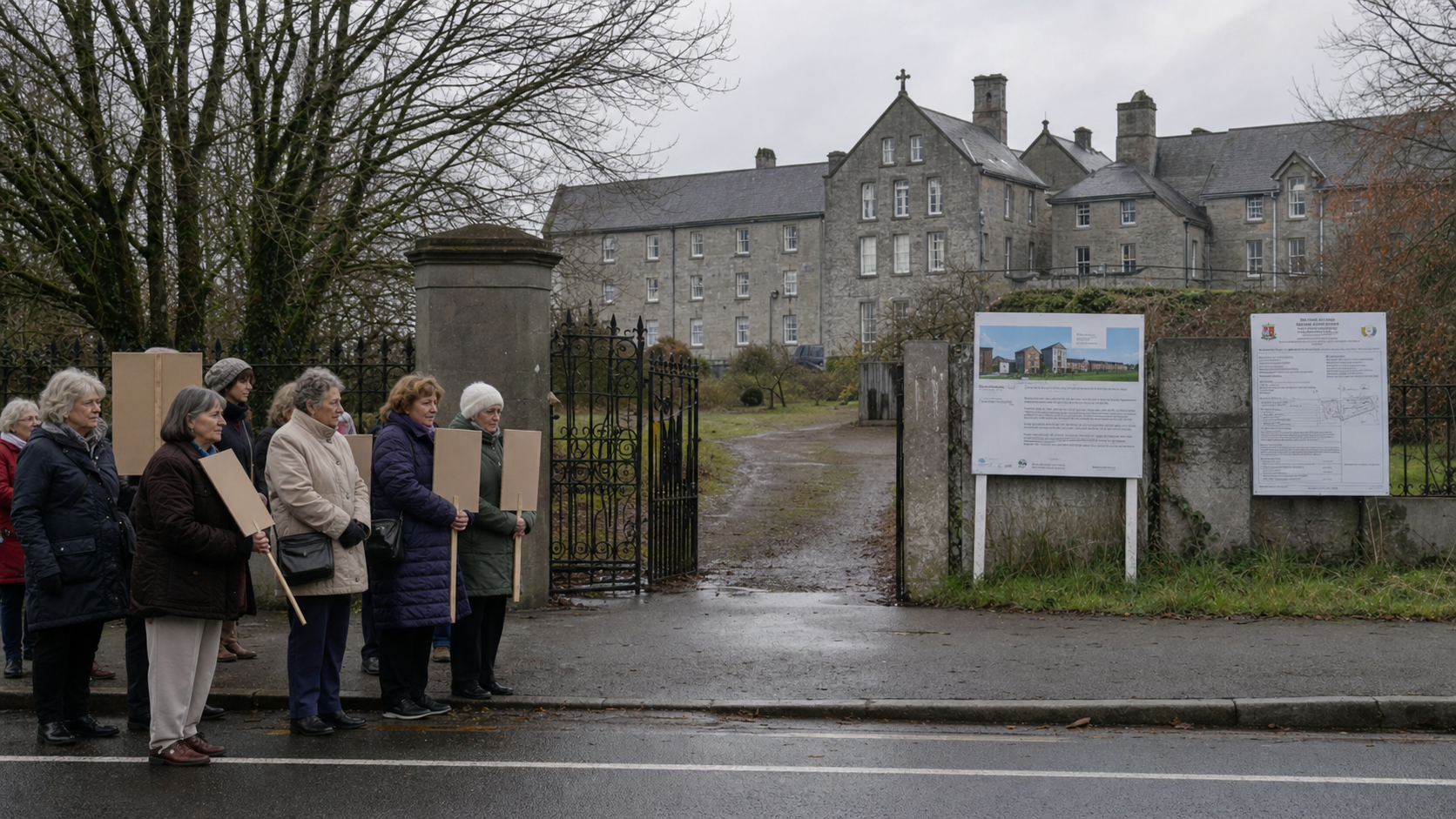
In a development that caused widespread outrage among survivors and their advocates, An Coimisiún Pleanála — the national planning authority — granted planning permission for the construction of 106 apartments on a portion of the Bessborough grounds. The decision was made on the basis that the specific plot approved for development was not identified as containing human remains, though critics argued that the uncertainty about the full extent of any burials made any development on the site premature and disrespectful.
Key Developments
The Taoiseach's intervention came following sustained pressure from survivors' groups, opposition politicians, and the public. Speaking on Friday, Micheál Martin — who, as a Cork TD, has a particular personal connection to the issue — called on Cork City Council to open direct negotiations with the current owners of the Bessborough site to explore what options might be available to secure the grounds for a memorial or other appropriate use.
However, the Taoiseach stopped short of endorsing the call for a Compulsory Purchase Order, describing the legal mechanism as 'not straightforward' and citing the absence of definitive evidence that human remains are present on the specific plot approved for development. This position drew criticism from Social Democrats leader Holly Cairns, who argued that the State has both a legal and moral obligation to secure the entire site and that the complexity of a CPO should not be used as a reason for inaction.
Survivors' groups, including those representing former residents of Bessborough and their children, expressed frustration at what they described as the government's continued failure to take decisive action. Many survivors have spent decades campaigning for recognition, accountability, and the proper memorialisation of the children who died at Bessborough and similar institutions.
Why It Matters
The Bessborough controversy sits at the intersection of Ireland's ongoing reckoning with its institutional past and the practical challenges of managing a planning system that must balance competing interests. The mother and baby home scandal has been one of the defining moral and political issues of contemporary Ireland, forcing a confrontation with a history of State and Church complicity in the systematic mistreatment of vulnerable women and children. The question of what happens to the physical sites of these institutions — many of which are now valuable development land — is therefore not merely a planning matter but a question of national conscience. The granting of planning permission for apartments at Bessborough, however legally defensible in narrow terms, has been experienced by many survivors as a further act of erasure — a repetition, in a different register, of the original impulse to conceal and forget.
Local Impact
The Bessborough site is located in the Blackrock area of Cork city, a prosperous southside suburb with a mix of residential, educational, and recreational uses. The prospect of apartment development on the grounds has divided local opinion, with some residents welcoming the provision of new housing in an area with high demand, while others have expressed discomfort at the idea of residential development on a site with such a painful history. For the Cork survivor community, many of whom live in the city and its surroundings, the outcome of the Bessborough controversy has profound personal significance. Cork City Council will now face the challenge of engaging with the site's owners in a context where political pressure, legal complexity, and the legitimate interests of survivors must all be carefully balanced.
What's Next
Cork City Council is expected to respond to the Taoiseach's call for engagement with the site's owners in the coming weeks. The council will need to take legal advice on the options available to it, including the feasibility of a CPO and the conditions under which planning permission might be modified or revoked. The government has indicated it will provide whatever support is necessary to facilitate a resolution that respects the dignity of survivors and the memory of those who died at Bessborough. A further Dáil debate on the issue is expected when the Oireachtas returns from its summer recess in September. Survivors' groups have indicated they will maintain their campaign for a CPO and a permanent, State-funded memorial on the full Bessborough site.