UHL Emergency Department Crisis Deepens as Nearly 1,000 Patients Attend in Three Days
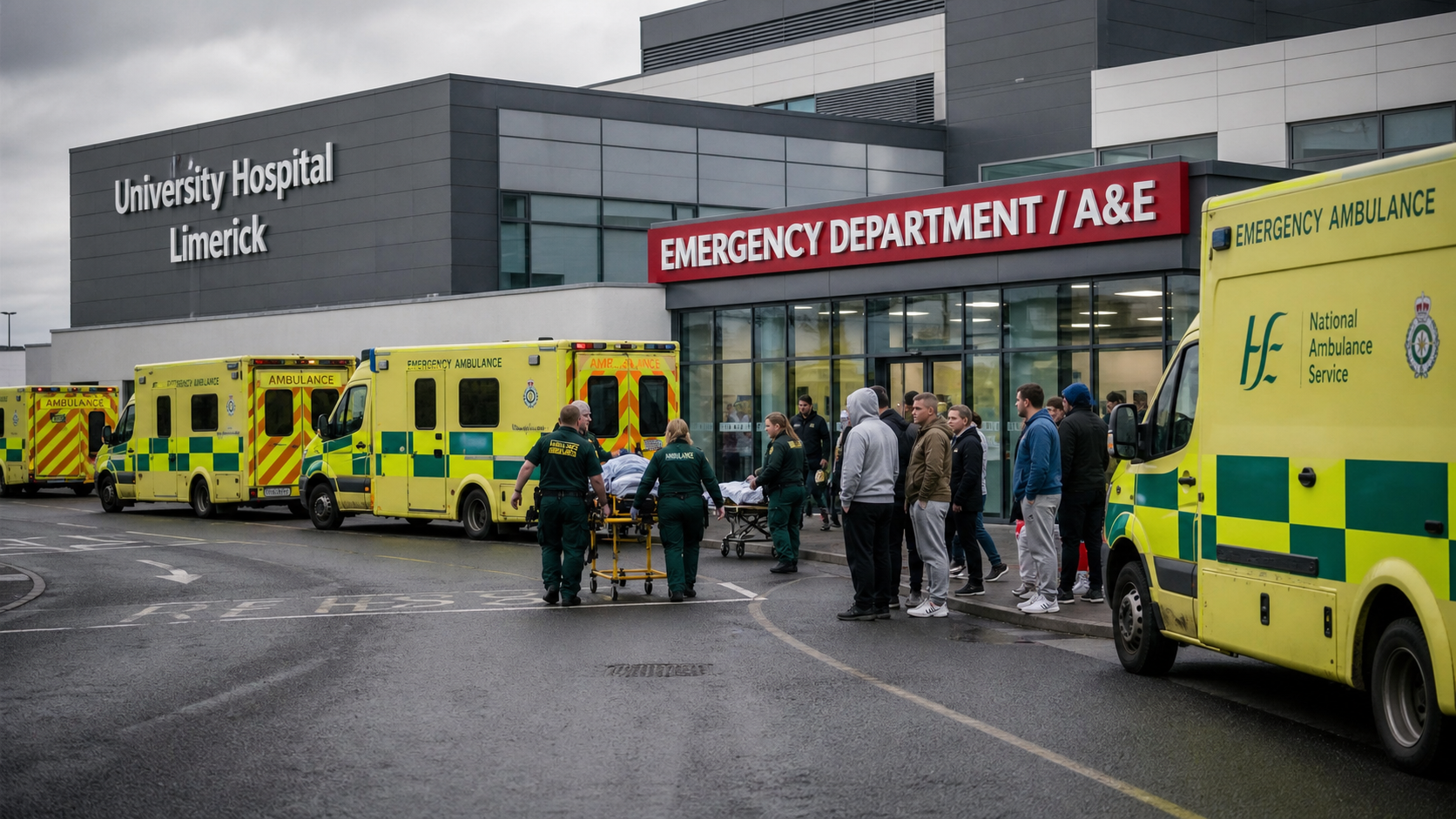
University Hospital Limerick's emergency department has recorded nearly 1,000 patient attendances in a three-day period, with 117 patients awaiting beds on Thursday morning — the latest episode in a sustained overcrowding crisis that has seen UHL top the national trolley count for the third consecutive month and prompted the hospital's medical board to describe conditions as "intolerable and unacceptable."
Background
University Hospital Limerick has been the most overcrowded hospital in Ireland for several years, a distinction that reflects a combination of factors including the hospital's role as the sole Model 4 facility for a catchment area of over 400,000 people across Limerick, Clare, Tipperary, and parts of Kerry and Cork, the absence of adequate step-down and community care facilities in the region, and a chronic shortage of consultants relative to other hospital groups.
The Irish Nurses and Midwives Organisation's monthly trolley count has consistently placed UHL at the top of the national table, with the gap between UHL and the next most overcrowded hospital typically running at more than double. In June 2026, 1,799 patients were recorded on trolleys at UHL — more than twice the figure at Sligo University Hospital, which was the second most overcrowded facility in the country.
The hospital's medical board has been among the most vocal critics of the situation, issuing a series of statements over the past two years warning that the conditions of severe overcrowding and excessive trolley numbers pose significant risks to patient safety, including the potential for medical errors. The board has specifically highlighted the shortage of consultants in the Mid-West region compared to other hospital groups as a structural factor that cannot be addressed through operational measures alone.
Key Developments
The HSE reported on 30 July that nearly 1,000 patients had attended the UHL emergency department over a three-day period, with the Irish Nurses and Midwives Organisation recording 117 patients awaiting a bed on Thursday morning. The hospital has implemented an escalation plan that includes opening surge capacity, transferring patients to inpatient wards, and expediting discharges, but these measures have been insufficient to prevent the emergency department from operating well above its designed capacity.
The HSE has encouraged the public to utilise alternative services, such as local injury units and GP-referral medical assessment units in Ennis, Nenagh, and St John's Hospital in Limerick, for non-life-threatening conditions. Officials noted that approximately half of recent attendances did not require a GP referral, suggesting that a significant proportion of patients could be managed in primary or community care settings if those services were more accessible.
By late July, 55,467 patients had attended the UHL emergency department in 2026, representing an 8 per cent increase compared to the same period in 2025. Daily attendances in June averaged 281, with peaks exceeding 300 on several days — figures that are far beyond the emergency department's designed capacity.
Why It Matters
The UHL overcrowding crisis is not a new problem, but its persistence through the summer months — when emergency department attendances typically ease — is a particularly alarming development. Unlike the winter surge, which is driven by respiratory illness and falls among older people, the summer overcrowding at UHL reflects a more fundamental structural imbalance between the demand for acute care in the Mid-West and the capacity available to meet it. The hospital's medical board has been warning for years that the situation is unsustainable, and the continued failure to address the underlying causes — consultant shortages, inadequate community care, insufficient step-down capacity — suggests that the crisis will persist until a more fundamental restructuring of healthcare delivery in the region is undertaken. For patients, the consequences are measured in hours spent on trolleys in corridors, delayed diagnoses, and the anxiety of waiting in an overcrowded and understaffed environment.
Local Impact
For the people of Limerick city and county, Clare, Tipperary, and the wider Mid-West region, the UHL crisis is a daily reality that affects thousands of families every year. The hospital serves as the only Model 4 facility for a vast geographic area, meaning that patients with serious conditions have no alternative but to attend UHL regardless of the conditions they will encounter there. Local GPs have reported increasing pressure to manage conditions that would normally be referred to the emergency department, as patients and their families seek to avoid the UHL waiting experience. Community healthcare organisations in the region have called for accelerated investment in primary care infrastructure, including additional GP practices, community diagnostic hubs, and enhanced home care services, as the most effective way to reduce pressure on the emergency department.
What's Next
A 16-bed rapid-build unit at UHL is scheduled for completion in the fourth quarter of 2026, which will provide some additional inpatient capacity. A second 96-bed block is expected by 2029. The HSE has confirmed that it is reviewing the consultant staffing levels at UHL as part of a broader workforce planning exercise, with a report expected in the autumn. The Oireachtas Health Committee is expected to hold hearings on the UHL situation in September, with the hospital's medical board and INMO representatives among those expected to give evidence.