Two Thirds of NI Disability Benefit Claimants Win at Tribunal as PIP System Faces 'Not Fit for Purpose' Verdict
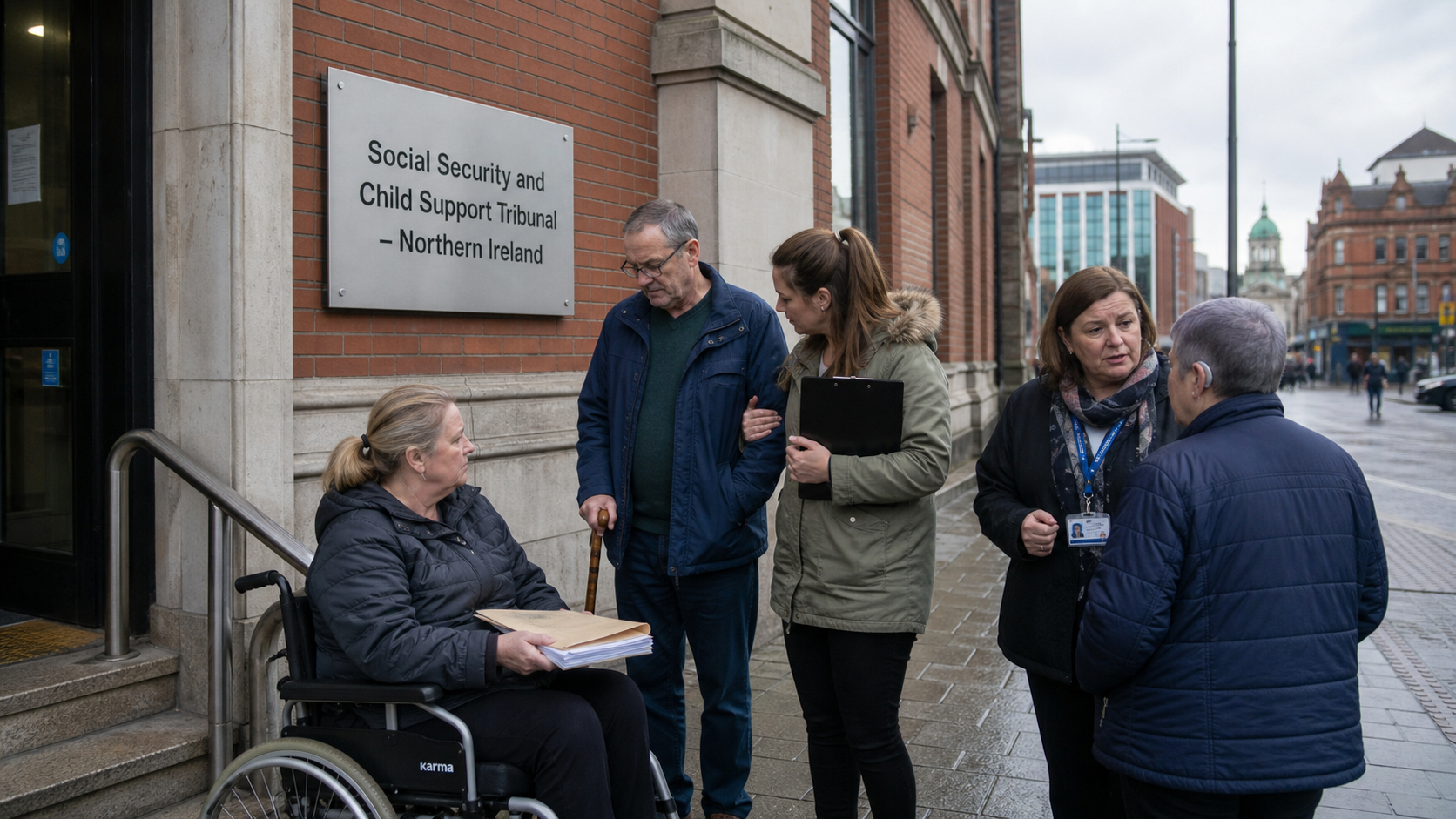
Approximately two thirds of Personal Independence Payment claimants in Northern Ireland who challenge a denied benefit decision at tribunal are winning their cases, with new data from the Department for Communities revealing success rates of up to 72 per cent for those who attend in person with formal representation — figures that welfare advisers say expose a fundamental failure in the initial assessment process administered by private contractor Capita.
Background
Personal Independence Payment is the primary disability benefit for working-age adults in Northern Ireland, designed to assist people with long-term health conditions or disabilities with the additional costs of daily living and mobility. Unlike its predecessor, Disability Living Allowance, PIP requires claimants to undergo a formal assessment — conducted by Capita on behalf of the Department for Communities — before a decision is made on entitlement.
The assessment process has been a source of controversy since PIP was introduced in Northern Ireland in 2016. Claimants and advocacy groups have consistently argued that the assessments fail to capture the full impact of complex or fluctuating conditions, that assessors lack specialist knowledge of specific conditions, and that the process is experienced as adversarial and dehumanising by many of the most vulnerable people in the system. The high tribunal success rate is, in this context, not a vindication of the appeals process — it is an indictment of the initial decision-making.
Northern Ireland maintains its own devolved authority over social security, meaning that while it broadly mirrors UK-wide welfare policy, the Department for Communities has the power to diverge from Westminster's approach. This distinction has become increasingly significant as the UK government conducts an independent review of PIP, with Disability Minister Sir Stephen Timms having found the current system "not fit for purpose" in an interim report.
Key Developments
Data from the Department for Communities for the 2026-27 period shows an overall tribunal success rate of 69.9 per cent for PIP claimants who appeal a denied decision. For the 2025-26 period, the equivalent figure was 64 per cent. The success rate is heavily influenced by the level of engagement at the tribunal stage: claimants who attend in person achieve a success rate of 65.1 per cent, while those who both attend in person and have formal representation — from welfare rights organisations, Citizens Advice, or legal advisers — achieve a success rate of 72.3 per cent.
Philip McKernan of AdviceSpace, a welfare rights organisation operating across Northern Ireland, described the figures as "shocking." He noted that the mandatory reconsideration stage — the intermediate step between an initial decision and a tribunal — rarely results in a change of outcome, meaning that claimants who cannot navigate the tribunal process are effectively denied benefits to which they are legally entitled. "The system is designed in a way that disadvantages the most vulnerable people," McKernan said. "Those who are most seriously ill, most isolated, or least able to advocate for themselves are the least likely to appeal — and therefore the least likely to receive what they're owed."
BBC NI's investigation into the issue, published this week, included testimony from claimants who described the assessment process as leaving them feeling "as though they were lying" about their own health conditions — a sentiment that resonates with the broader critique of PIP assessments as insufficiently sensitive to the lived experience of disability.
Why It Matters
The tribunal success rate is not simply a statistical curiosity — it represents a systemic failure with real consequences for real people. Every claimant who is wrongly denied PIP and does not appeal is living without financial support they are legally entitled to. The additional costs of disability — adapted equipment, specialist transport, higher heating bills, dietary requirements — do not disappear because a benefit has been denied. They are absorbed by the individual, their family, or the wider social care system.
The contrast between the mandatory reconsideration stage, where the Department for Communities frequently upholds its original decision, and the tribunal stage, where two thirds of claimants succeed, suggests that the initial assessment process is systematically underestimating the needs of a significant proportion of claimants. This is not a marginal error — it is a structural problem that has persisted across multiple years and multiple assessment contracts.
Northern Ireland's devolved authority over social security gives the Department for Communities the power to reform the assessment process independently of Westminster. The question is whether the political will exists to do so, particularly in the context of a budget crisis that makes any increase in benefit expenditure politically sensitive.
Local Impact
The impact of PIP denials is felt across Northern Ireland, but is particularly acute in areas with high rates of disability and limited access to welfare rights advice. In west Belfast, north and east Derry, and parts of Fermanagh and Tyrone, welfare rights organisations report high volumes of PIP appeals and significant unmet need among people who do not pursue their cases. The Belfast Advice Partnership and AdviceSpace operate across the city and province respectively, but their capacity is limited relative to the scale of the problem. Citizens Advice offices in Newry, Armagh, and Antrim have also reported increased demand for PIP appeal support in recent months.
What's Next
The UK government's independent review of PIP, led by Disability Minister Sir Stephen Timms, is expected to publish its final recommendations before the end of 2026. The Department for Communities has indicated that it will evaluate those recommendations carefully before determining any local reforms, noting that Northern Ireland's social security system has some distinct features that may require tailored responses. Welfare rights organisations are calling for an immediate review of the Capita assessment contract and the introduction of specialist assessors for complex conditions including autism, mental health conditions, and fluctuating illnesses. A Stormont debate on PIP reform is expected to be scheduled for October.