Trump Meets Taoiseach and President Connolly in Dublin as US Presses Ireland on LNG Imports and Trade Balance
US President Donald Trump arrived in Dublin on Saturday morning for a two-day visit that has placed the Irish government in one of its most delicate diplomatic positions in years, meeting President Catherine Connolly at Áras an Uachtaráin and Taoiseach Micheál Martin at Farmleigh House before travelling to Doonbeg for the Irish Open — with the LNG question, the trade imbalance, and the optics of hosting a deeply divisive American president all demanding careful navigation from a coalition government that cannot afford to alienate either Washington or its own electorate.
Background
Donald Trump's relationship with Ireland is long-standing and commercially rooted: he owns Trump International Golf Links and Hotel in Doonbeg, County Clare, a property he has visited on several occasions and which is hosting the Amgen Irish Open this week. The visit is the first by a sitting US president to Ireland since Joe Biden's trip in April 2023, and it carries a very different political charge. Trump's presidency has been marked by trade tariffs, immigration crackdowns, and a foreign policy that has strained relationships with traditional US allies, including Ireland's EU partners.
The LNG question has been building since Trump raised it during a St Patrick's Day meeting with Taoiseach Martin in Washington earlier in 2026. The US has become the world's largest exporter of liquefied natural gas, and the Trump administration has been pressing European countries to purchase American LNG as a way of reducing their dependence on Russian energy and, simultaneously, reducing the US trade deficit with Europe. Ireland's trade surplus with the United States — driven largely by the pharmaceutical and technology sectors — has made it a particular focus of American attention.
The Irish government has expressed interest in developing an LNG terminal in the Shannon estuary, a project that would require significant infrastructure investment and has faced opposition from environmental groups who argue that it locks Ireland into fossil fuel dependency at a time when the country should be accelerating its transition to renewable energy.
Key Developments
Trump arrived in Dublin on the morning of September 12, travelling by Marine One helicopter to Phoenix Park, where the park was closed to the public as part of an extensive security operation. His first engagement was a courtesy call to President Catherine Connolly at Áras an Uachtaráin — a meeting that attracted particular attention given Connolly's history as a vocal critic of the Trump administration's policies. The meeting was described by both sides as cordial, with Connolly understood to have raised human rights concerns directly with the President.
The bilateral meeting with Taoiseach Martin at Farmleigh House was the centrepiece of the Dublin visit. Trump pressed the case for Irish LNG imports, framing the purchase as a mechanism to reduce the trade imbalance and strengthen the economic relationship between the two countries. Martin is understood to have indicated Ireland's openness to the Shannon LNG terminal project while emphasising the need for the development to be consistent with Ireland's climate commitments. A reception hosted by the US Ambassador at his Phoenix Park residence brought together US and Irish business leaders, with the tech and pharmaceutical sectors — the backbone of the US-Ireland economic relationship — well represented.
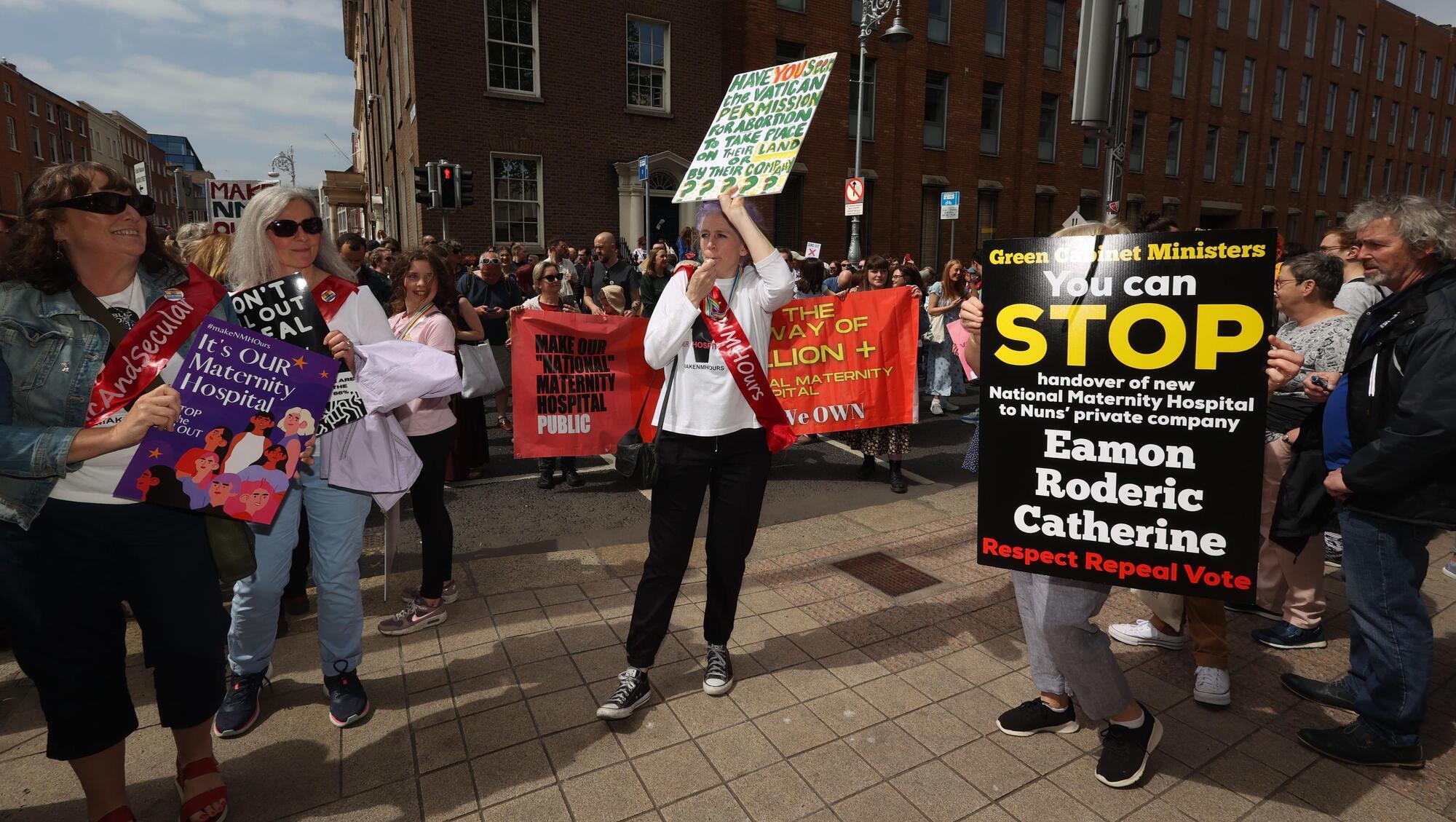
Protests were organised in both Dublin and Doonbeg by groups including the Irish Neutrality League, with demonstrators gathering at several points along the presidential motorcade route. Gardaí declared the visit an "extraordinary event" and confirmed a no-tolerance approach to public disorder.
Why It Matters
The Trump visit crystallises a tension that has been present in Irish foreign policy since 2016: how to maintain the vital economic relationship with the United States — which underpins tens of thousands of Irish jobs in the pharmaceutical and technology sectors — while not appearing to endorse or legitimise a president whose policies are deeply unpopular with a significant portion of the Irish public. The LNG question adds a further dimension, pitting economic and diplomatic considerations against environmental commitments that the government has made legally binding under the Climate Action Plan.
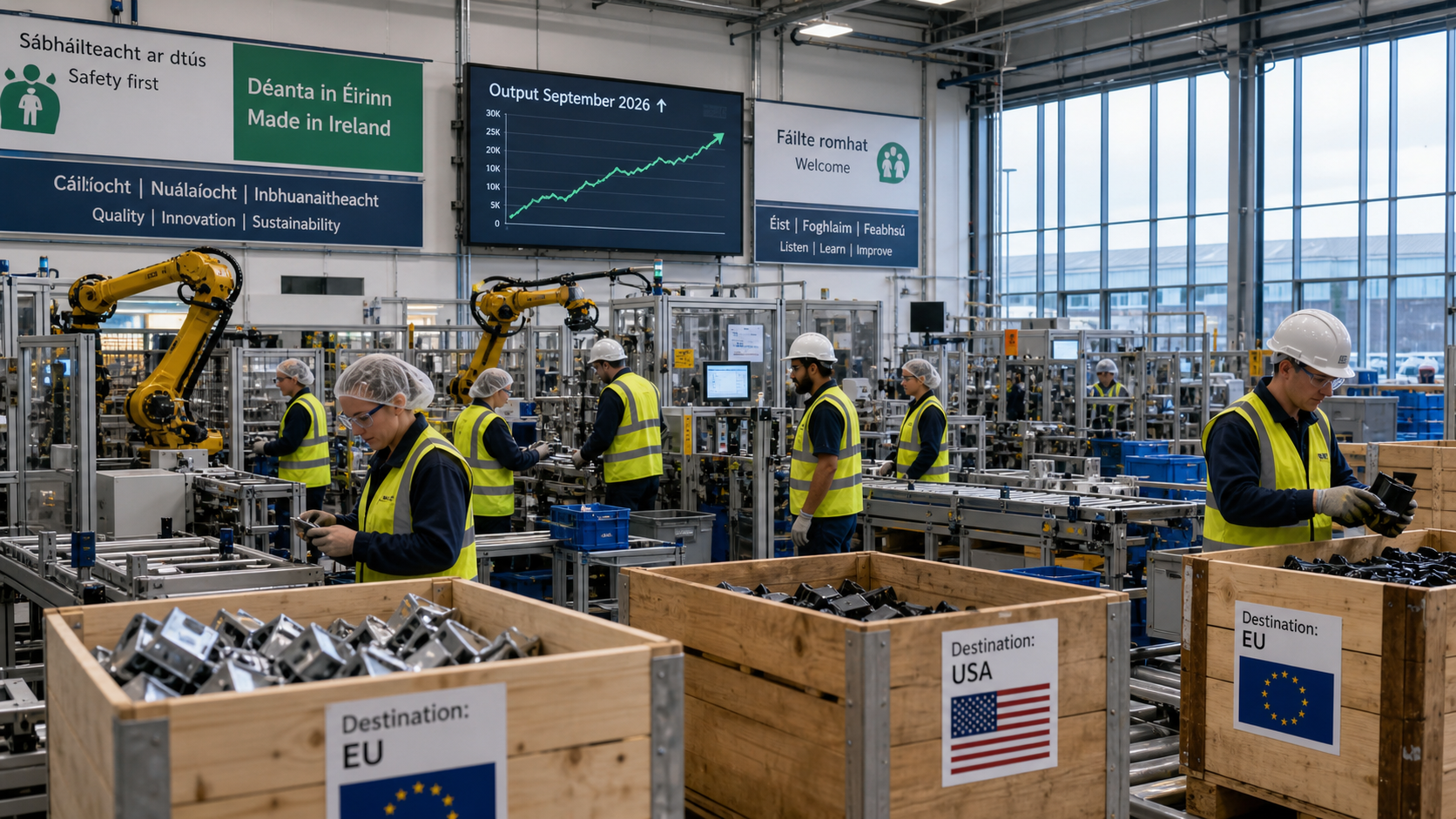
Ireland's trade surplus with the US, estimated at over €50 billion annually, makes it uniquely vulnerable to American pressure on trade issues. The Trump administration has shown a willingness to use tariffs as a diplomatic tool, and the Irish government is acutely aware that a deterioration in the US-Ireland relationship could have severe consequences for the multinational investment that has driven Irish economic growth for three decades. The LNG question is, in this context, as much about managing that vulnerability as it is about energy policy.
Local Impact
In Dublin, the visit caused significant disruption, with Phoenix Park closed, traffic restrictions across the city centre, and a heightened security presence in the areas around Áras an Uachtaráin and Farmleigh House. Businesses in the city centre reported mixed impacts, with some benefiting from increased footfall from those who came to observe the presidential motorcade and others experiencing reduced trade due to road closures. In Doonbeg, the combination of the Irish Open and the presidential visit has brought an extraordinary level of attention to a small Clare village that is more accustomed to quiet Atlantic winters than global media scrutiny.
What's Next
Trump is expected to attend the final rounds of the Irish Open at Doonbeg on Saturday and Sunday, with reports suggesting he may present the trophy to the tournament winner on Sunday evening. The Taoiseach is expected to follow up the Farmleigh meeting with further engagement on the LNG question in the coming weeks, as the government assesses the feasibility and political implications of the Shannon terminal project. The visit will be closely analysed by both the government's supporters and its critics as a test of how Ireland manages its relationship with a US administration that demands loyalty while offering uncertain reciprocity.