Trump Claims Iran War 'Nearing Completion' as Strikes Continue Across Persian Gulf
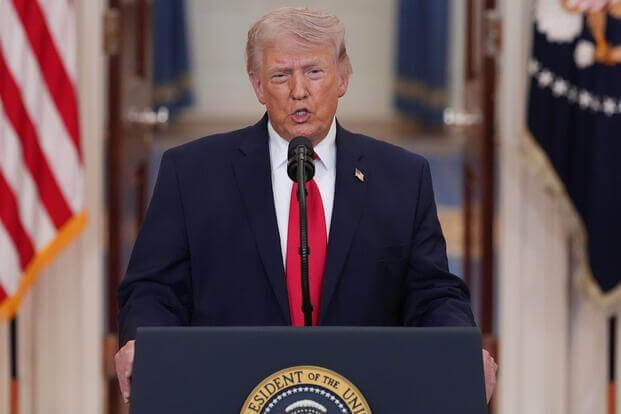
US President Donald Trump has declared the war in Iran is "nearing completion" and announced plans for a US military withdrawal within two to three weeks — but Iran has continued to launch ballistic missile and drone strikes against neighbouring Gulf states, casting serious doubt on the timeline and raising urgent questions about the conflict's true trajectory.
Trump's prime-time address was the most significant public statement on the conflict since US and Israeli forces launched Operation Epic Fury on 28 February 2026, targeting Iran's nuclear and military infrastructure in a coordinated assault. The speech was met with immediate scepticism from analysts, allied governments, and legal experts, who noted that the military situation on the ground remained deeply fluid and that a ceasefire does not constitute a permanent end to hostilities.
Background
The 2026 Iran war erupted following the collapse of diplomatic negotiations aimed at reviving a nuclear agreement after the demise of the 2015 Joint Comprehensive Plan of Action. Tensions had escalated sharply in December 2024 when the International Atomic Energy Agency reported that Iran had amassed a record quantity of military-grade enriched uranium, prompting the Trump administration to reinstate a "maximum pressure" campaign.
The opening US-Israeli salvo on 28 February struck nearly 900 targets in the first 12 hours alone, including missile and air defence systems, nuclear facilities, and government command centres. Supreme Leader Ali Khamenei and dozens of senior political and military officials were killed in the initial strikes, creating a significant leadership vacuum in Tehran. Iran responded the same day under the banner of Operation True Promise 4, launching a sustained campaign of ballistic missiles and drones against US military installations and Gulf state territory.
Between 28 February and 13 March, over 800 Iranian airstrikes were documented, targeting Bahrain, Jordan, Kuwait, Oman, Qatar, Saudi Arabia, and the UAE. Dubai International Airport was struck multiple times, and major energy infrastructure — including the Aramco refinery at Ras Tanura and the Ruwais industrial complex — was hit, sending shockwaves through global commodity markets. The UAE alone reported intercepting over 500 ballistic missiles and thousands of drones by early April.
Key Developments
The conflict's most severe global consequence has been the effective closure of the Strait of Hormuz, through which roughly 25 per cent of the world's seaborne oil and 20 per cent of its liquefied natural gas normally transits. Iran's blockade, combined with a US naval counter-blockade announced in mid-April, created a dual chokepoint that sent crude oil prices surging past $100 per barrel on 8 March, eventually peaking at $126 on 30 April — the highest level since 2022.
Despite Trump's claims of military success, Iran's strikes continued in the days following his speech, with missiles targeting Israel and Gulf states. Human rights organisations have raised widespread concerns about attacks on civilian infrastructure by both sides, and fears of potential war crimes investigations have grown. The UN Security Council passed a resolution on 11 March demanding an end to attacks by Iran and its proxies and reaffirming the right of free navigation in the strait.
A fragile two-week ceasefire brokered by Pakistan's Prime Minister was announced on 8 April, leading to the Islamabad Talks on 11–12 April — the highest-level direct engagement between the US and Iran since the 1979 Revolution. However, the talks ended without a breakthrough on core issues, particularly Iran's nuclear programme. In a legally controversial move, Trump sent a letter to Congressional leaders claiming the war was "terminated" as of 7 April to circumvent the 60-day limit under the US War Powers Resolution. Senate Minority Leader Chuck Schumer called the argument "bullshit," while legal experts noted that a ceasefire does not pause the 60-day clock.
Why It Matters
The Iran conflict is reshaping global geopolitics, straining alliances, and driving up energy costs for consumers across the UK, Ireland, and beyond. The disruption to an estimated 20 per cent of global oil supplies has triggered a worldwide fuel crisis, with countries from Asia to Africa experiencing severe shortages, panic buying, and soaring energy prices. Economists have warned that a prolonged closure of the strait could trigger a full-blown global recession, and the crisis has already disrupted fertiliser markets — accounting for over 30 per cent of global urea exports — raising fears for food security.
For the UK and Ireland, the economic consequences are tangible. Inflationary pressures have intensified, and aviation has been directly affected, with Ryanair CEO Michael O'Leary warning that up to 25 per cent of the airline's fuel supply could be at risk if the conflict continues. The UK government has maintained a cautious position, providing defensive military support to intercept Iranian projectiles while stopping short of full endorsement of US offensive operations. The UK, France, and Germany have all emphasised a return to diplomacy and called for a long-term agreement covering all points of contention.
Local Impact
For households and businesses across the UK and Ireland, the Iran conflict is not a distant geopolitical abstraction — it is being felt at the petrol pump, in energy bills, and in the cost of everyday goods. The surge in oil prices past $100 per barrel has fed directly into fuel costs, adding pressure to household budgets already strained by years of elevated inflation. Northern Ireland, with its particular dependence on road transport and heating oil, is acutely exposed to energy price shocks of this magnitude. Local businesses reliant on logistics and distribution have flagged rising operational costs, while the aviation sector's difficulties threaten connectivity from Belfast International and George Best Belfast City Airport.
What's Next
As of early May 2026, the conflict stands at a precarious crossroads. Hostilities are paused under a tenuous ceasefire, but the fundamental drivers — Iran's nuclear ambitions, its ballistic missile programme, and its regional activities — remain unresolved. China, Russia, and Pakistan have published a five-point peace plan emphasising respect for sovereignty and the restoration of free passage through the Strait of Hormuz, but deep-seated mistrust and maximalist demands from both Washington and Tehran present formidable obstacles. The "terminated" war remains a live and unresolved crisis with the potential to reignite at any moment. Full coverage at The Guardian and the House of Commons Library.