Irish Community in United States Gripped by 'Sense of Vulnerability' as Immigration Enforcement Intensifies
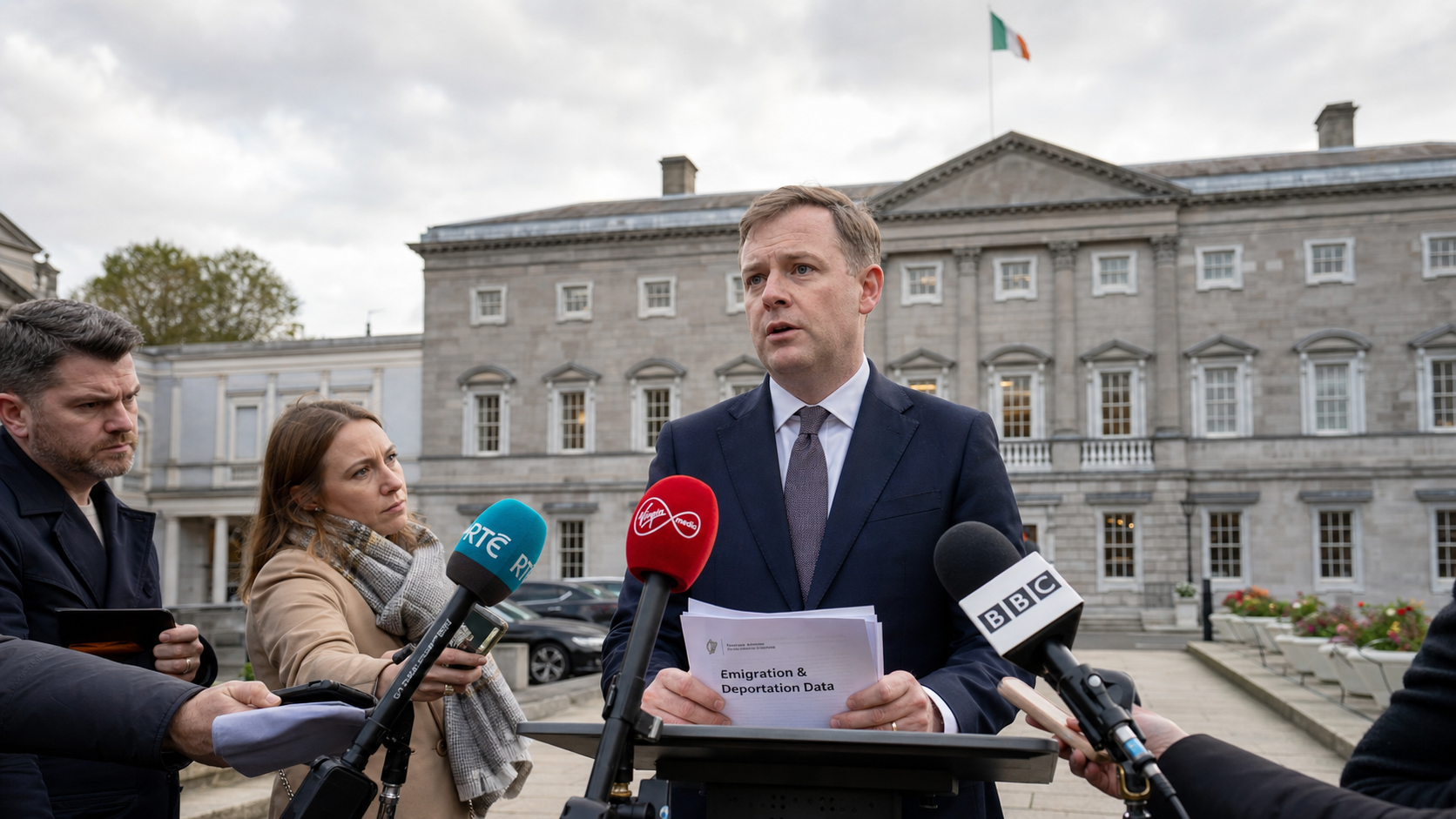
The Irish community in the United States is experiencing a period of acute anxiety as intensified immigration enforcement creates a climate of fear that is affecting both documented and undocumented Irish citizens. Minister of State for Diaspora Neale Richmond has described a "sense of vulnerability" that is permeating Irish-American communities from Boston to San Francisco, with mental health and addiction services reporting increased demand from Irish nationals who are struggling to cope with the uncertainty of their situation. The scale of the problem is illustrated by a 330% increase in consular requests related to deportations in 2025, and by the case of Donna Hughes-Browne — a documented Irish resident who was detained for months — which has been raised in the Dáil as emblematic of the challenges facing Irish people in America.
Background
The Irish community in the United States is one of the largest and most established diaspora communities in the world, with an estimated 40 million Americans claiming Irish heritage and a significant number of Irish-born citizens living and working across the country. The community has deep roots in cities including New York, Boston, Chicago, Philadelphia, and San Francisco, where Irish cultural organisations, GAA clubs, and community support networks have been active for generations.
The undocumented Irish in America — estimated to number between 10,000 and 50,000, depending on the methodology used — have been a persistent concern for successive Irish governments, which have sought to negotiate a pathway to legal status for this community through bilateral discussions with Washington. These efforts have had limited success, and the undocumented Irish remain in a precarious legal position that makes them vulnerable to deportation and prevents them from fully participating in American civic and economic life.
The intensification of immigration enforcement in the United States has created a new and more acute dimension to this long-standing problem. The enforcement actions are not targeted specifically at the Irish community, but their broad scope means that Irish nationals — both documented and undocumented — are being caught up in a system that is operating with less discretion and more aggression than in previous years. The result is a climate of fear that is affecting the entire Irish-American community, not just those who are undocumented.
Key Developments
RTÉ News reported on June 11 on the situation facing the Irish community in the United States, citing Minister Richmond's assessment of the "sense of vulnerability" that has taken hold. The minister noted that both documented and undocumented Irish citizens are experiencing anxiety, and that this anxiety is manifesting in increased demand for mental health and addiction services among Irish nationals in America. The Irish consulates in New York, Boston, Chicago, and San Francisco have all reported significant increases in the number of Irish nationals seeking assistance with immigration-related issues.
The 330% increase in consular requests related to deportations in 2025 — cited by RTÉ — is a striking figure that illustrates the scale of the problem. The Irish consular network in the United States has been working to provide support to Irish nationals who are facing deportation proceedings, including legal advice, emergency financial assistance, and liaison with US immigration authorities. The scale of the demand has placed significant pressure on consular resources, and the Department of Foreign Affairs has been working to increase staffing at the most affected posts.
The case of Donna Hughes-Browne, a documented Irish resident who was detained by US immigration authorities for several months before being released, was raised in the Dáil as an example of the precarious situation facing Irish people in America. Her case attracted significant media attention in Ireland and highlighted the fact that even documented Irish residents are not immune from the consequences of the intensified enforcement environment.
Why It Matters
The situation facing the Irish community in the United States matters for several reasons. Most immediately, it represents a genuine humanitarian concern: Irish nationals who are living and working legally in America are experiencing fear and anxiety that is affecting their mental health and their ability to function normally. This is a problem that the Irish government has a responsibility to address, both through diplomatic engagement with Washington and through the provision of consular support to affected individuals.
The situation also matters because of its implications for the broader Irish-American relationship. The Irish diaspora in the United States has historically been one of Ireland's most important diplomatic assets, providing a network of influence and goodwill that has been invaluable in advancing Irish interests in Washington. A community that is fearful and under pressure is less able to play this role effectively, and the long-term consequences for Irish-American relations could be significant.
The 330% increase in deportation-related consular requests is also a reminder of the scale of the undocumented Irish problem and the failure of successive governments — Irish and American — to find a durable solution. The undocumented Irish have been living in legal limbo for decades, and the current enforcement environment has made their situation more precarious than at any point in recent memory.
Local Impact
The impact of the situation in America is felt in Ireland through the families and communities of those who are affected. In counties like Mayo, Galway, Donegal, and Kerry — which have historically had high rates of emigration to the United States — the anxiety of relatives in America is a daily reality for many families. Local GAA clubs, which maintain strong connections with their diaspora members in America, have been reporting increased concern among their US-based members.
The Irish government's consular network has been working to provide support to affected individuals, but the scale of the demand has placed significant pressure on resources. The Department of Foreign Affairs has indicated it is reviewing its consular capacity in the United States and considering whether additional resources are needed to meet the increased demand.
What's Next
Minister Richmond has indicated he will be travelling to the United States in the coming weeks to meet with Irish community organisations and consular staff, and to assess the situation on the ground. The Department of Foreign Affairs is also in discussions with the US State Department about the situation facing Irish nationals, though the scope for bilateral intervention in US immigration enforcement is limited. The Oireachtas Committee on Foreign Affairs is expected to hold hearings on the situation facing the Irish diaspora in America later in the summer.