Troubles Bill 'Must Be Improved Further' as Parliamentary Human Rights Committee Calls for Attorney General Oversight of Prosecutions
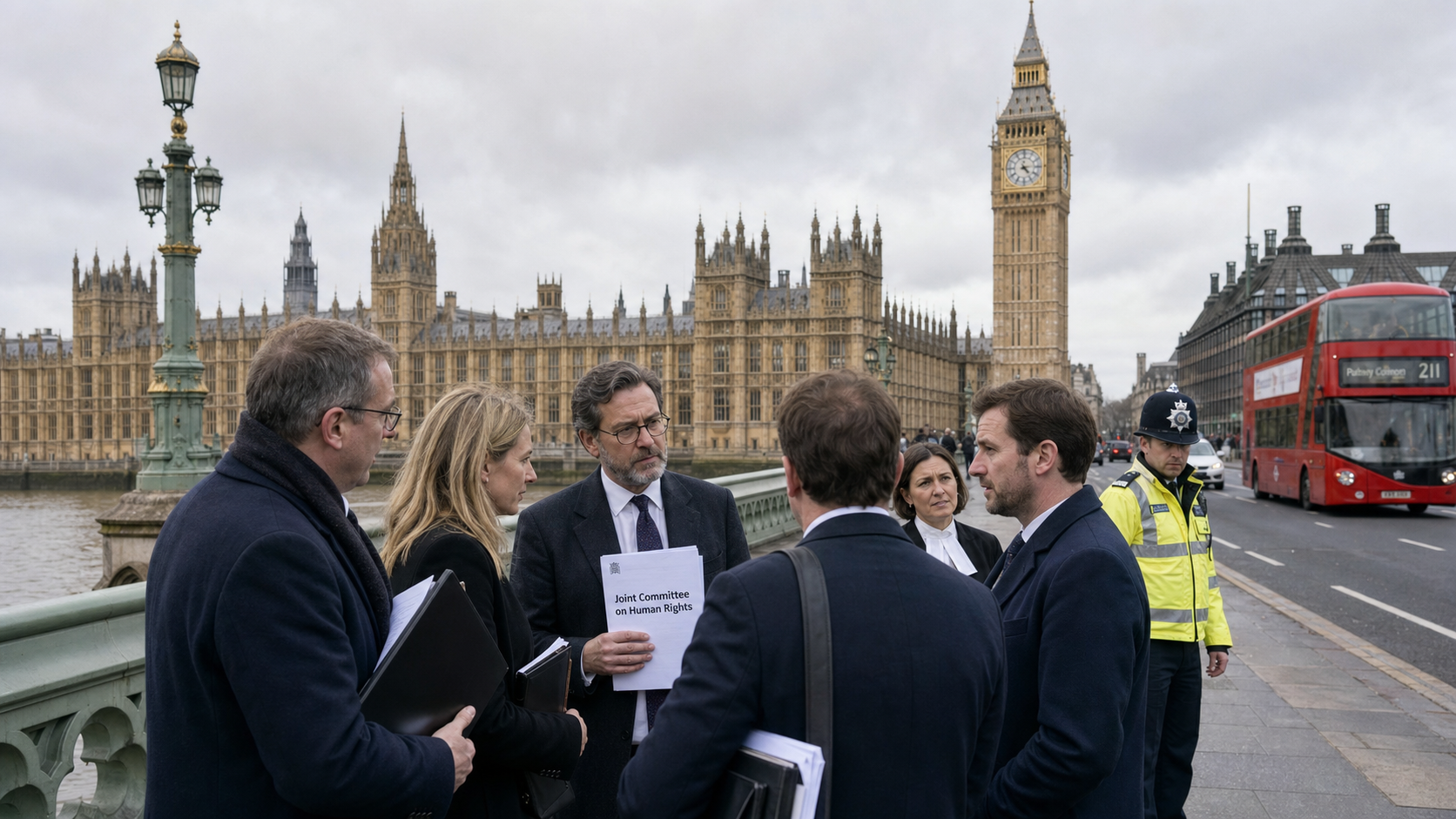
The UK Parliament's Joint Committee on Human Rights has published a detailed report on the government's Troubles Bill, concluding that while the legislation represents a meaningful step forward from the previous administration's deeply controversial Legacy Act, it requires substantial further amendment before it can command the confidence of victims, survivors, and the broader community in Northern Ireland.
Background
The Troubles Bill, introduced by the Labour government earlier this year, is intended to replace the Northern Ireland Troubles (Legacy and Reconciliation) Act passed by the previous Conservative administration — legislation that was widely condemned by victims' groups, human rights organisations, the Irish government, and all five of Northern Ireland's main political parties. The original Act's central provision — a conditional immunity scheme that effectively ended the prospect of prosecution for most Troubles-era offences — was found to be incompatible with the European Convention on Human Rights by the Court of Appeal in Belfast.
The new bill attempts to address those legal deficiencies while maintaining the government's stated objective of providing a framework for dealing with the legacy of the conflict that is both legally robust and capable of delivering some measure of truth and accountability for the estimated 3,500 people killed during the Troubles. The Joint Committee on Human Rights, chaired by Lord David Alton, was tasked with scrutinising the bill at committee stage and has now published its findings.
The committee's work took place against a backdrop of intense lobbying from victims' groups, veterans' organisations, and political parties across the spectrum, each with sharply different views about what a workable legacy framework should look like. The challenge of reconciling those competing interests has defeated every previous attempt at legislation, and the committee's report reflects the difficulty of the task.
Key Developments
The committee's primary recommendation is that the government introduce a requirement for the Attorney General to consent to any future prosecution related to the Troubles before it can proceed. The committee argues that this would introduce an essential layer of accountability and proportionality to prosecution decisions in cases that are, by their nature, politically and legally sensitive. It would also, the committee suggests, provide greater protection for veterans who fear that the bill leaves them exposed to prosecution without adequate safeguards.
Beyond the prosecution question, the report calls for strengthening the independence of the proposed Legacy Commission, improving the processes for disclosing sensitive information to families, and expanding the definition of "close family member" to prevent the exclusion of relatives who do not fit the current narrow legal definition. The committee also expressed "deep concern" about the government's use of a remedial order as a temporary measure between the old Legacy Act and the new bill, noting that the pace of the legislative process did not justify the urgency claimed.
Why It Matters
The legacy of the Troubles remains one of the most contested and emotionally charged issues in Northern Irish public life. More than 3,500 people were killed during the conflict, and thousands more were injured or bereaved. For many families, the question of accountability — of knowing what happened to their loved ones and who was responsible — remains unresolved decades later. The failure of successive governments to deliver a workable legacy framework has compounded that pain. The current bill is the latest attempt to break that impasse, and the committee's report reflects the reality that no single piece of legislation can satisfy all of the competing interests at stake. What it can do, the committee argues, is establish a framework that is legally sound, transparent, and capable of delivering at least some of what families have been waiting for.
Local Impact
For families across Northern Ireland who lost loved ones during the Troubles — in Belfast's north and west, in Derry, in South Armagh, in Fermanagh and Tyrone — the committee's report is another chapter in a long and painful story. Victims' groups in Belfast have broadly welcomed the call for Attorney General oversight, arguing that it provides a safeguard against politically motivated prosecutions while preserving the principle that serious crimes must be capable of being prosecuted. Veterans' groups have expressed more cautious support, noting that the detail of how the consent mechanism would work in practice will be critical. The PSNI's Legacy Investigation Branch, which has been operating in a state of uncertainty since the original Legacy Act was challenged in court, is awaiting clarity on its future role under the new legislation.
What's Next
The government has welcomed the committee's scrutiny and indicated that it will introduce a package of amendments when the bill returns to Parliament in the autumn. Prime Minister Andy Burnham has committed to further engagement with veterans' groups before those amendments are finalised. The bill is expected to complete its parliamentary passage before the end of 2026, with the Legacy Commission anticipated to begin operating in early 2027. Victims' groups have been invited to submit further evidence to the committee before the autumn parliamentary session begins.