Translink Confirms £1.5 Million Loss from June Riots as Final Bill Expected to Rise Further
The full financial cost of June's race-hate riots in Northern Ireland is coming into sharp focus, with Infrastructure Minister Liz Kimmins confirming that public transport operator Translink has sustained losses of approximately £1.5 million — a figure that is expected to climb further as damage assessments are completed across the network.
Background
The riots that swept through Belfast and several other towns in Northern Ireland during June 2026 were among the most serious episodes of civil disorder the province had seen in years. Triggered by a knife attack in north Belfast on 8 June, the violence quickly took on an anti-immigrant character, with attacks on properties associated with asylum seekers and ethnic minority communities, as well as widespread damage to public infrastructure.
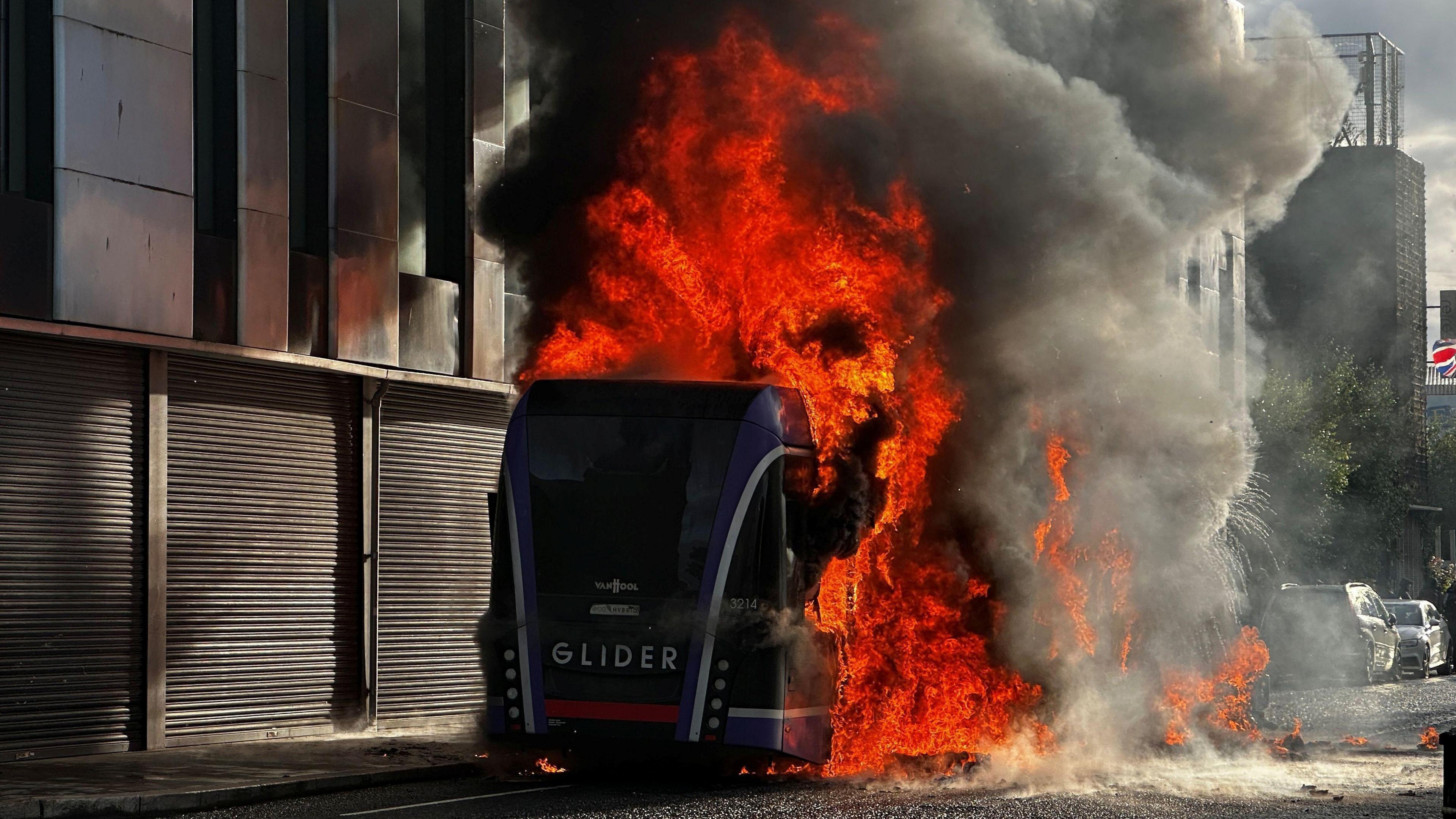
Translink, which operates the Metro bus network, the Glider rapid transit service, and the NI Railways network, was among the most visible victims of the disorder. Buses were attacked and damaged, services were suspended across large parts of the network, and staff were placed in danger as violence spread through city centre areas. The destruction of a Glider bus — one of the flagship vehicles of Belfast's modern public transport system — became a symbol of the disorder's indiscriminate destructiveness.
The riots also had a cascading effect on health services, with the disruption to transport causing over 1,100 outpatient appointments to be cancelled as patients were unable to reach hospitals and clinics. This figure, confirmed by the Department of Health, underscores the extent to which the disorder affected ordinary people going about their daily lives.
Key Developments
Minister Kimmins confirmed the £1.5 million figure in a statement to the Assembly, noting that it encompasses the cost of the destroyed Glider bus, repairs to other damaged vehicles, the cost of deploying additional security measures across the network, and the income lost during the period when services were suspended or curtailed. She emphasised that the assessment is ongoing and that the final figure is likely to be higher once all claims and repair costs have been processed.
The minister also confirmed that the Department for Infrastructure is in discussions with the Treasury about the possibility of additional funding to cover the exceptional costs arising from the disorder. The Stormont Executive is already operating under severe budgetary pressure, and the additional burden of riot-related costs has added to the urgency of the ongoing budget negotiations with Westminster.
Translink has confirmed that all affected services have now been restored to normal operation, and that the destroyed Glider bus has been replaced from the existing fleet. However, the operator has indicated that the financial impact of the riots will affect its capital investment programme for the coming year.
Why It Matters
The £1.5 million Translink bill is one component of a much larger public cost arising from the June riots. The PSNI has separately confirmed that policing the disorder cost in excess of £5 million, and the cost of rehousing families displaced from their homes, repairing damaged properties, and providing emergency support to affected communities adds further to the total. When all public sector costs are aggregated, the June riots are likely to have cost Northern Ireland's public finances well in excess of £10 million — money that could have been spent on health, education, or infrastructure.
For Translink specifically, the timing is particularly damaging. The operator has been investing heavily in modernising its fleet and expanding the Glider network, and the loss of a Glider bus — which costs significantly more than a standard Metro vehicle — represents a meaningful setback. Unlike the Republic's Bus Éireann, which operates under a different funding model, Translink is heavily dependent on public subsidy and has limited capacity to absorb exceptional losses of this magnitude.
Local Impact
The suspension of Translink services during the riots had a disproportionate impact on communities in north and west Belfast, where car ownership rates are lower than the city average and public transport is the primary means of getting to work, school, and medical appointments. The cancellation of over 1,100 outpatient appointments affected patients across the Belfast Health and Social Care Trust area, with some waiting months for rescheduled slots. Glider services on the G1 and G2 routes were among those most severely disrupted, affecting commuters travelling between east and west Belfast through the city centre.
What's Next
The Department for Infrastructure will publish a full damage assessment report in the coming weeks, which will include the final confirmed cost to Translink and an outline of the steps being taken to prevent similar disruption in the event of future disorder. The Stormont Executive's budget negotiations with the Treasury are expected to address the exceptional costs arising from the riots as part of a broader discussion about the sustainability of Northern Ireland's public finances. Translink's capital investment programme for 2026-27 will be reviewed in light of the financial impact of the disorder.