PSNI Urged to Use New Westminster Powers to Remove Paramilitary Flags as Eleventh Night Approaches
Community groups, politicians, and civic leaders are calling on the Police Service of Northern Ireland to make full use of new powers granted by Westminster legislation to remove paramilitary flags from public spaces, as the approach of the Eleventh Night brings the annual controversy over flag-flying to a head across the province.
Background
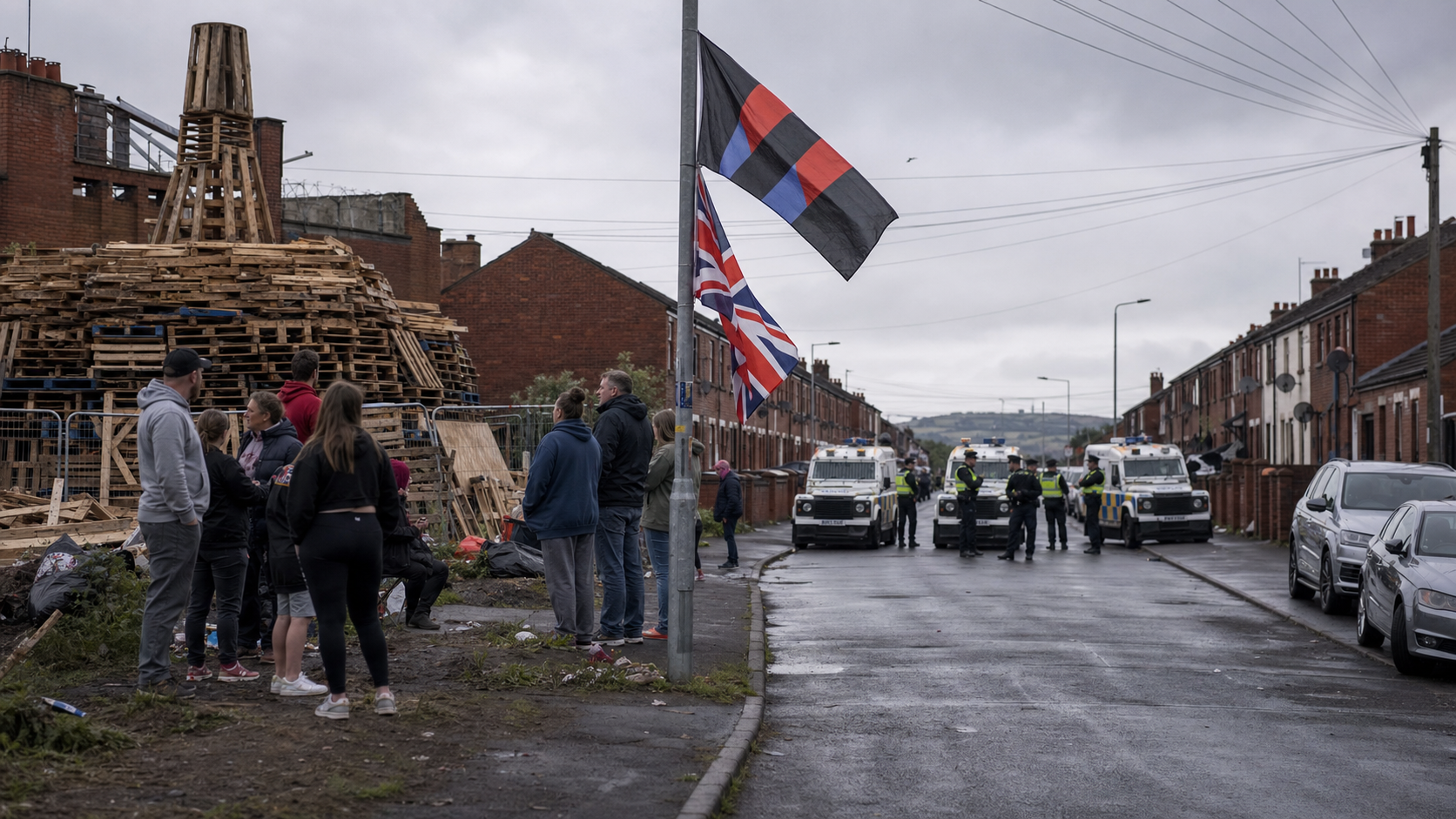
The flying of paramilitary flags in public spaces has been a persistent source of tension in Northern Ireland for decades. Flags associated with loyalist paramilitary organisations — the Ulster Volunteer Force, the Ulster Defence Association, and the Red Hand Commando — are flown in many areas of Belfast and other towns during the summer months, particularly in the weeks leading up to the Twelfth of July. Republican paramilitary flags are also flown in some nationalist areas, though the controversy tends to be most acute in loyalist communities where the flags are most visible.
The flags are widely regarded by community relations organisations, business groups, and many residents as intimidating and unwelcoming, particularly in areas that attract tourists or where communities of different backgrounds live in close proximity. The PSNI has historically been reluctant to remove flags proactively, citing concerns about public order and the risk of inflaming tensions in areas where the flags are seen as expressions of community identity.
Westminster legislation passed in the previous parliamentary session granted the PSNI new powers to remove paramilitary flags and emblems from public spaces, going further than the existing legal framework which required a higher threshold of evidence before action could be taken. The new powers were welcomed by community groups and politicians across the political spectrum, but questions have remained about the extent to which the PSNI would use them in practice.
Key Developments
With the Eleventh Night — the night of 11 July, when bonfires are lit across loyalist areas of Northern Ireland — approaching, the pressure on the PSNI to act has intensified. Community groups in areas including north Belfast, east Belfast, and Londonderry have written to the Chief Constable calling for a proactive approach to flag removal, arguing that the new powers create both an opportunity and an obligation to act.
The PSNI has responded by acknowledging that the new legislation gives officers greater latitude than before, but has stopped short of committing to a systematic removal programme. A spokesperson confirmed that the service does not have a mandatory duty to remove flags and will assess each incident on a case-by-case basis, taking into account factors including public safety, community impact, and the specific nature of the flag or emblem in question.
Alliance Party representatives have been among the most vocal in calling for the PSNI to take a more assertive approach, arguing that the failure to remove paramilitary flags sends a damaging message about the rule of law in Northern Ireland. SDLP and Sinn Féin politicians have made similar arguments, while some DUP and UUP representatives have urged caution, warning against actions that could be seen as targeting loyalist communities.
Why It Matters
The paramilitary flags controversy is about more than aesthetics or community relations — it goes to the heart of questions about the rule of law and the equal application of policing in Northern Ireland. The PSNI's reluctance to use its new powers proactively risks undermining the credibility of the legislation and sending a signal that certain communities are effectively exempt from the law. This is particularly significant in the context of the June riots, which demonstrated the potential for community tensions to escalate rapidly when grievances — real or perceived — are not addressed.
For businesses and tourism operators in affected areas, the presence of paramilitary flags is a practical problem as well as a symbolic one. Belfast's city centre and tourist areas have worked hard to present a welcoming image to visitors, and the visibility of paramilitary symbols in areas close to major attractions undermines that effort. Unlike the Republic of Ireland, where the display of paramilitary emblems is more tightly regulated, Northern Ireland's approach has historically been more permissive, reflecting the political sensitivities of the post-conflict environment.
Local Impact
The flags controversy is most acute in areas of north and east Belfast, where loyalist paramilitary flags are most densely concentrated. Neighbourhoods including Tiger's Bay, Rathcoole, and parts of the Newtownards Road corridor in east Belfast are among those where flags are most visible. In Londonderry, flags in the Waterside area have been a source of tension with the city's nationalist majority. The PSNI's Neighbourhood Policing Teams in these areas will be central to any decision about flag removal, and their assessment of local community dynamics will be a key factor in determining how the new powers are applied.
What's Next
The PSNI is expected to publish guidance on its approach to the new flag removal powers in the coming days, ahead of the Eleventh Night on 11 July. Community groups have indicated that they will monitor the situation closely and will hold the police service to account if the new powers are not used. The Policing Board is expected to raise the issue at its next meeting, and the Justice Minister has indicated that she will seek a briefing from the Chief Constable on the PSNI's plans.