Tourism Ireland Eyes India, China and Canada to Push Northern Visitor Spend Past £1 Billion a Year
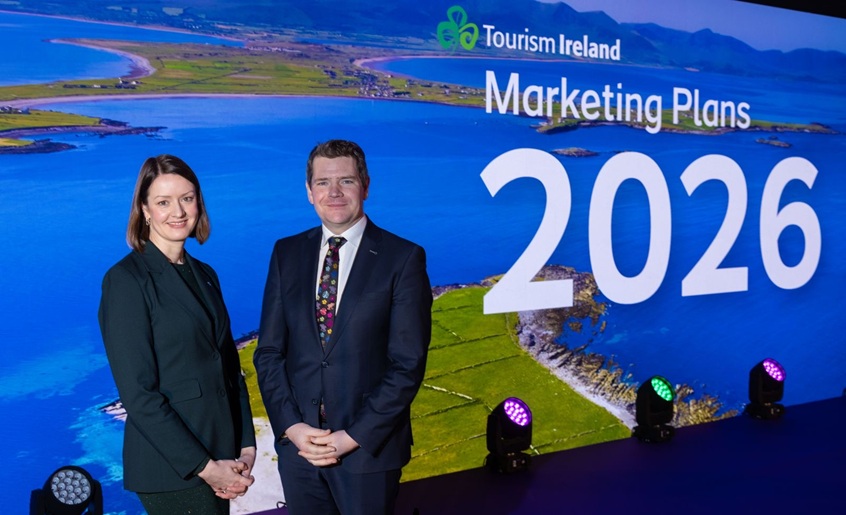
Tourism Ireland has set its sights on three of the world's fastest-growing outbound travel markets — India, China, and Canada — as part of an ambitious strategy to push annual visitor spending in Northern Ireland past the £1 billion mark. The organisation, which promotes the island of Ireland as a tourism destination in markets outside the island, believes that targeted investment in these three markets could transform the scale and diversity of Northern Ireland's tourism economy over the next five years.
Background
Northern Ireland's tourism sector has undergone a remarkable transformation over the past two decades. From a destination that was largely avoided by international visitors during the Troubles, it has become one of the most compelling tourism propositions in the British Isles, driven by the success of Game of Thrones filming locations, the Causeway Coastal Route, the Titanic Belfast visitor experience, and a growing reputation for food, culture, and outdoor adventure.
Annual visitor numbers have grown significantly, and spending has followed. But the sector has historically been heavily dependent on visitors from Great Britain and the Republic of Ireland — markets that, while important, offer limited growth potential compared to the long-haul markets that are driving the global tourism boom. Tourism Ireland's strategy is to diversify the visitor base by attracting more visitors from markets where the potential for growth is greatest.
The £1 billion spending target represents a significant step up from current levels and would require a sustained increase in both visitor numbers and average spend per visitor. Achieving it will require not just effective marketing but also investment in the tourism infrastructure — accommodation, transport, visitor attractions — that can support a larger and more diverse visitor base.
Key Developments
The Irish News reported this week that Tourism Ireland has identified India, China, and Canada as its priority long-haul markets for Northern Ireland, based on analysis of outbound travel trends, the size of the Irish diaspora in each country, and the potential for growth in visitor numbers. Each market presents a different opportunity and requires a different approach.
In India, the focus is on the growing middle class and the increasing appetite for long-haul travel to Europe. Tourism Ireland is working with Indian travel trade operators to develop Northern Ireland-specific itineraries and to position the region as a must-visit destination for Indian travellers who are already planning trips to the UK and Ireland. The organisation is also exploring the possibility of direct air connections between Indian cities and Belfast International Airport, which would significantly reduce the barrier to travel.
In China, the strategy is focused on the post-pandemic recovery of outbound tourism and the particular appeal of Northern Ireland's natural landscapes and cultural heritage to Chinese visitors. Tourism Ireland has been working with Chinese digital platforms and travel influencers to raise awareness of Northern Ireland as a destination, and it is investing in Mandarin-language marketing materials and visitor information.
In Canada, the large Irish-Canadian diaspora provides a natural foundation for tourism promotion. Tourism Ireland is working with Canadian travel agents and tour operators to develop heritage tourism packages that connect Irish-Canadians with their ancestral homeland, and it is also targeting the broader Canadian market with campaigns focused on Northern Ireland's outdoor adventure and food tourism offerings.
Why It Matters
The £1 billion target matters because tourism is one of the few sectors of Northern Ireland's economy that has genuine potential for significant growth in the short to medium term. The region's manufacturing base has been declining for decades, and the financial services sector, while growing, is not large enough to compensate. Tourism, by contrast, is a sector where Northern Ireland has genuine competitive advantages — a compelling landscape, a rich cultural heritage, a growing reputation for food and hospitality — and where the barriers to growth are primarily about awareness and accessibility rather than fundamental product quality.
The diversification of the visitor base is also important for the resilience of the sector. An over-dependence on visitors from Great Britain and the Republic makes Northern Ireland's tourism economy vulnerable to fluctuations in those markets — whether driven by economic conditions, exchange rates, or political events. A more diverse visitor base, drawing from multiple long-haul markets, would provide a more stable foundation for the sector's long-term growth.
The strategy also has implications for the hospitality sector, which is currently facing a severe crisis driven by cost pressures and the VAT differential with the Republic. A significant increase in visitor numbers and spending would provide a much-needed boost to hotels, restaurants, and other hospitality businesses, though it would not in itself address the structural VAT disadvantage that is driving closures.
Local Impact
In Belfast, the tourism strategy is expected to have its most immediate impact on the city's hotel and hospitality sector, which has been investing heavily in new capacity in anticipation of continued visitor growth. The Bedford hotel, which is set to open later in 2026, is one of several new properties that have been developed in the expectation of growing demand from international visitors. In the Causeway Coast area, tourism businesses are already seeing increased interest from long-haul markets, with Titanic Belfast reporting a growing proportion of visitors from outside the traditional British and Irish markets.
What's Next
Tourism Ireland is expected to publish a detailed implementation plan for the long-haul market strategy in the autumn, setting out specific targets for visitor numbers and spending from each of the three priority markets. The organisation is also in discussions with Belfast International Airport and George Best Belfast City Airport about the possibility of new direct routes from long-haul markets, which would be a critical enabler of the strategy. A progress review is planned for early 2027, at which point the organisation will assess whether the strategy is on track to meet the £1 billion target.
%20(6)-Nov-26-2025-02-12-55-8074-PM.png)