TikTok, Meta and Google Face Oireachtas Grilling Over Content Glorifying Dangerous Driving After M9 Tragedy
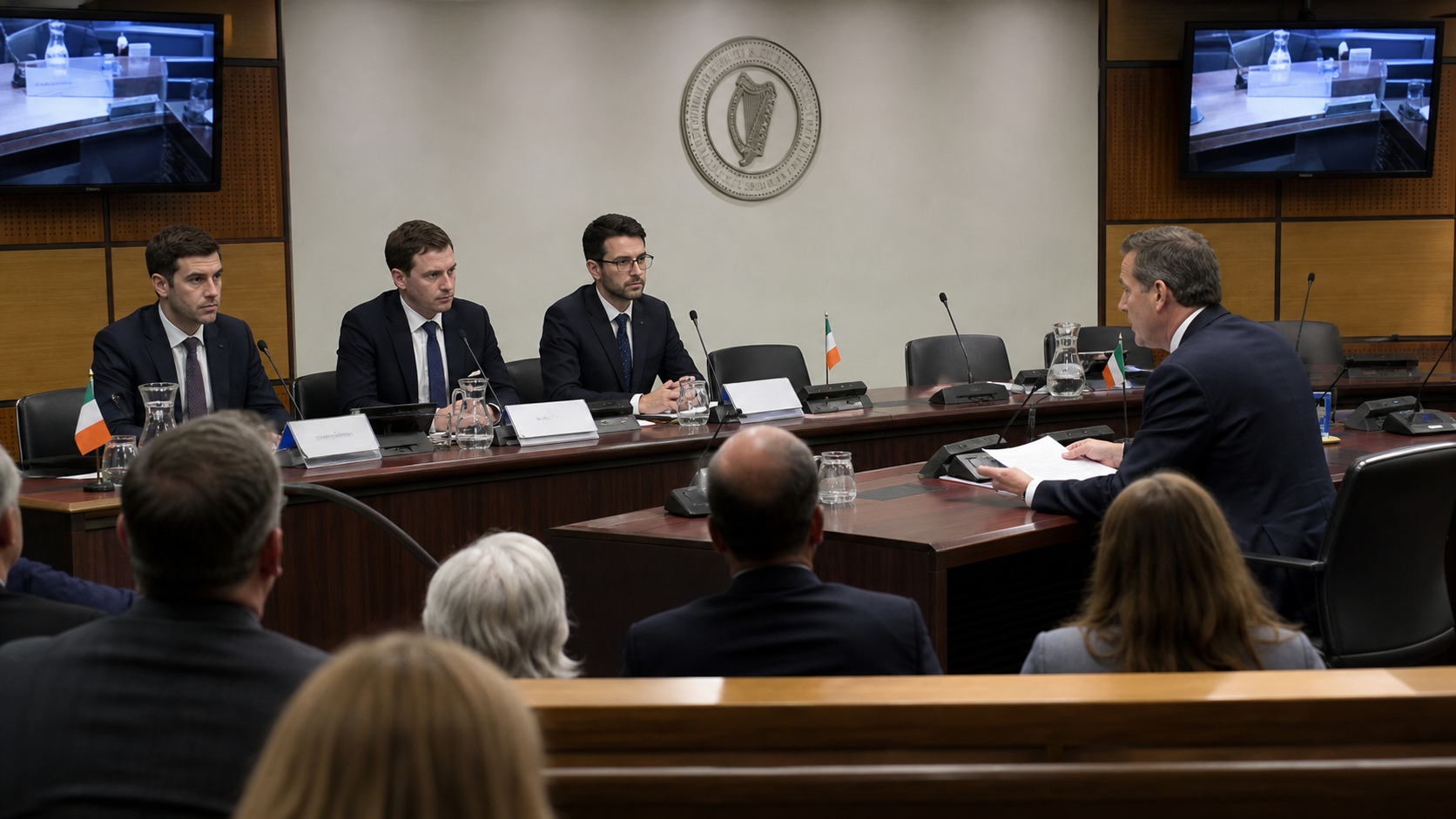
Representatives from TikTok, Meta, and Google appeared before the Oireachtas Joint Committee on Arts, Media, Communications, Culture and Sport on Tuesday to defend their records on removing content that glorifies dangerous driving, following the deaths of five teenagers in an M9 motorway crash in August 2026 that prompted urgent questions about the role of social media in normalising reckless behaviour among young people.
Background
The M9 motorway crash in August 2026, in which five teenagers were killed while travelling the wrong way down a motorway, sent shockwaves through Irish society and prompted immediate questions about the influence of social media content that glorifies joyriding, wrong-way driving, and other forms of dangerous behaviour. Gardaí and road safety advocates pointed to a growing body of online content — primarily on TikTok, Instagram, and YouTube — that presents reckless driving as exciting, aspirational, and consequence-free.
The Oireachtas committee, chaired by Labour TD Alan Kelly, had previously invited TikTok to appear before it in the immediate aftermath of the crash, but the platform initially declined, citing ongoing investigations. The committee persisted, and Tuesday's hearing represented the first opportunity for elected representatives to question the platforms directly about their content moderation practices and their response to the specific concerns raised by the M9 tragedy.
Ireland's media regulator, Coimisiún na Meán, also participated in the hearing, providing an overview of the regulatory framework under the Online Safety and Media Regulation Act and the EU's Digital Services Act, both of which impose obligations on platforms to identify and remove harmful content.
Key Developments
TikTok's representatives, Susan Moss and Zachary Hecht, told the committee that 99.6 per cent of content promoting risky behaviour was removed proactively — before user reports — in the first half of 2026. They emphasised that while the platform has a responsibility to prevent the promotion of criminal acts, it cannot unilaterally address the underlying societal causes of dangerous behaviour. The platform's initial refusal to appear before the committee was not directly addressed, though committee members pressed the representatives on the delay.
Meta's representative Dualta Ó Broin informed the committee that the company now treats driving against traffic as a prohibited "high-risk viral challenge" and removes such depictions from Facebook and Instagram. Google's Ryan Meade stated that over 98.5 per cent of policy-violating videos on YouTube were detected by automated systems in the first quarter of 2026, before any user report was made.
Coimisiún na Meán's executive chairperson Jeremy Godfrey reported that the commission has multiple open investigations into potential breaches of online safety rules by various platforms and is collaborating with the European Commission on additional cases. He acknowledged that the regulatory framework is still relatively new and that enforcement capacity is being built incrementally.
Why It Matters
The M9 tragedy and the subsequent committee hearing have brought into sharp focus a question that Irish society has been grappling with for several years: to what extent are social media platforms responsible for the real-world consequences of the content they host and amplify? The platforms' representatives presented their content moderation statistics as evidence of responsible behaviour, but committee members pointed out that even a fraction of a per cent of harmful content, when applied to the billions of videos uploaded to these platforms each day, represents an enormous volume of material that can reach and influence young people.
The hearing also highlighted the limitations of the current regulatory framework. Coimisiún na Meán is a relatively new body with growing but still limited enforcement capacity, and the platforms' obligations under the Digital Services Act are subject to ongoing interpretation and negotiation at European level. The gap between the speed at which harmful content spreads and the speed at which regulators can respond remains a fundamental challenge.
Local Impact
For the families of the five teenagers killed on the M9, Tuesday's hearing was a painful reminder of the circumstances that led to their loss. Road safety advocates, including the Road Safety Authority, have called for a comprehensive review of how social media content is regulated in Ireland, with particular attention to content that targets young people. Schools across the country have been urged to incorporate digital literacy and online safety education into their curricula, with a specific focus on the relationship between online content and real-world risk-taking behaviour.
What's Next
The committee is expected to publish a report with recommendations for legislative and regulatory action in the coming months. Among the measures under consideration are mandatory age verification for social media platforms, enhanced obligations on platforms to proactively identify and remove content that glorifies dangerous behaviour, and increased resources for Coimisiún na Meán's enforcement activities. The European Commission is also expected to publish updated guidance on the application of the Digital Services Act to content that promotes dangerous activities, which will have direct implications for how platforms operating in Ireland manage this category of material.