Thousands Fill Belfast City Hall Square in Largest Anti-Racism Rally in the City's History
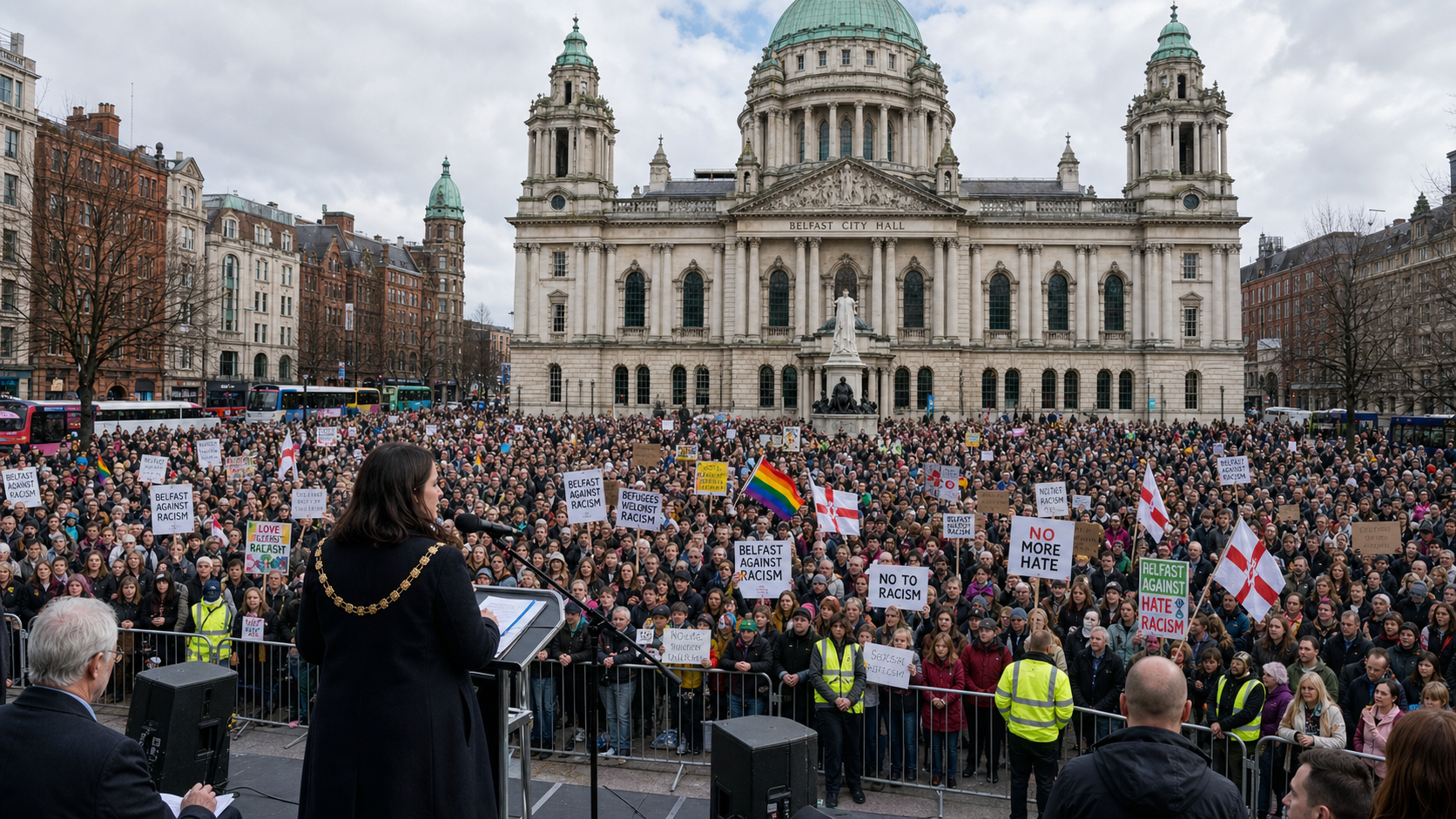
Belfast showed its true face on Saturday afternoon when thousands of people converged on the grounds of City Hall for a United Against Racism demonstration that organisers believe was the largest of its kind in the city's history. The rally, which drew participants from every community and background, was a direct and emphatic response to the anti-migrant violence that had convulsed parts of the city in the days following a stabbing in North Belfast on June 8.
Background
The events that preceded Saturday's rally were among the most disturbing to unfold in Belfast in years. Following a knife attack in North Belfast in which a man was critically injured, a wave of anti-migrant disorder swept through parts of the city and beyond, with properties attacked, a Glider bus destroyed, and families from ethnic minority backgrounds forced to flee their homes. The violence prompted a critical incident declaration from the Police Service of Northern Ireland and the suspension of Translink bus and rail services on multiple evenings.
The disorder drew widespread condemnation from political leaders across the spectrum, with all five main parties at Stormont issuing a joint statement. But for many in Belfast's communities, a political statement was not enough. The United Against Racism Belfast group, which had been organising in the days following the initial violence, called for a public demonstration to show that the rioters did not speak for the city.
The response exceeded all expectations. By early Saturday afternoon, the grounds of City Hall were packed, with crowds spilling onto the surrounding streets. A parallel demonstration took place in Derry, where hundreds gathered in the city centre in a show of solidarity. The Belfast event was addressed by community leaders, trade union representatives, faith leaders, and members of the ethnic minority communities who had been most directly affected by the violence.
Key Developments
Belfast's Lord Mayor, Róis-Máire Donnelly, addressed the crowd from the steps of City Hall, her voice carrying across a square that had fallen quiet to hear her. "You are the real Belfast," she told the assembled thousands. "This city has always been a city of welcome, a city of workers, a city of people who know what it means to struggle and to stand together. What happened this week does not represent us. You represent us."
Ivanka Antova, one of the lead organisers from United Against Racism Belfast, opened the event by expressing sympathy for the family of Stephen Ogilvy, the man critically injured in the original North Belfast stabbing. She was clear that the rally was not a political event but a human one. "We are here because we believe in the dignity of every person who lives in this city," she said. "We are here because silence is not an option."
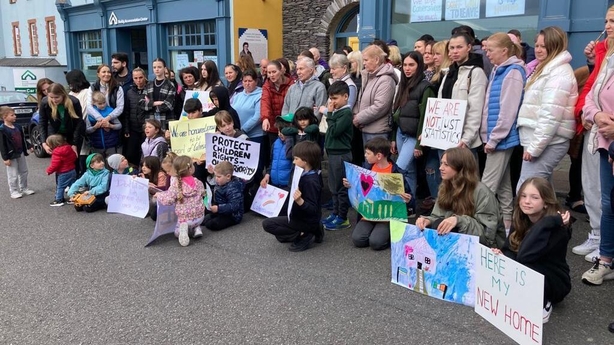
The crowd chanted "Refugees are welcome here" and "Belfast says no to racism" throughout the afternoon. Many attendees carried handmade signs, some in multiple languages, reflecting the diversity of the city's population. Representatives from the city's Nigerian, Romanian, Sudanese, and Eastern European communities were among those who spoke from the platform, sharing their experiences of living in Belfast and their determination to remain part of the city's fabric.
Why It Matters
Saturday's rally matters because it demonstrated something that the violence of the preceding week had threatened to obscure: that Belfast is, at its core, a city that has chosen the difficult path of coexistence over the easier path of division. That choice has never been simple or painless, and the events of the past week showed how fragile it can be. But the scale of Saturday's response — the sheer number of people who chose to come out, in the rain, on a Saturday afternoon, to stand in a square and say that this is not who we are — was genuinely moving.
It is also significant in a historical context. Belfast has held anti-racism demonstrations before, but nothing on this scale. The city's relationship with questions of identity, belonging, and community has always been complex, shaped by its own particular history of sectarian division. The fact that people from both unionist and nationalist traditions, from every faith and none, stood together on Saturday suggests that the city's understanding of community has expanded in ways that would have been difficult to imagine a generation ago.
For the families who were forced to flee their homes during the disorder, Saturday's rally was more than symbolic. Several spoke of the relief they felt seeing the scale of the response. "We thought we were alone," one woman told a reporter at the edge of the crowd. "We are not alone."
Local Impact
The immediate practical impact of Saturday's rally was felt in the city's ethnic minority communities, many of whom had been living in fear since the disorder began. Community support organisations reported a significant increase in calls from families seeking reassurance and practical assistance in the days following the violence. Several families who had temporarily relocated to emergency accommodation were, by Saturday evening, beginning to make plans to return to their homes.
In the Holyland area of South Belfast, where some of the disorder had been concentrated, residents' groups organised their own clean-up efforts in the days before the rally, with local people from all backgrounds working together to repair damage and show solidarity with affected neighbours. Similar efforts were reported in parts of North and East Belfast. The PSNI's new area commander, Chief Superintendent Amanda Ford, praised the community response and pledged an increased police presence at upcoming events including the Belsonic music festival.
What's Next
United Against Racism Belfast has announced plans for a series of follow-up community events over the coming weeks, including a public forum on integration and belonging in the city, and a series of neighbourhood gatherings designed to bring together long-established and newer residents. The group is also calling on Stormont to establish a dedicated cross-departmental task force on community cohesion and integration. Belfast City Council is expected to discuss the events of the past week at its next full meeting, with several councillors indicating they will bring forward motions on community relations and support for ethnic minority residents. The PSNI investigation into the disorder continues, with further arrests anticipated.