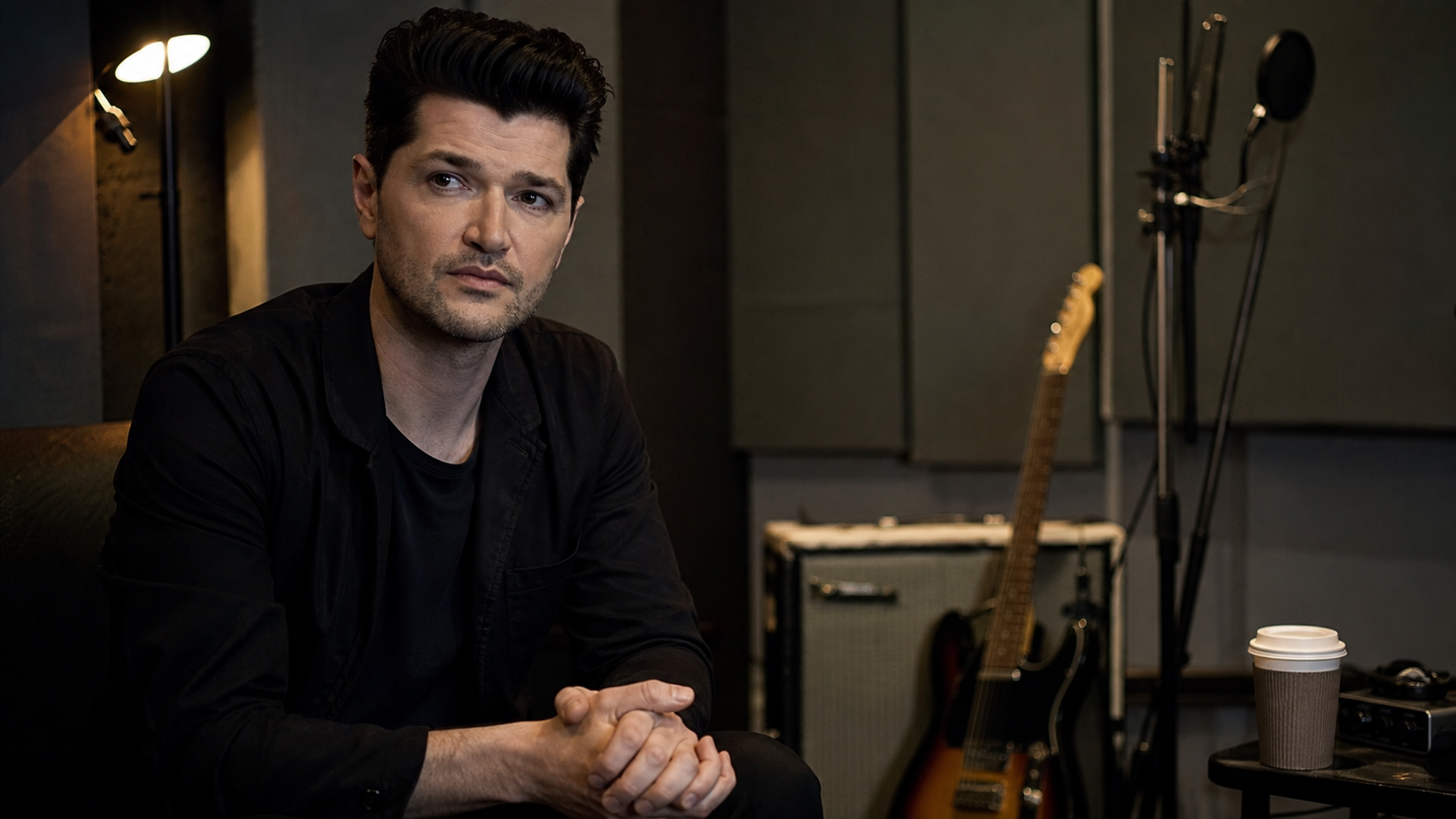
Danny O'Donoghue on Therapy, Drinking and the Truth Behind The Script's Anthems: 'I Was Saying All the Right Things'
The Script frontman Danny O'Donoghue has spoken with unusual candour about his experience of therapy, his struggles with alcohol, and the gap between the uplifting anthems that have made the Dublin band one of Ireland's most successful musical exports and the personal darkness that has sometimes accompanied that success — in an interview that reveals a man who has done significant work on himself and who is now willing to talk about that work in a way that he hopes will be useful to others.
Background
The Script, formed in Dublin in 2001 by O'Donoghue, Mark Sheehan, and Glen Power, became one of the most commercially successful Irish bands of the twenty-first century, with a string of albums and singles that combined melodic pop-rock with emotionally direct lyrics about love, loss, resilience, and hope. Songs like The Man Who Can't Be Moved, Hall of Fame, and Superheroes became anthems for a generation of Irish and international listeners, and the band's ability to connect with audiences on an emotional level was central to their success.
The band's journey has not been without difficulty. Mark Sheehan, the band's guitarist and co-writer, died in April 2023 following a brief illness, a loss that O'Donoghue has described as the most devastating of his life. The band subsequently announced that they would continue, with O'Donoghue and Power joined by new members, but the process of rebuilding after Sheehan's death has been a significant personal and creative challenge for O'Donoghue.
O'Donoghue has spoken previously about his mental health struggles, but the interview published this weekend in The Irish Times is notable for its specificity and its honesty. He speaks about the experience of being in therapy while continuing to drink — "saying all the right things but drinking at weekends" — and about the moment when he recognised that the two were incompatible. He also reflects on the particular challenge of being a public figure whose professional identity is built around emotional openness while maintaining a private life that is considerably more complicated.
Key Developments
In the interview, O'Donoghue describes his experience of therapy as initially performative — a process in which he was going through the motions without genuinely engaging with the work. "I was in therapy, saying all the right things but drinking at weekends," he says. "And at some point I had to be honest with myself about the fact that those two things were not compatible. You can't do the work and then undo it every Friday night."
He speaks about the role that Sheehan's death played in forcing him to confront aspects of himself that he had been avoiding. "When you lose someone that close, you can't hide from yourself anymore," he says. "All the things you've been putting off dealing with — they're right there in front of you, and you have to decide whether you're going to deal with them or not." He describes the decision to address his relationship with alcohol as one of the most difficult and most important of his life.
The interview also touches on the creative process of making music after Sheehan's death — the challenge of writing songs that honour his memory while also moving forward, and the question of what The Script means without one of its founding members. O'Donoghue is candid about the difficulty of that process but also about the sense of purpose it has given him. "Mark would have wanted us to keep going," he says. "That's not a cliché — it's what I genuinely believe."
Why It Matters
Danny O'Donoghue's willingness to speak publicly about his struggles with alcohol and his experience of therapy matters because it contributes to the ongoing normalisation of conversations about mental health and addiction in Ireland. The country has made significant progress in reducing the stigma around mental health in recent years, but alcohol remains a particularly complex subject — a substance that is deeply embedded in Irish social culture and that is simultaneously a source of significant harm for a significant minority of the population.
Public figures who speak honestly about their relationship with alcohol — not in the abstract, but in the specific, personal terms that O'Donoghue uses — provide a kind of permission for others to have similar conversations. The Script's music has always been about emotional honesty, and O'Donoghue's willingness to extend that honesty to his own life is consistent with the values that have made the band's work resonate with so many people.
Local Impact
In Dublin, where O'Donoghue grew up and where The Script formed, the interview has been received with warmth and respect. The band has always maintained a strong connection to their home city, and O'Donoghue's willingness to speak honestly about his struggles is seen as consistent with the directness and authenticity that Dublin audiences value. The Script's autumn tour, which includes dates at the 3Arena in Dublin, is expected to sell out quickly, with the band's fanbase remaining loyal despite the changes in their lineup following Sheehan's death. Mental health organisations including Pieta House and Aware have welcomed O'Donoghue's comments, noting that his platform gives him the ability to reach people who might not otherwise engage with conversations about mental health and addiction.
What's Next
The Script's autumn tour begins in October, with dates across Ireland and the United Kingdom before extending to Europe and North America. The band is also working on new material, with O'Donoghue indicating that the next album will be the most personal they have made — a reflection of the experiences of the past three years and of the work he has done on himself during that time. A release date has not yet been announced, but the band's management has indicated that new music is expected in the first half of 2027.