Taoiseach Martin Condemns Those Who 'Dishonour' Irish Flag by Using It to Divide
Taoiseach Micheál Martin has condemned those who "dishonour" the Irish tricolour by using it to divide or exclude, calling for the national flag to be respected as a symbol of unity for all people on the island. His remarks, delivered at a national commemoration, address a growing debate about the appropriation of national symbols by groups promoting exclusionary ideologies — a debate with particular resonance on both sides of the Irish border.
Background
The Irish tricolour of green, white, and orange was explicitly designed as a symbol of reconciliation. Its origins lie in the Young Ireland movement: in 1848, Thomas Francis Meagher presented a silk tricolour to the citizens of Dublin, declaring that "the white in the centre signifies a lasting truce between the 'Orange' and the 'Green', and I trust that beneath its folds the hands of Irish Protestants and Irish Catholics may be clasped in generous and heroic brotherhood." The green represented the older Gaelic and Catholic tradition; the orange, the Protestant tradition and supporters of William of Orange; the white, the hope for lasting peace between them. The flag was elevated to national prominence when it was raised above the General Post Office during the Easter Rising of 1916, and its status was formally enshrined in Article 7 of the 1937 Constitution.
Taoiseach Martin has repeatedly used significant national commemorations — including the annual commemoration of Theobald Wolfe Tone, who sought to unite "Protestant, Catholic and Dissenter," and events at Arbour Hill — to address what he terms the "dishonour" of the tricolour when used to divide or exclude. His speeches draw a direct line to the ideals of the 1916 Proclamation, describing its authors as "deeply modern and outward looking" individuals who sought an Ireland that embraced diverse traditions. For them, the tricolour was a "profound symbol of inclusion," explicitly designed to reject the notion that it belonged to a single group or ideology.
Key Developments
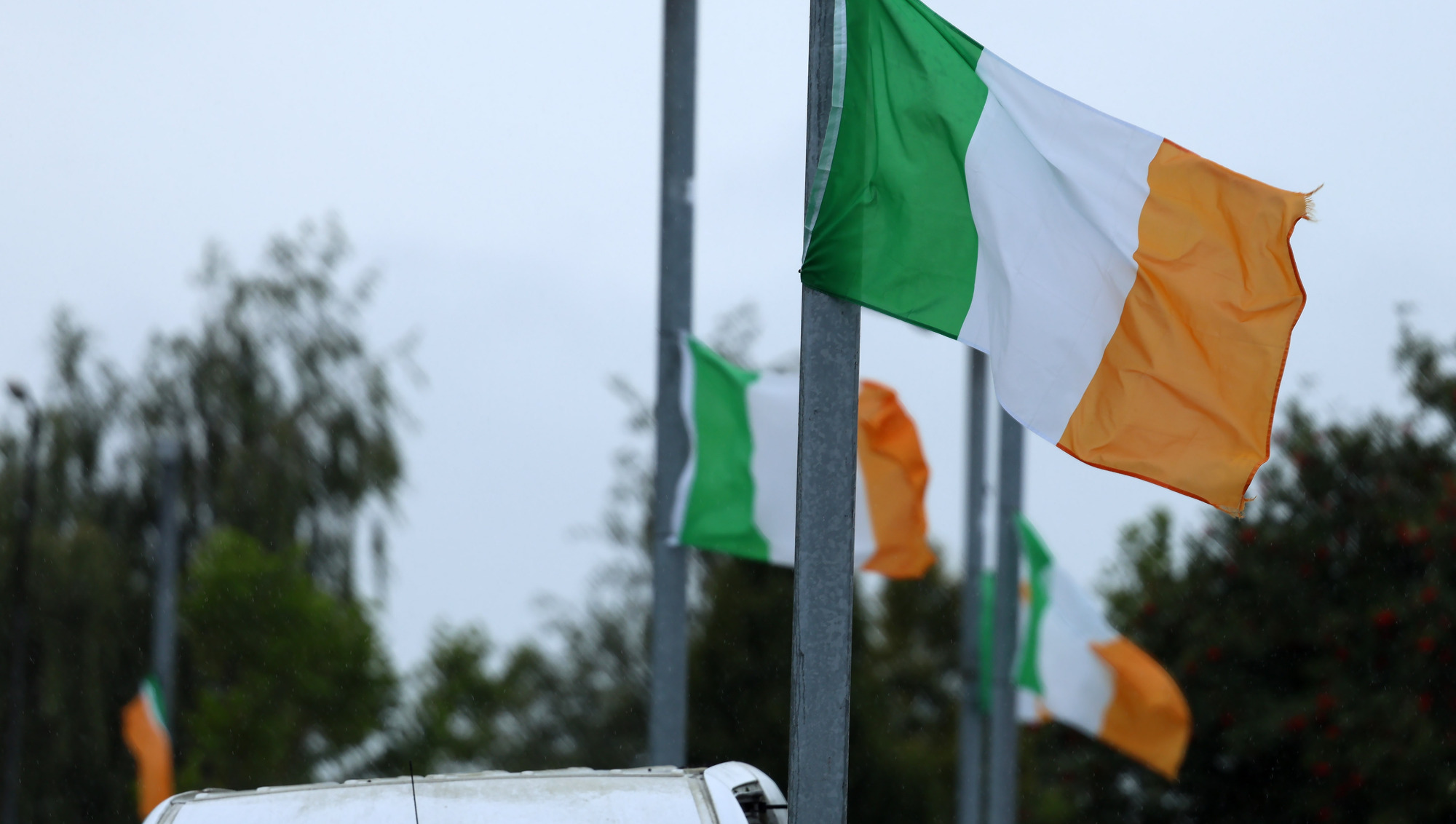
The Taoiseach's latest remarks come against a backdrop of increasing public debate over the display of the national flag. Concerns have grown over the use of the tricolour by factions promoting anti-immigrant sentiment and what critics have described as an "aggressive nativism." An increase in flags appearing on lampposts and public railings in Dublin and other areas has been seen by some as a "gross misuse of the national flag" intended to intimidate minority or migrant communities. Martin directly challenged this trend, framing it as a betrayal of the inclusive republicanism the flag was meant to represent. "Our identity survived because we have been willing to evolve," he said, warning against attempts to narrow the definition of Irishness.
His central argument is that the Irish tricolour fundamentally belongs to all people of the island, regardless of background or political belief. Groups that treat the flag as a "weapon to assert a superiority" or to claim a more authentic Irish identity than others fundamentally misunderstand its meaning, he argued. Using the flag to promote aggressive and exclusionary views is wrong and dishonours the men and women who established it as a unifying symbol.
Why It Matters
The debate about the tricolour matters because national symbols are not merely decorative — they carry meaning, and when that meaning is contested or corrupted, it has real consequences for social cohesion. The phenomenon Martin is addressing — the co-option of the national flag by exclusionary political movements — has been described by some commentators as an "Ulsterisation" of political discourse in the Republic, importing the sectarian-style territorialism of the Northern Ireland flags issue into a jurisdiction where it had previously been largely absent. If the tricolour becomes associated in the public mind with hostility towards migrants or minorities, it loses its capacity to function as a genuinely unifying symbol. Martin's intervention is an attempt to reclaim the flag's original meaning before that association becomes entrenched.
Local Impact
In Northern Ireland, the tricolour has always been a contested symbol. For nationalists and republicans, it is the legitimate flag for the entire island. For many in the unionist and loyalist communities, its association with Irish republicanism — and specifically its use by paramilitary groups during the Troubles — has linked it with violence and political opposition to Northern Ireland's existence. The annual burning of tricolours on Eleventh Night bonfires is a stark illustration of this antagonism. The Commission on Flags, Identity, Culture and Tradition has acknowledged this reality and recommended exploring a new civic flag for Northern Ireland to represent all communities. Martin's remarks about the flag's inclusive origins are therefore particularly significant in a Northern Irish context, where the gap between the tricolour's intended meaning and its lived reality is most acute. His insistence that the flag belongs to all people of the island is both a political statement and an aspiration that remains, for many, unrealised.
What's Next
The debate about national symbols is unlikely to be resolved by any single speech, however well-intentioned. In the Republic, the question of how to respond to the appropriation of the tricolour by far-right groups will continue to exercise politicians, civil society organisations, and communities. In Northern Ireland, the flags issue remains one of the most sensitive and unresolved aspects of the peace process, with the Commission on Flags, Identity, Culture and Tradition's recommendations yet to be fully implemented. In the longer term, any conversation about a united Ireland will inevitably involve questions about national symbols — including whether the tricolour, whatever its original intent, can realistically serve as the flag of a new political entity that includes a substantial unionist population. Martin's remarks are a contribution to that conversation, insisting that the flag's inclusive origins must be its defining meaning. Sources: The Irish Times — Martin on the tricolour; RTÉ News — Taoiseach on national flag.