Taoiseach Martin Calls for Clarity on Border Poll Trigger as UK Secretary's 'Judgement Call' Draws Criticism
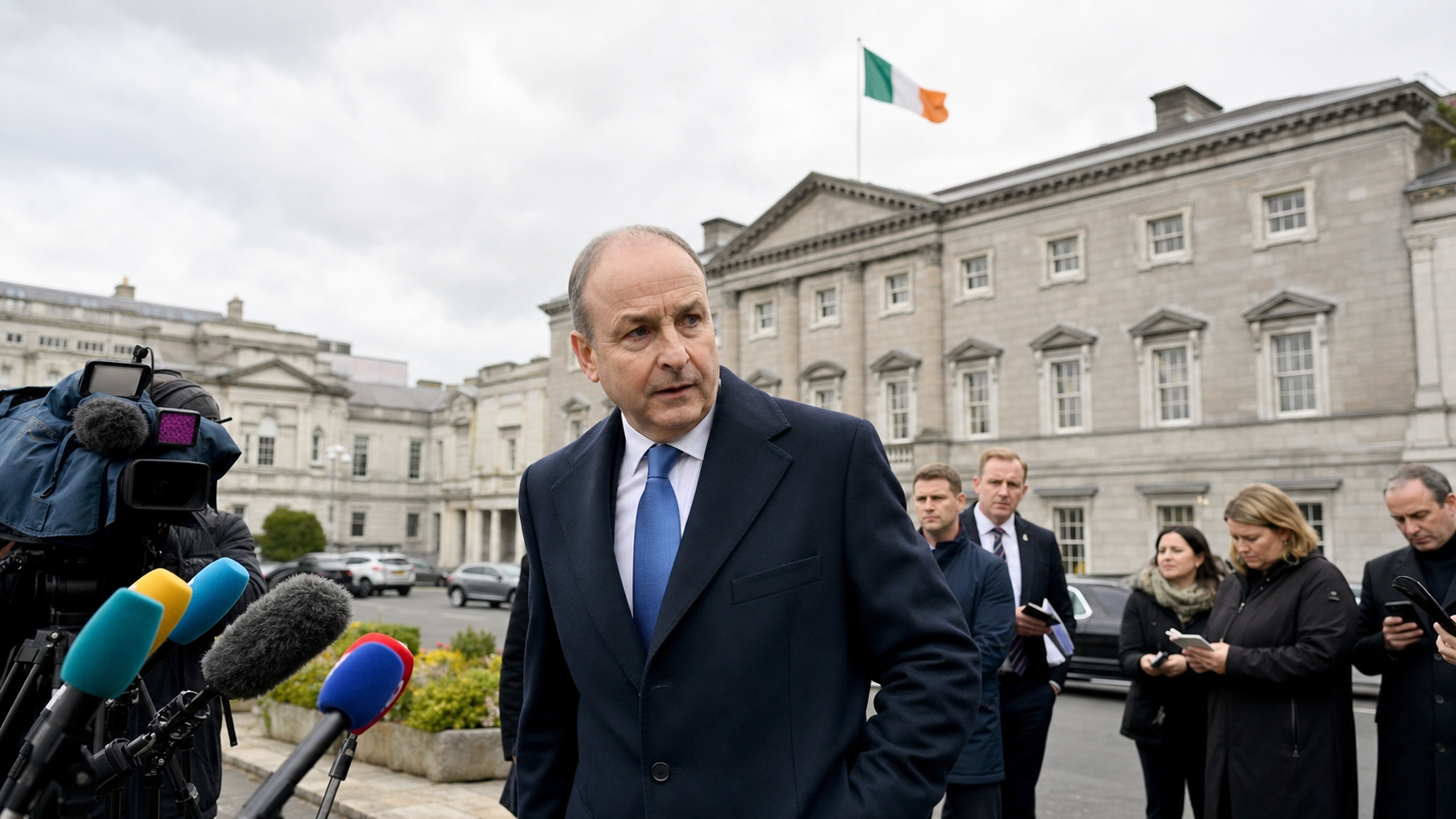
Taoiseach Micheál Martin has called for a formal discussion between the British and Irish governments and Northern Ireland's political parties to clarify the conditions under which a border poll would be triggered, describing the current arrangement as "not satisfactory." His intervention, made on Friday, follows remarks by British Prime Minister Andy Burnham that a referendum on Irish unity was "off the table" — comments that drew sharp criticism from nationalist parties and prompted Burnham to subsequently clarify his position.
Background
The question of when and how a border poll might be called has been a recurring source of political tension since the 1998 Good Friday Agreement established the framework for such a referendum. The Agreement mandates that the Secretary of State for Northern Ireland must call a poll if it "appears likely" that a majority of those voting would support Irish unification. The deliberate vagueness of that formulation — a product of the political compromises necessary to secure the Agreement — has left the precise threshold for triggering a referendum undefined and subject to interpretation.
The issue has gained renewed prominence in recent years as polling on constitutional preferences in Northern Ireland has shown a narrowing of the gap between those who favour remaining in the United Kingdom and those who favour Irish unity. While no poll has yet shown a clear majority for unification, the trend has been sufficient to prompt serious political discussion about the conditions under which a referendum might become appropriate, and about who should have the authority to make that determination.
British Prime Minister Andy Burnham visited Belfast in late August 2026 and described a border poll as being "off the table," a formulation that drew immediate criticism from Sinn Féin and the SDLP, who argued that it was inconsistent with the spirit and letter of the Good Friday Agreement. Burnham subsequently clarified that he remains fully committed to the Agreement's provisions, including those relating to a border poll, but the episode highlighted the sensitivity of the issue and the potential for misunderstanding about the UK government's position.
Key Developments
Speaking on Friday, Taoiseach Martin said the current arrangements for calling a border poll were "not satisfactory" because the decision rested on a "judgement call" by the Secretary of State, without any agreed criteria or process for making that judgement. He argued that the wording of the Good Friday Agreement was "deliberately vague" at the time of its drafting and that there is now a need for a formal discussion to "tease out" the circumstances and conditions under which a referendum would be triggered. He indicated his intention to raise the issue with Prime Minister Burnham at their scheduled meeting later in September.
Martin was careful to distinguish between his personal support for Irish unity and his opposition to what he described as "browbeating" by short-term political campaigning or calls for specific timelines. He emphasised the "enormous, substantial complexity" involved in the process of unification, noting that deep-seated divergences in systems including education and health have developed across the island over the past century. He cautioned that a border poll is not an end in itself and that any move toward unity must involve genuine engagement with unionism to ensure a sustainable outcome.
The Taoiseach's intervention drew predictable responses from across the political spectrum. DUP leader Gavin Robinson reaffirmed that Northern Ireland remains a sovereign part of the United Kingdom under the Belfast Agreement and that there is currently no evidence of a majority desire for change. Ulster Unionist leader Jon Burrows suggested Martin should "stay in his lane." SDLP assembly member Matthew O'Toole defended the Taoiseach, arguing that seeking clarity on the process is entirely consistent with the text of the Agreement.
Why It Matters
The question of the border poll trigger is not merely academic — it has real implications for political stability in Northern Ireland and for the relationship between the British and Irish governments. The current ambiguity creates a situation in which any Secretary of State's statement about the likelihood or otherwise of a poll can be interpreted as either a commitment or a denial, generating political controversy regardless of the intention behind the words. A clearer, agreed framework for how the threshold would be assessed would reduce the scope for misunderstanding and political point-scoring, even if it did not resolve the underlying constitutional question.
Martin's intervention also reflects a broader shift in how the Irish government approaches the unity question. The days when Dublin politicians would avoid the subject entirely are long gone; the question now is how to engage with it in a way that is constructive rather than destabilising. His emphasis on complexity and the need for unionist engagement is a more sophisticated position than simple advocacy for a poll, and it reflects the lessons of the Scottish independence referendum experience, where the aftermath of a close result created lasting political division.
Local Impact
In Northern Ireland, the border poll debate cuts across community lines in ways that do not always map neatly onto traditional unionist-nationalist divisions. Younger voters, in particular, have shown more fluid attitudes toward constitutional questions than previous generations, and the issue of EU membership — which Northern Ireland voted to remain in — continues to shape attitudes toward the border and toward the relationship with the Republic. In communities across Belfast, Derry, and the border counties, the question of what a united Ireland would actually look like in practical terms — in terms of health services, education, taxation, and social policy — is increasingly part of the conversation in a way that it was not a decade ago.
What's Next
Taoiseach Martin is scheduled to meet Prime Minister Burnham later in September, at which point the border poll issue is expected to be among the topics discussed. The North-South Ministerial Council is also due to meet in the coming weeks, providing another forum for engagement on constitutional and governance issues. Political parties across Northern Ireland will continue to develop their positions on the unity question ahead of what many expect to be an increasingly prominent debate in the years ahead.